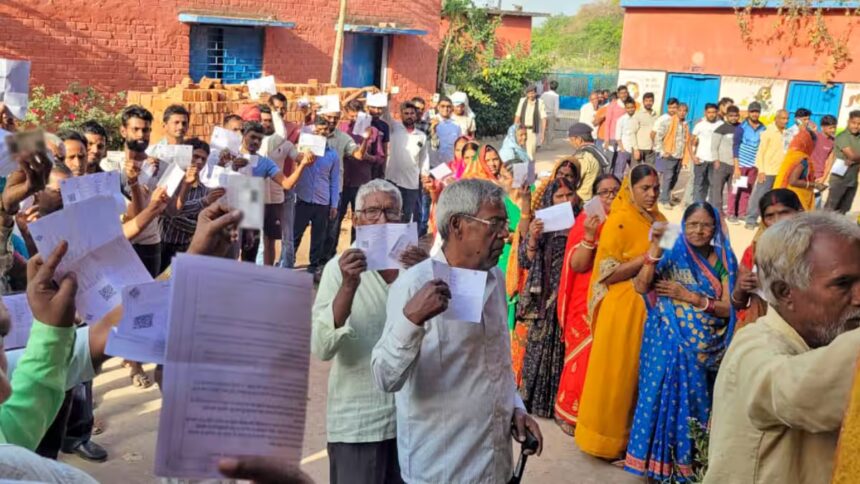
The 2025 Bihar Assembly elections are entering their final and crucial phase on Tuesday, November 11, with voting scheduled in 122 constituencies out of the total 243 seats. The state’s political landscape is witnessing one of its most intense contests in recent history, as the National Democratic Alliance led by Chief Minister Nitish Kumar and the Mahagathbandhan spearheaded by Tejashwi Yadav battle for control of the legislature. The first phase of voting, conducted on November 6, witnessed a historic voter turnout of 65 percent, reflecting a highly engaged electorate eager to determine the state’s political direction. With the conclusion of the second phase, all attention will shift to exit poll projections, which are expected to indicate voter trends and offer a glimpse of the potential outcome. These projections, however, are only indicative and not a guarantee of the final results, as the actual counting of votes and formation of government will ultimately decide the state’s future.
Exit Poll Predictions: Timing, Process, and Public Access
Exit polls have emerged as a major focus during any election, providing a preliminary understanding of voter sentiment and potential results. In the case of Bihar’s 2025 elections, exit poll predictions are expected to be released once the second phase of voting concludes. This phase of voting, spanning 122 constituencies, will determine the final distribution of power in the 243-seat assembly. According to Election Commission regulations, the release of exit poll results prior to the completion of voting is strictly prohibited. In past elections, such as the Delhi Assembly elections earlier this year, the commission enforced this rule, ensuring that no polling agency could publicly display or broadcast predictions before the official voting hours ended.
Once voting concludes, major polling agencies, including Axis My India, CVoter, IPSOS, Jan Ki Baat, and Today’s Chanakya, are expected to release their findings through their official websites and social media platforms. These exit polls aim to provide a snapshot of voter choices, regional trends, and the performance of key political parties in specific constituencies. Media organizations, political analysts, and the general public will closely follow these predictions to gauge the possible outcomes. Leading news outlets will simultaneously provide live updates, detailed analyses, and expert commentary to interpret the implications of the emerging trends.
Exit polls, while insightful, cannot replace the actual counting process, which will determine the state’s next government. Factors such as last-minute voter decisions, voter turnout in remote areas, and variations across constituencies can lead to differences between projected and actual outcomes. However, exit polls are an essential tool for understanding overall electoral sentiment, assessing campaign effectiveness, and anticipating potential alliances or shifts in power. They also offer political parties a measure of the effectiveness of their outreach and policy messaging, providing critical feedback for future electoral strategies.
With the growing influence of digital media, voters and analysts alike will be able to access live coverage and real-time results of exit polls through multiple platforms. Prominent newspapers and television channels will host special election segments, combining data from multiple polling agencies to provide consolidated projections. These live updates will serve as an important indicator of which alliances or parties may hold sway in the Bihar Assembly, offering insights into regional variations, voter behavior in urban and rural areas, and the impact of local issues on overall electoral outcomes.
First Phase Voting and Political Stakes
The first phase of Bihar’s assembly elections, conducted on November 6, recorded an unprecedented voter turnout of 65.08 percent, the highest in the state’s electoral history. This marked a significant level of political engagement among the electorate and set the tone for the second phase of voting. In this high-stakes contest, the ruling JD(U)-BJP-led National Democratic Alliance seeks to retain power under the leadership of Nitish Kumar, while the RJD-led Mahagathbandhan aims to challenge the status quo and unseat the nine-time chief minister. The first phase was not only a measure of public sentiment but also a crucial test of campaign strategies, grassroots mobilization, and the resonance of key political messages among voters.
During the first phase, political analysts observed several notable trends. Urban constituencies displayed strong voter turnout, indicating heightened interest among younger voters and first-time participants. Rural areas, traditionally strongholds of local parties and caste-based alliances, also saw enthusiastic participation, highlighting the electorate’s desire to voice its opinion on governance, development, and social welfare initiatives. Issues such as unemployment, education, infrastructure, and law and order were widely debated across campaign platforms, with both alliances attempting to position themselves as better equipped to address the state’s pressing concerns.
The Mahagathbandhan, led by Tejashwi Yadav, focused heavily on promises of social welfare, youth employment, and inclusive governance, targeting constituencies where dissatisfaction with the incumbent government was reportedly high. On the other hand, the JD(U)-BJP alliance emphasized continuity, development projects undertaken during the previous term, and efforts to maintain law and order, seeking to consolidate its traditional voter base while appealing to undecided segments of the electorate.
In addition to local issues, broader national narratives and party ideologies also played a role in shaping voter preferences. National-level developments, economic policies, and party leadership dynamics were frequently cited in debates, campaign speeches, and media discussions. The interplay of these factors contributed to making the first phase an essential precursor to the second phase, providing both alliances with insights into areas of strength, voter concerns, and potential vulnerabilities.
The second phase, encompassing 122 constituencies, is widely regarded as decisive. The final outcome will hinge on voter turnout, the distribution of support across rural and urban regions, and the ability of political parties to effectively mobilize their bases. For Nitish Kumar’s JD(U)-BJP alliance, retaining power would affirm their governance model and policy initiatives, while for the Mahagathbandhan, a successful performance could herald a significant political shift in the state’s legislative framework. Analysts suggest that close attention will be paid to swing constituencies, where voter loyalty is divided and outcomes could be influenced by last-minute campaigning, local leadership influence, and community-specific issues.
Another factor adding complexity to this election is the engagement of younger voters. This demographic, which often seeks employment, educational opportunities, and social reforms, has shown an increased willingness to participate in elections. Their preferences are expected to shape electoral outcomes significantly, influencing the balance of power in closely contested constituencies. Exit polls will attempt to capture these trends, offering insights into the aspirations and priorities of Bihar’s younger electorate and how they might influence the formation of the next government.
In conclusion, the 2025 Bihar Assembly elections, particularly the second phase of voting and the subsequent exit poll projections, represent a critical juncture in the state’s political landscape. The contest between the JD(U)-BJP-led NDA and the RJD-led Mahagathbandhan encapsulates not only a battle for legislative control but also a broader narrative of governance, development, and public sentiment. Voter turnout, regional variations, and the influence of youth participation are likely to play decisive roles in determining the outcome. While exit polls provide an early indication of trends, the final results, based on actual vote counting, will ultimately decide Bihar’s political future and the composition of its next government.