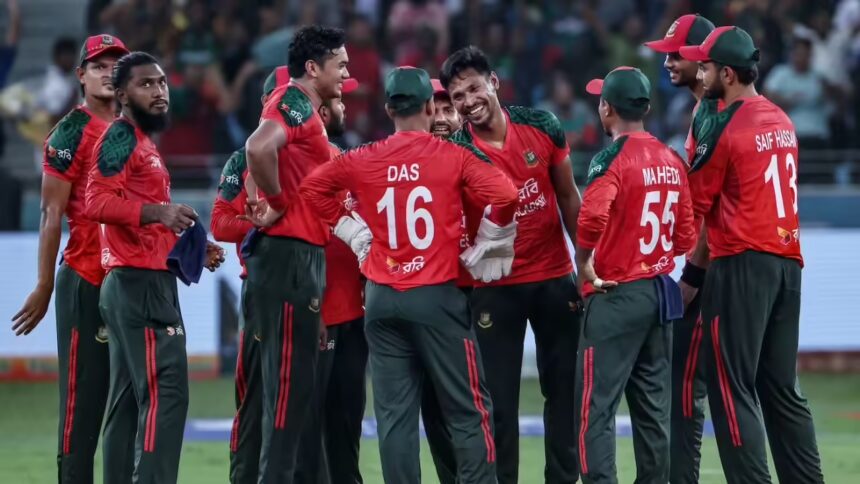
Bangladesh refuses to play T20 World Cup matches in India, urging ICC to shift venues amid safety and dignity concerns.
Bangladesh has taken an uncompromising position ahead of the ICC Men’s T20 World Cup 2026 by declaring that its national team will not travel to India to play tournament matches under any circumstances. The stance, articulated by the country’s sports advisor and backed by the Bangladesh Cricket Board, has elevated what was initially a scheduling concern into a major international cricketing dispute. Citing issues of player safety, national dignity and political sensitivity, Bangladesh has asked the International Cricket Council to relocate its fixtures to a neutral venue, setting the stage for a tense confrontation between sporting governance, diplomacy and the principles of global competition.
Bangladesh’s Position on Security, Sovereignty and Sporting Dignity
Bangladesh’s refusal to play T20 World Cup matches in India reflects a broader assertion of sovereignty and national self-respect rather than a narrowly defined sporting disagreement. The country’s sports advisor, Asif Nazrul, has repeatedly stated that Bangladesh cannot be pressured into decisions that compromise the safety or dignity of its players. According to him, participation in a global tournament should never come at the cost of national confidence or perceived vulnerability, regardless of the prestige or financial importance of the event.
The government’s position is rooted in a belief that the current political and public environment in India is not conducive to ensuring the safety of Bangladeshi players, officials and supporters. While no specific incident has been officially cited as an immediate threat, Bangladeshi authorities argue that heightened public sentiment and unresolved bilateral tensions create an atmosphere of uncertainty that cannot be ignored. For Dhaka, even a small risk is unacceptable when it involves national representatives on foreign soil.
The Bangladesh Cricket Board has formally communicated these concerns to the International Cricket Council, requesting that Bangladesh’s scheduled matches be moved to neutral venues such as Sri Lanka or other co-host nations. Officials have emphasised that Bangladesh remains committed to playing in the World Cup and has no intention of withdrawing from the tournament itself. The objection, they insist, is limited strictly to playing in India.
Bangladesh’s leadership has also pointed to past precedents in international cricket where venue changes were permitted due to political or security concerns. They argue that accommodating such requests does not undermine the integrity of the tournament but rather preserves its inclusivity. From their perspective, denying Bangladesh a neutral venue option would amount to unequal treatment and an erosion of the principle that player welfare must come first.
Public opinion within Bangladesh has largely aligned with the government’s stance. Media commentary and former players have framed the issue as one of respect rather than rivalry, emphasising that participation in sport should not require compromise on national values. At the same time, some voices have urged restraint, warning that prolonged confrontation with the ICC could isolate Bangladesh within the global cricketing community.
The firmness of Bangladesh’s position has been reinforced by support from regional allies. The Pakistan Cricket Board has publicly backed Bangladesh’s demand for venue relocation, adding a geopolitical dimension to the issue. This solidarity has intensified scrutiny on the ICC, which now faces pressure to balance the concerns of multiple member boards against logistical planning and commercial commitments.
Despite Bangladesh’s arguments, the ICC has so far maintained that its security assessments do not indicate a level of risk that would justify altering the tournament schedule. Officials within the council have reiterated that India is a capable and experienced host nation with extensive infrastructure and security arrangements. This divergence in risk perception lies at the heart of the standoff, with neither side showing signs of immediate compromise.
ICC Dilemma, Regional Politics and Impact on the T20 World Cup
The impasse has placed the International Cricket Council in a difficult position, exposing the limits of sports governance when national politics intersect with tournament planning. The ICC is responsible not only for ensuring the safety of players but also for maintaining consistency, fairness and predictability in its events. Granting Bangladesh’s request could open the door for similar demands from other nations in the future, potentially complicating the organisation of multinational tournaments.
From the ICC’s standpoint, the T20 World Cup is a tightly coordinated event involving broadcasters, sponsors, host governments and fans across multiple countries. Any last-minute change in venues would trigger a cascade of logistical challenges, including travel rearrangements, broadcast recalibration and contractual renegotiations. These factors weigh heavily on the council’s reluctance to modify the schedule.
India’s cricket authorities have remained largely measured in their response, expressing confidence in the country’s ability to host international teams safely and professionally. The Board of Control for Cricket in India has consistently highlighted India’s track record of successfully hosting major global tournaments and bilateral series involving teams from diverse political backgrounds. From this perspective, Bangladesh’s refusal is viewed as unnecessary and potentially disruptive.
The controversy has also created uncertainty for players, who are caught between personal ambition and national policy. Several Bangladeshi cricketers have expressed a strong desire to participate in the World Cup, recognising it as a defining moment in their careers. However, they have also publicly affirmed that they will respect whatever decision is taken by the government and the cricket board, underscoring the complex hierarchy of authority in international sport.
Beyond immediate logistics, the dispute raises broader questions about the future of cricket diplomacy in South Asia. Cricket has long served as both a bridge and a battleground for regional relations, capable of easing tensions or amplifying them. The current standoff suggests a shift towards a more assertive posture by Bangladesh, signalling that it is willing to challenge established power structures within global cricket when it believes national interests are at stake.
There is also speculation about potential outcomes should the deadlock persist. One possibility is that Bangladesh’s matches could be shifted to a neutral venue through a compromise formula that preserves the overall structure of the tournament. Another scenario involves Bangladesh refusing to participate unless its conditions are met, forcing the ICC to consider replacement teams or altered group formats. Either outcome would have significant competitive and commercial consequences.
For fans, the uncertainty has dampened anticipation for marquee fixtures, particularly high-profile matches involving India and Bangladesh. Broadcasters and sponsors are monitoring developments closely, aware that prolonged ambiguity could affect viewership planning and marketing strategies. The situation illustrates how political considerations, even when framed around safety and dignity, can ripple outward to affect the entire sporting ecosystem.
As discussions continue behind closed doors, the Bangladesh–India venue dispute stands as a reminder that international sport does not exist in isolation. Decisions taken by governing bodies must navigate not only regulations and schedules but also emotions, history and evolving regional dynamics. The resolution of this issue will likely shape how future tournaments address similar conflicts, setting a precedent with implications far beyond the 2026 T20 World Cup.