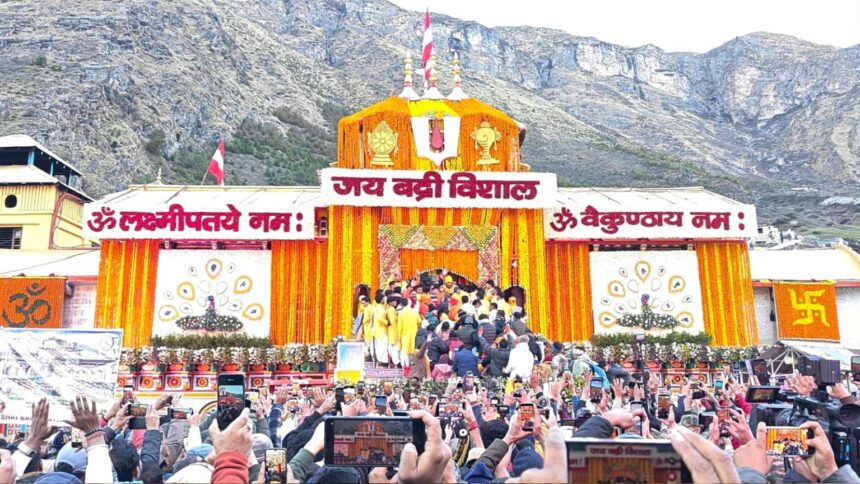
The sacred portals of Badrinath Temple opened at 6:15 a.m., marking the start of Char Dham Yatra 2026 with rituals, chants, and massive devotee turnout.
The opening of Badrinath Temple marks one of the most significant spiritual events in India, drawing thousands of devotees to the Chamoli district of Uttarakhand. Every year, the temple doors are opened with elaborate Vedic rituals after remaining closed during the harsh winter months, when the region becomes inaccessible due to heavy snowfall.
At precisely 6:15 a.m., priests performed sacred rituals amid Vedic chants, signaling the reopening of the shrine dedicated to Lord Vishnu. The atmosphere was filled with devotion as chants of “Jai Badri Vishal” echoed across the Himalayan valley. Pilgrims from different parts of the country gathered in large numbers, many having undertaken long and challenging journeys to witness the auspicious occasion.
The temple was decorated with flowers and traditional ornaments, reflecting the spiritual grandeur associated with the opening ceremony. Devotional music, conch shell sounds, and traditional instruments created a divine ambiance. Army band performances added a ceremonial element, blending patriotism with spirituality and enhancing the significance of the occasion.
Chief Minister Pushkar Singh Dhami participated in the ceremony and performed the ‘Mahabhishek Puja’ in the name of Prime Minister Narendra Modi. The ritual was conducted to pray for the prosperity, peace, and well-being of the nation and its citizens. The Chief Minister also reviewed the arrangements made for pilgrims and stated that the government has taken comprehensive measures to ensure safety, convenience, and smooth conduct of the Char Dham Yatra.
With the opening of Badrinath Temple, all four sacred shrines of the Char Dham circuit are now open. Kedarnath Temple was opened a day earlier, while Gangotri Temple and Yamunotri Temple were opened on April 19. This officially marks the beginning of the Char Dham Yatra season, one of the most important pilgrimage journeys in Hinduism.
Badrinath Temple holds immense religious significance and is dedicated to Lord Vishnu, worshipped as Badri Narayan. According to Hindu beliefs, visiting this shrine helps devotees attain spiritual purification and liberation. The temple is also part of the Chota Char Dham circuit and one of the 108 Divya Desams, making it an essential pilgrimage destination for Vaishnavites.
The history of the temple dates back centuries and is believed to have been revived by Adi Shankaracharya in the 8th century. Located at an altitude of over 3,000 meters in the Himalayas, the temple remains open only for six months each year due to extreme weather conditions. During winter, the idol is shifted to a nearby location where worship continues.
The Char Dham Yatra includes four sacred sites—Yamunotri, Gangotri, Kedarnath, and Badrinath—each representing a unique aspect of Hindu spirituality. The journey is considered a path to salvation and spiritual enlightenment. Devotees undertake this pilgrimage with deep faith, often braving difficult terrain and unpredictable weather.
The opening of the yatra season also brings significant economic benefits to the region. Tourism increases substantially, supporting local businesses such as hotels, transport services, restaurants, and small vendors. The state government focuses on balancing tourism growth with environmental sustainability to preserve the fragile Himalayan ecosystem.
Authorities have made extensive preparations to manage the large influx of pilgrims. Improved road connectivity, enhanced medical facilities, emergency response systems, and better crowd management strategies have been implemented. Special attention has been given to weather monitoring and disaster preparedness to ensure the safety of visitors.
Pilgrims are advised to register for the yatra, carry necessary identification, and follow official guidelines. Health advisories, including acclimatization measures, are also recommended due to the high-altitude conditions of the region. The administration has urged visitors to maintain cleanliness and respect the ecological sensitivity of the area.
For devotees, the journey to Badrinath is not just a religious obligation but a deeply emotional and spiritual experience. The serene environment of the Himalayas, combined with the sacred presence of the temple, offers a sense of peace and inner fulfillment. Many pilgrims describe the experience as transformative, reinforcing their faith and connection with the divine.
The reopening of the temple symbolizes renewal and hope, marking the return of spiritual activity after months of closure. It also reflects the enduring traditions and cultural heritage of India, where faith continues to play a central role in people’s lives.
As the Char Dham Yatra 2026 begins, lakhs of devotees are expected to visit the shrines in the coming months. The successful opening of Badrinath Temple sets the tone for the pilgrimage season, highlighting the importance of devotion, discipline, and community participation.
The event also underscores the role of coordinated efforts between government authorities, temple committees, and local communities in ensuring a seamless pilgrimage experience. With improved infrastructure and better planning, the yatra continues to evolve while preserving its traditional essence.
The opening ceremony of Badrinath Temple once again demonstrates the deep-rooted spiritual traditions of India and the unwavering faith of millions. As devotees embark on this sacred journey, the Himalayas resonate with prayers, chants, and a collective sense of devotion that transcends boundaries.