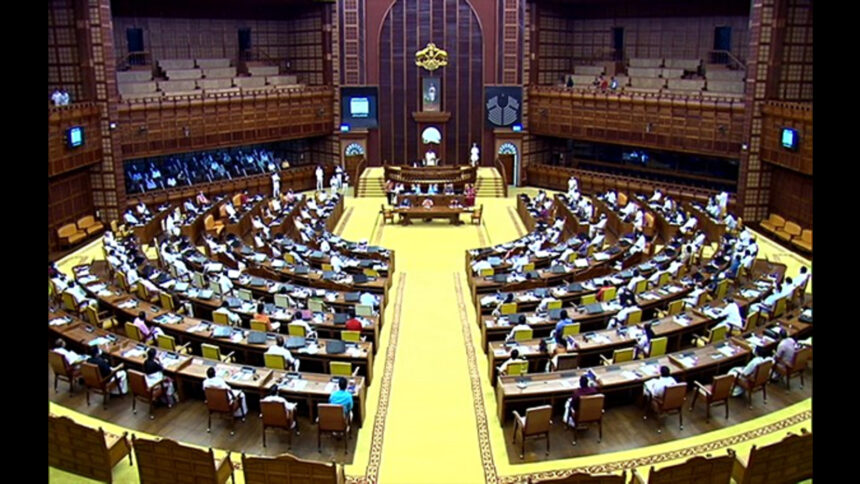
The state legislative assembly on Wednesday passed a resolution opposing the Centre’s proposed Waqf (Amendment) Bill, citing concerns over its impact on state autonomy and Waqf board administration. The resolution, tabled by Law Minister HK Patil, was backed by the ruling party and urged the Union government to reconsider the bill, emphasizing the need for broader consultations with stakeholders. The move led to a walkout by the Opposition.
The ruling party argued that the amendment would centralize control, undermining the state’s authority over Waqf properties and governance. Patil stated that the House unanimously rejected the Waqf (Amendment) Bill, 2024, as it was against the interests of the people. The resolution also called on the Centre to withdraw the legislation, stating that it did not align with the aspirations of all communities and went against the secular principles of the nation.
Concerns raised by the Karnataka State Waqf Board and other stakeholders were also highlighted, with the resolution criticizing the Centre for introducing the bill without adequate consultations. Patil pointed out that the 2013 amendments to the Waqf Act already provided a framework for managing Waqf properties, which include 28 endowed institutions in the state.
Citing constitutional provisions, the resolution asserted that matters related to Waqf properties fall under the Concurrent List, where both state and central governments have legislative authority. It argued that the proposed amendments intrude upon the state’s executive and legislative domain, pointing out that subjects such as burial grounds, land, and land records fall under the exclusive purview of the state government. The resolution stressed that any changes to such legislation should be made in consultation with state authorities.
Leader of Opposition R Ashoka criticized the resolution, arguing that it diverted attention from larger governance issues. He raised concerns about land encroachments and alleged that religious institutions and even schools had been affected. He questioned the state government’s stance, accusing it of shifting blame to the Centre while failing to address the broader issue of land disputes.
Ashoka further pointed out that if 50% of the states approve a law, it becomes legally binding. He argued that with 18 BJP-ruled states supporting the bill, the resolution was unnecessary and politically motivated. Despite the opposition’s objections, the assembly stood firm on its demand for the Centre to withdraw the proposed amendments.