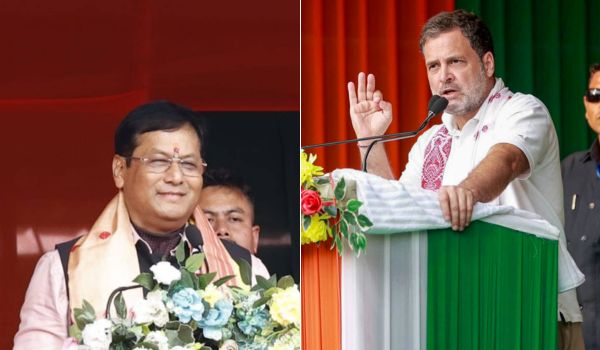
The political atmosphere in Assam has reached a fever pitch as campaigning for the upcoming assembly elections intensifies, with senior leaders from both the Bharatiya Janata Party and the Indian National Congress addressing rallies across the state. With voting scheduled in a single phase, the urgency of outreach has pushed parties to deploy top leadership, sharpen narratives, and directly engage with voters on issues ranging from identity and development to governance and historical accountability.
The high-stakes nature of the election is evident in the tone and content of the campaigns, where both sides are seeking to consolidate their core support bases while appealing to undecided voters. The BJP, aiming to retain power, has focused on showcasing its governance record and future promises, while the Congress has intensified its criticism of the ruling establishment, attempting to position itself as a credible alternative.
BJP Focuses on Development, Identity, and Governance Record
Senior BJP leaders have taken center stage in the campaign, emphasizing the party’s achievements and its vision for Assam’s future. Sarbananda Sonowal, addressing a rally in Dhemaji, highlighted what he described as the failures of previous Congress governments, particularly accusing them of enabling illegal immigration and land encroachment. He asserted that such policies had threatened the rights and identity of indigenous communities in the state.
Sonowal also pointed to the BJP government’s initiatives, including the distribution of land titles to over eight lakh people, as evidence of its commitment to securing the rights of local populations. These measures, he argued, represent a broader effort to protect Assam’s cultural and demographic integrity while ensuring socio-economic stability.
The BJP’s campaign narrative extends beyond identity politics to include development-oriented promises. The party has repeatedly highlighted infrastructure growth, welfare schemes, and economic expansion as key achievements during its tenure. This dual focus on identity and development reflects a strategic attempt to address both emotional and material concerns of the electorate.
At the same time, the BJP has intensified its attacks on the Congress, accusing it of historical mismanagement and failure to address critical issues such as border security and economic development. Leaders from the party have framed the election as a choice between continuity and regression, urging voters to support what they describe as a proven model of governance.
Congress Counters with Criticism, Alliances, and Alternative Vision
The Congress campaign, meanwhile, has centered on challenging the BJP’s claims and highlighting what it sees as gaps in governance. Party leaders have accused the ruling government of failing to deliver on key promises, particularly in areas such as employment, price control, and social harmony. By focusing on these issues, the Congress aims to tap into voter dissatisfaction and build momentum ahead of polling day.
The opposition’s strategy also involves leveraging alliances and regional dynamics to strengthen its position. In a state where electoral outcomes are often shaped by complex social and political factors, coalition-building has become a crucial element of the Congress campaign. The party is working to present a united front against the BJP, emphasizing inclusivity and collective governance.
Rallies addressed by Congress leaders have sought to connect with voters at a grassroots level, highlighting local concerns and promising targeted solutions. This approach contrasts with the BJP’s emphasis on large-scale achievements, offering voters a different perspective on governance and priorities.
The exchange of sharp rhetoric between the two parties underscores the intensity of the contest. Accusations and counter-accusations have become a defining feature of the campaign, reflecting the high stakes involved. For the Congress, the election represents an opportunity to regain political ground in a state where the BJP has established a strong foothold. For the BJP, it is a test of its ability to sustain voter trust and maintain its dominance.
As the campaign enters its final phase, the focus is likely to remain on key issues that resonate with voters, including identity, development, and governance. The outcome will depend not only on the effectiveness of campaign strategies but also on how well each party addresses the aspirations and concerns of Assam’s diverse electorate.