Arab American and Muslim leaders in the United States, including some who backed Donald Trump in the 2024 presidential election, have condemned his recent proposal for the United States to take control of Gaza and relocate its Palestinian population. While they view the suggestion as unacceptable and counterproductive to achieving lasting peace, many dismissed the remarks as unrealistic political rhetoric rather than a concrete policy plan.
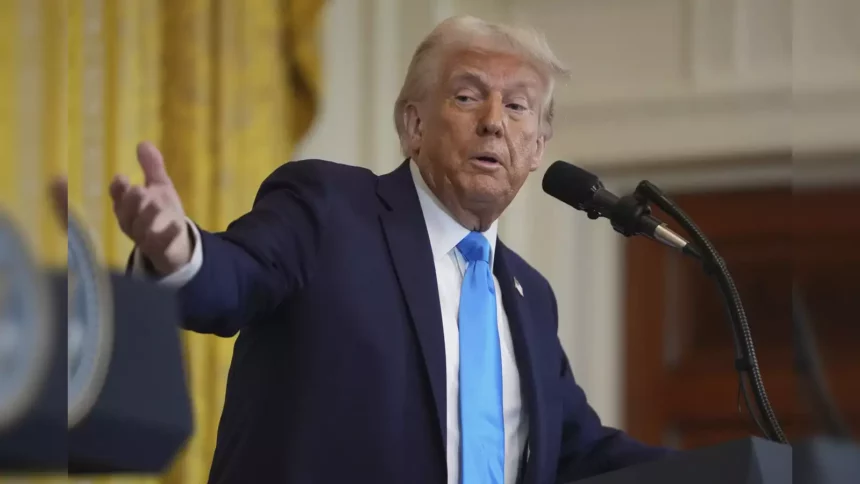
During a White House press conference with Israeli Prime Minister Benjamin Netanyahu on Tuesday, Donald Trump outlined his vision for the United States to “take over” Gaza and transform the war-torn region into what he described as the “Riviera of the Middle East.” He also floated the idea of resettling Palestinians in neighboring countries. The remarks provoked backlash from Arab American and Muslim communities, particularly those with ties to Gaza, who view any forced displacement—whether voluntary or involuntary—as an infringement on Palestinian sovereignty.
Bishara Bahbah, founder of Arab Americans for Donald Trump, stated that while Donald Trump may have meant well, his proposal angered many. Bishara Bahbah, who played a key role in mobilizing Arab American support for Donald Trump in Michigan and other battleground states, clarified that his group recently changed its name to Arab Americans for Peace, shifting its focus following Donald Trump’s election. Despite his criticism of the proposal, he maintained that Donald Trump remains the best option for preventing further escalation in Gaza.
Strategists believe Arab American and Muslim voters played a crucial role in Donald Trump’s victories in swing states, particularly Michigan, which has the largest concentration of Arabs, Muslims, and Palestinians in the United States. Many in the community had voted against Vice President Kamala Harris as a protest against the administration of Joseph Biden and its unwavering support for Israel during its military campaign in Gaza, which was launched in response to the October 7, 2023, attacks by Hamas. Some Donald Trump supporters even credited him with helping to orchestrate a ceasefire, despite the fact that it occurred before he took office.
Rabiul Chowdhury, co-founder of Muslims for Donald Trump, expressed frustration over the lack of a viable long-term solution for Gaza’s rebuilding but remained steadfast in his support for Donald Trump. He argued that equating Donald Trump’s rhetoric with the military support provided by Joseph Biden and Kamala Harris to Israel was misleading, stating that Donald Trump was still the better option.
The administration of Joseph Biden had stood by Israel throughout its military campaign, while also urging it to minimize civilian casualties and allow humanitarian aid into Gaza. Joseph Biden praised the ceasefire deal that took effect last month, claiming it closely mirrored a framework he had proposed the previous year.
Osama Siblani, publisher of Arab American News and a spokesperson for the Arab American Political Action Committee, criticized Donald Trump’s comments, likening them to the rhetoric of a “crazy man.” He argued that instead of supporting efforts to rebuild Gaza, Donald Trump was exploiting the suffering of Palestinians for political gain. However, he believed that most Arab American voters who either supported Donald Trump or withheld their votes from Kamala Harris would not regret their decision.
Yahya Basha, founder of Muslims for American Progress and an early supporter of Donald Trump in Michigan, said he was not surprised by Donald Trump’s comments, given earlier statements made by his son-in-law Jared Kushner about Gaza being a potential resort destination. However, he remained skeptical that the United States would follow through on such plans. Reflecting on his support for Donald Trump, he stated that he had no regrets and hoped to see positive developments in the future. He also pointed out that Donald Trump often makes provocative statements that do not translate into policy, citing past remarks about wanting to buy Greenland or make Canada the 51st state of the United States.
While Donald Trump’s proposal has drawn widespread condemnation from Arab American and Muslim leaders, it remains unclear how it will impact his political standing among these communities in the long run. Many still view him as the preferable alternative to Joseph Biden and Kamala Harris, even as they reject specific aspects of his foreign policy vision.