In the ever-evolving intersection of art, identity, and public opinion, celebrated composer A R Rahman found himself at the centre of a national conversation after remarks he made about perceived communal undercurrents in the Hindi film industry triggered sharp reactions. What began as a reflective comment on changing professional landscapes soon escalated into a polarising public debate, amplified by social media commentary and emotional responses. Amid criticism and misinterpretation, Rahman’s daughters stepped forward to express quiet but firm support for their father, reinforcing a message of respectful disagreement rather than personal attack, and reframing the controversy as a larger discussion on freedom of expression, artistic honesty, and the responsibilities of public discourse.
The remarks, the backlash, and the call for respectful disagreement
The controversy originated from an interview in which A R Rahman spoke about his journey in the Hindi film industry, reflecting on how professional opportunities and creative collaborations have evolved over time. In a candid moment, he alluded to what he perceived as communal tendencies influencing certain industry dynamics. Though Rahman did not name individuals or communities, the use of the word “communal” became the focal point of intense scrutiny. Some critics argued that the comment was vague and potentially divisive, while others interpreted it as a personal observation shaped by lived experience rather than a sweeping accusation.
As excerpts from the interview circulated online, reactions multiplied rapidly. Supporters defended Rahman’s right to articulate his perspective, especially given his decades-long contribution to Indian and global music. Detractors, however, questioned his intent and credibility, with sections of online discourse crossing into personal criticism. The speed and intensity of the backlash highlighted how quickly nuanced statements can be compressed into headline-sized controversies in the digital age.
In the midst of this escalating debate, noted Malayalam composer Kailas Menon offered a measured and impassioned response. Through a public message, Menon urged audiences to separate disagreement from disrespect. His central appeal, summarised in the phrase “disagree, don’t disgrace,” resonated widely. Menon emphasised that disagreement is a natural and healthy part of artistic and social dialogue, but reducing an artist’s decades of work and integrity to online hostility undermines meaningful conversation. He argued that Rahman’s statement should be engaged with critically, not weaponised for character assassination.
Menon’s intervention shifted the tone of the discussion for many observers. Rather than focusing solely on the semantics of Rahman’s remarks, the conversation expanded to include the quality of public discourse itself. Questions emerged about how artists are treated when they speak honestly about their experiences, and whether social media platforms encourage reflection or reward outrage. Menon’s words served as a reminder that critique can coexist with civility, even on sensitive topics involving identity and community.
Rahman himself responded with calm restraint. Acknowledging that his words may have been misunderstood, he reiterated his deep respect for India’s diversity and his gratitude for the opportunities the country has given him. He clarified that his remarks were rooted in personal feelings rather than an intention to generalise or accuse. By doing so, Rahman attempted to redirect attention from confrontation toward understanding, reaffirming his belief in dialogue over division.
Family solidarity, industry voices, and a wider reflection on artistic freedom
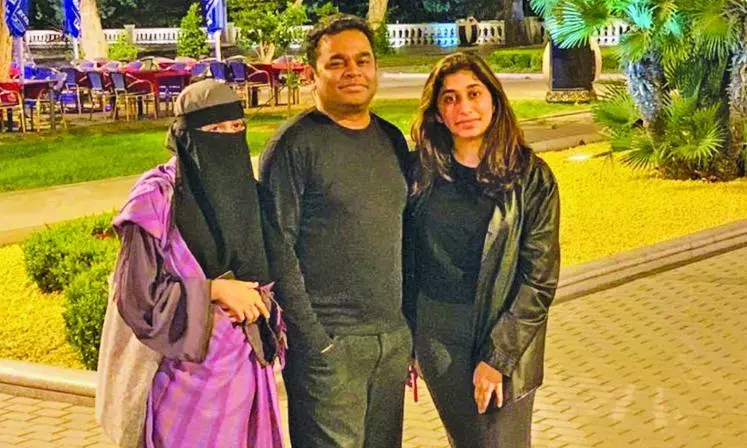
As the debate continued, the most poignant response came not through lengthy statements, but through quiet gestures of solidarity from Rahman’s daughters, Khatija Rahman and Raheema Rahman. By sharing Kailas Menon’s message on their social media platforms, they signalled clear support for both their father and the principle he stood for. Khatija’s expressive reaction underscored agreement with the sentiment that disagreement should never devolve into disrespect, while Raheema’s repost echoed the same stance without additional commentary. Together, their actions conveyed familial unity and an appeal for empathy.
Their support brought a deeply human dimension to the controversy. What might otherwise have remained an abstract debate about words and interpretations became a reminder that public criticism affects real people and families. For many observers, the daughters’ response reframed the issue as one not merely about an artist’s statement, but about how society treats those who speak from personal experience.
Other voices from the film industry also entered the conversation. Long-time collaborators and colleagues defended Rahman’s character and artistic integrity, suggesting that his remarks were taken out of context. They pointed to his consistent body of work, which celebrates cultural plurality and emotional universality, as evidence that he has never promoted division through his art. These industry responses highlighted the gap between an artist’s lifelong creative philosophy and the way isolated comments can be perceived when removed from broader context.
The episode sparked wider reflection on freedom of expression within creative industries. Artists often draw from personal observation, emotion, and lived reality, which may not always align neatly with public expectations. When such expressions intersect with sensitive social themes, the reaction can be swift and unforgiving. Rahman’s experience illustrated the delicate balance artists must navigate between honesty and interpretation, especially in an environment where every word is amplified and archived.
At the same time, the controversy prompted discussions about accountability. While many defended Rahman’s right to speak, others argued that influential figures must be mindful of language due to their reach and impact. This tension between expression and responsibility remains unresolved, reflecting broader societal debates rather than a single incident. What stood out, however, was the collective call from multiple quarters for nuance, patience, and respectful engagement.
Ultimately, the support from Rahman’s daughters, the intervention by Kailas Menon, and the measured responses from industry peers transformed the controversy into a moment of introspection. It underscored the importance of listening beyond soundbites, recognising the difference between critique and hostility, and preserving space for thoughtful disagreement. In an era defined by rapid reactions, the episode served as a reminder that art, conversation, and criticism all flourish best in an atmosphere of mutual respect.