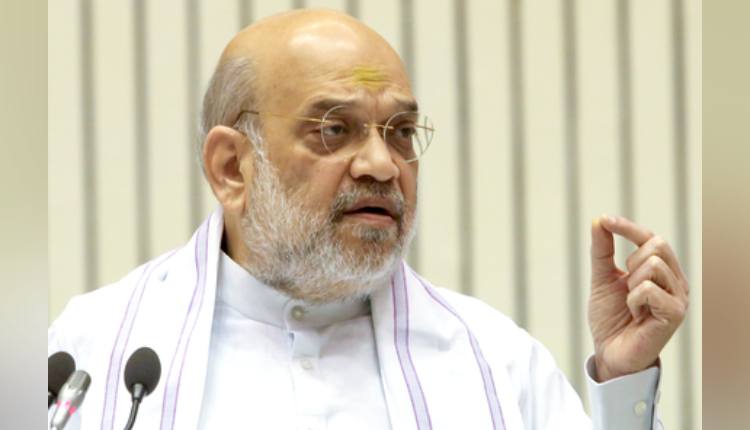
Union Home Minister Amit Shah will undertake a three-day visit to Bihar from February 25 to 27, during which he will chair what is being described as the first comprehensive high-level review focused specifically on demographic changes, infiltration concerns, and alleged illegal religious constructions in the sensitive Seemanchal region.
The visit signals a direct intervention by the Union government into issues that have long featured in administrative and political discussions surrounding Bihar’s border districts. According to official sources, the Home Minister will conduct an extensive review with District Magistrates and Superintendents of Police from seven districts of the Seemanchal belt — Kishanganj, Araria, Purnia, Katihar, Madhepura, Saharsa, and Supaul. These districts lie along or in close proximity to the India-Nepal and India-Bangladesh borders and are regarded as strategically sensitive due to cross-border movement patterns and complex internal security dynamics.
The meeting is expected to bring together senior civil and police officials for detailed presentations on ground-level developments. Sources indicate that discussions will cover demographic trends, inputs relating to alleged illegal infiltration, and the status of religious structures reportedly constructed without due authorisation. Intelligence assessments and field reports are likely to form part of the review framework.
Officials describe the initiative as unprecedented in its scope at the district level in Bihar. While internal security meetings are routinely held, this is believed to be the first time that the Union Home Minister will directly chair a focused review centred specifically on demographic and infiltration-related issues across multiple districts simultaneously.
Focus on district-level coordination and border vigilance
The Seemanchal region has historically remained under administrative watch due to its geographic positioning and socio-economic characteristics. Its proximity to international borders, especially the open border with Nepal, presents unique challenges in managing cross-border movement, surveillance, and law enforcement coordination. Population density, migration pressures, and infrastructure constraints have further added to governance complexities.
During the visit, Shah is expected to emphasise coordinated action between district administrations and law enforcement agencies. Clear directions may be issued to strengthen coordination mechanisms, improve intelligence-sharing processes, and ensure that local authorities maintain close oversight over developments that could have security implications.
The review is likely to involve data-driven assessments of demographic patterns and migration trends. Officials suggest that deliberations will focus on lawful enforcement measures within the framework of existing statutes. The presence of senior officers from the Ministry of Home Affairs underscores the importance attached to the exercise.
Accompanying the Home Minister are Union Home Secretary Govind Mohan and Intelligence Bureau Director Tapan Deka. Their participation indicates that intelligence-based inputs will play a central role in shaping the discussions. Field reports, surveillance assessments, and district-level administrative data are expected to be examined in detail.
In addition to meetings with district officials, Shah is scheduled to hold discussions with the Sashastra Seema Bal, the central armed police force tasked with guarding the India-Nepal border. The interaction is expected to centre on surveillance upgrades, operational coordination with state police, and strategies to curb illegal cross-border activities. Given Bihar’s extensive and porous border with Nepal, strengthening collaboration between central forces and local authorities remains a key operational priority.
The review may also address broader internal security concerns beyond infiltration, including organised crime networks, smuggling activities, and the potential exploitation of border vulnerabilities. Officials suggest that enhancing monitoring mechanisms and inter-agency coordination will form a major outcome of the deliberations.
Broader internal security assessment and governance implications
Beyond the Seemanchal-specific review, Shah’s itinerary includes multiple meetings on Bihar’s overall internal security preparedness. These discussions are expected to examine border management frameworks, intelligence coordination systems, and policing strategies across the state. Preparedness against extremist elements and organised criminal activities may also feature prominently.
The Seemanchal belt has periodically drawn attention due to concerns about alleged demographic shifts and cross-border infiltration. Political discourse around the region has intensified in recent years, often intersecting with broader debates on national security and governance. By chairing a comprehensive review at the district level, the Union government appears to be signalling heightened institutional focus on the region.
Officials indicate that the meetings will aim to translate security assessments into actionable administrative measures. This could include strengthening verification mechanisms, enhancing data analytics capabilities at the district level, and issuing time-bound directives for implementation. Emphasis is expected to be placed on lawful and procedural enforcement, ensuring that administrative steps align with constitutional and statutory provisions.
The Home Minister is also likely to review preparedness frameworks related to crisis management and coordinated response systems. Ensuring seamless communication between civil administration, state police, and central agencies remains critical in regions characterised by cross-border sensitivities.
The three-day visit may conclude with a structured review of action points and timelines. Follow-up mechanisms could involve periodic reporting from district authorities and enhanced oversight by central agencies. The involvement of top officials from the Ministry of Home Affairs suggests that the outcomes of the meetings may feed into broader national security planning.
Seemanchal’s socio-economic profile, marked by developmental challenges and migration pressures, adds layers of complexity to security management. Administrative interventions are often required to balance developmental needs with enforcement priorities. Officials suggest that governance-based solutions, supported by intelligence inputs, will be central to the approach discussed during the meetings.
Shah’s visit thus represents a significant engagement by the Union government in Bihar’s internal security architecture. By directly chairing district-level reviews and engaging with border security forces, the Home Minister is expected to reinforce institutional coordination and sharpen the focus on sensitive areas within the state.