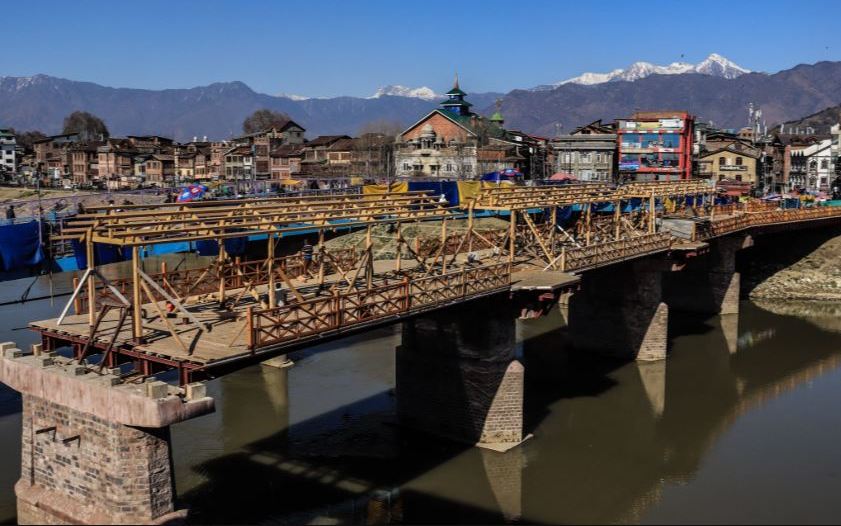
A historic landmark in Srinagar, the Amira Kadal wooden bridge, is undergoing a major transformation to enhance the city’s cultural appeal and tourism potential. The renovation, part of the Srinagar Smart City project, aims to restore the bridge’s traditional architectural beauty while incorporating modern amenities. Once completed, the bridge will serve as a pedestrian-friendly recreational space, enriching the aesthetic charm of the summer capital.
Located near Lal Chowk, the Amira Kadal wooden bridge spans the Jhelum River and is one of the oldest bridges in Srinagar. The ongoing Rs 7.17-crore redevelopment project involves retrofitting the existing piers and constructing a wooden walkway to preserve its historical significance. Inspired by other iconic bridges in the city, such as Rajbagh Wooden Bridge, Habba Kadal, and Zero Bridge, the revamped structure will blend traditional Kashmiri architecture with contemporary design elements.
Originally built in 1774 under Afghan governor Amir Khan Jawan Sher of the Durrani Empire, the bridge has long served as a vital connection for pedestrians. The reconstruction focuses on preserving its historic essence while making it more accessible and visually appealing. Unlike the adjacent Amira Kadal Bridge, which is used for vehicular traffic, the renovated wooden bridge will be exclusively for pedestrians, offering a safe and scenic route over the Jhelum.
An official from the Srinagar Smart City project highlighted the bridge’s new features, which include a 52-meter-long vending zone, gazebos, and plazas with seating arrangements at both ends. The design emphasizes a two-level flooring system to ensure durability and comfort. Additional amenities such as drinking water facilities and modern lighting installations will further enhance its usability and aesthetic appeal.
The project, nearing completion with 90% of the work already done, is expected to be opened to the public soon. As part of the city’s heritage tourism revival initiative, the new bridge will provide space for local artisans, food vendors, and craftspeople, fostering economic growth while preserving cultural traditions.
Local residents have welcomed the transformation, citing its potential to improve pedestrian movement and boost tourism. Many believe the new bridge will offer a scenic and safe alternative for foot traffic while enhancing the city’s visual appeal. Residents like Javed Ahmad appreciate the initiative, calling it a much-needed addition to Srinagar’s infrastructure.
With its unique blend of history and modernity, the revamped Amira Kadal Bridge is set to become a significant cultural and recreational landmark, further cementing Srinagar’s reputation as the ‘City of Bridges.’