A controversial ruling by the Allahabad High Court granting bail to a man accused of rape has sparked outrage. The court’s remark that the woman “herself invited trouble” has been strongly criticized by the Supreme Court, which deemed the comments objectionable and inappropriate.
What Did the Allahabad High Court Say?
In the case, the accused was granted bail with the court’s justification that the victim had “invited trouble” by choosing to go to the accused’s home after consuming alcohol. The incident, which took place on September 21 of the previous year, involved a postgraduate woman who claimed that the accused, also a student, had promised to drop her off at Noida but instead took her to a flat in Gurgaon, where she was allegedly raped. The accused, according to his defense, argued that the woman was an adult, living in a PG hostel, and had voluntarily consumed alcohol with her friends before choosing to go to his residence for rest.
The Allahabad High Court, in its ruling, said that even if the woman’s version of events was accepted as true, the accused’s actions did not amount to rape. Instead, the court suggested that the interaction might have been a “consensual relationship” between the two parties, further stating that the woman “invited trouble.”
This statement raised significant concerns about how rape cases are handled in courts, especially with the backdrop of ongoing discussions on women’s safety.
Supreme Court’s Strong Reaction
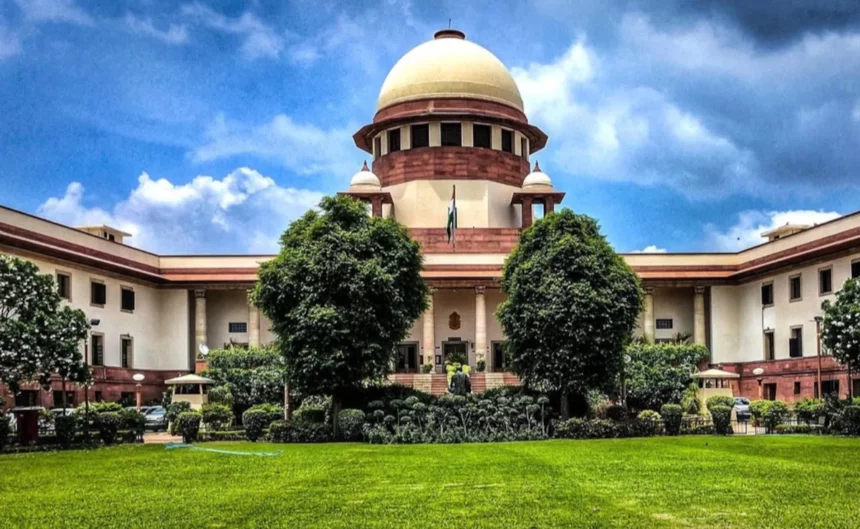
The Supreme Court swiftly took up the issue, expressing its dismay over the Allahabad High Court’s remarks. Justice BR Gavai, heading the bench, questioned the rationale behind such remarks, stressing that judges need to be cautious and sensitive when handling cases of such serious nature. The Supreme Court emphasized that comments like “invited trouble” could send the wrong message and harm the credibility of the judicial process.
Justice Gavai remarked, “One has to be very careful with these cases which are so sensitive.” The Supreme Court also raised the issue of how such remarks could affect public perception and the treatment of victims in future cases.
This isn’t the first time the Allahabad High Court’s rulings have drawn sharp criticism. The court had previously ruled that grabbing the victim’s breasts and attempting to pull her clothes didn’t constitute rape, but was still a form of sexual assault. This decision was later put on hold by the Supreme Court.
The Earlier Controversy Involving a POCSO Case
The Allahabad High Court had also made controversial remarks in a POCSO (Protection of Children from Sexual Offences) case. In 2023, it ruled that actions like grabbing a victim’s breasts and attempting to pull off her lower garment could not be classified as rape. However, the court acknowledged that it was a form of sexual assault.
The ruling was strongly criticized by legal experts, and the Supreme Court later intervened, calling the observations “shocking” and a display of a total lack of sensitivity.
What Does This Mean for Future Rulings?
The Supreme Court has now put a temporary hold on the Allahabad High Court’s latest order in the rape case, signaling the need for more careful and thoughtful judicial scrutiny in such sensitive matters. The Court’s intervention highlights the importance of upholding the dignity of victims and ensuring justice is served in an appropriate manner.
The Supreme Court’s comments serve as a reminder that the judiciary must be cautious when handling sensitive cases like rape, where public opinion and societal norms can influence outcomes. The case underscores the need for reforms in how rape cases are approached legally to ensure fairness and justice for all parties involved.