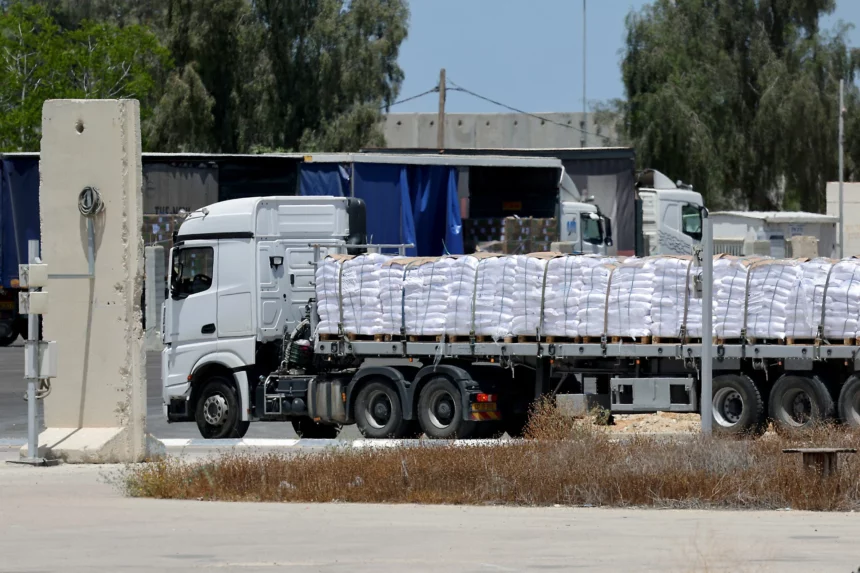
After weeks of blockade and mounting international pressure, Israel allowed 100 aid trucks carrying essential supplies such as flour, baby food, and medical equipment into the Gaza Strip. However, despite this breakthrough, UN officials report that the distribution of aid remains a major challenge, with much of the assistance yet to reach the people who urgently need it. Meanwhile, Israeli Prime Minister Benjamin Netanyahu expressed openness to a temporary ceasefire aimed at securing the return of hostages but insisted that military operations to control Gaza would continue.
Aid Delays and Distribution Challenges
Following an 11-week blockade, Israel’s military confirmed that a total of 98 aid trucks had entered Gaza over Monday and Tuesday. Yet, local aid workers and bakeries reported that these supplies had not reached soup kitchens, markets, or hospitals due to logistical and security issues. Antoine Renard, World Food Programme’s country director, emphasized that the aid trucks represent only a fraction of what is needed and so far, none of this aid has reached the Gaza population in a meaningful way. Thousands of tons of food and vital supplies remain stuck near crossing points, while around 25% of Gaza’s residents face severe food insecurity.
The delay has caused immense suffering, with residents like Mahmoud al-Haw sharing heartbreaking accounts of long waits for limited food rations. UN officials highlighted that security concerns at the Kerem Shalom crossing hub were a major bottleneck, though there was some hope that supplies might begin moving more freely following recent developments. Witnesses confirmed seeing aid trucks entering key areas in southern and central Gaza, signaling a cautious step toward easing the humanitarian crisis.
Ongoing Conflict and Political Standoff
Despite humanitarian efforts, violence continues unabated. Palestinian health authorities reported at least 50 deaths from airstrikes and tank fire across Gaza, while the Israeli military claimed to have targeted 115 locations linked to Hamas military infrastructure. Attempts to halt the fighting have repeatedly failed, with Hamas demanding a complete end to the war and Israeli withdrawal, while Israel insists Hamas must disarm and leave Gaza.
Prime Minister Netanyahu claimed that Hamas leader Mohammed Sinwar was likely killed in a recent Israeli airstrike and reiterated his call for Gaza’s total demilitarization and the exile of Hamas leaders. The conflict has drawn global condemnation, including from Western allies such as Britain and Canada, and signs of frustration from the United States, traditionally Israel’s strongest supporter. Within Israel, voices critical of the ongoing war have emerged, warning of the risk of the country becoming a “pariah state.” Opinion polls suggest strong public support for a ceasefire involving the return of hostages, though hardliners in the Israeli cabinet continue to press for a full military victory.
The war, triggered by the October 7 Hamas attack that killed over 1,200 Israelis and took hostages, has since led to over 53,600 Palestinian deaths, with widespread devastation and severe humanitarian distress in Gaza.