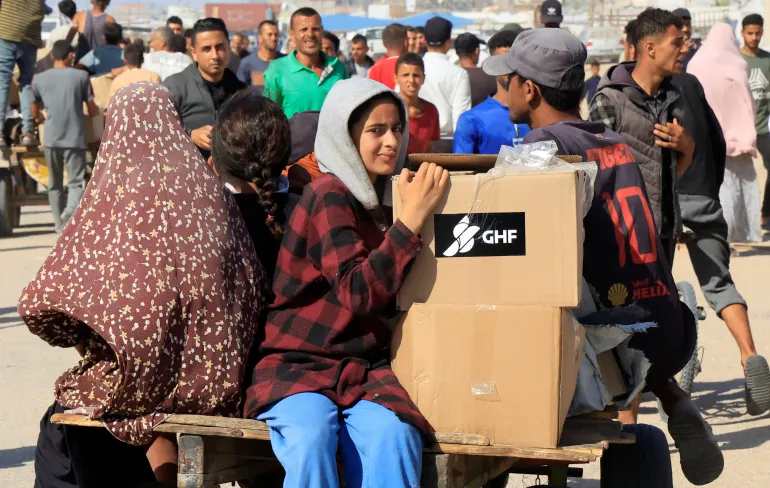
A U.S.-supported humanitarian group has resumed aid distribution at two sites in Gaza after temporarily halting operations due to deadly shootings near its facilities. The Gaza Humanitarian Foundation (GHF) delivered 26 truckloads of essential food supplies in the Rafah area, despite ongoing violence and serious safety risks to civilians and aid workers. This resumption comes amid increasing international concern over the severe humanitarian crisis caused by the Israeli blockade and military operations, which have pushed Gaza’s population toward famine and worsened malnutrition among children.
Humanitarian Crisis and Aid Challenges
The United Nations has repeatedly warned that Gaza’s 2.3 million residents face acute food shortages and widespread malnutrition, especially among young children. The U.N. aid chief highlighted the urgent need for therapeutic feeding and healthcare, warning that thousands of lives hang in the balance without immediate intervention. Despite these warnings, the security situation remains precarious. The GHF had paused aid deliveries after multiple Palestinians were shot dead near its Rafah distribution site over three consecutive days. The Israeli military stated that warning shots were fired to prevent Palestinians from approaching troops, which GHF maintains did not affect their safe aid distributions.
The Gaza Humanitarian Foundation operates with private U.S. security and logistics firms to transport aid inside Gaza, bypassing traditional relief agencies. This approach has drawn criticism from international humanitarian organizations and the U.N., who accuse the GHF of lacking neutrality and being too closely linked to Israeli military control. Many aid groups refuse to work with GHF due to concerns that its limited distribution points in central and southern Gaza restrict access and contribute to displacement.
Security and Political Tensions
The ongoing Israeli military campaign, which resumed after a fragile ceasefire with Hamas collapsed in March, has escalated violence across Gaza. Recent strikes killed at least 20 Palestinians, including journalists, intensifying fears over civilian safety. Israel announced recovering the bodies of two dual-nationality hostages, with dozens more still held captive.
Adding to the complexity, Israeli opposition politicians have accused the government of arming local Palestinian militias hostile to Hamas in areas under Israeli control, a claim partially confirmed by officials. This weaponization is seen as an attempt to secure aid deliveries but risks deepening internal divisions within Gaza.
The volatile mix of humanitarian need, military conflict, and political maneuvering underscores the urgent and complex challenges facing aid organizations working to support Gaza’s vulnerable population during this crisis.