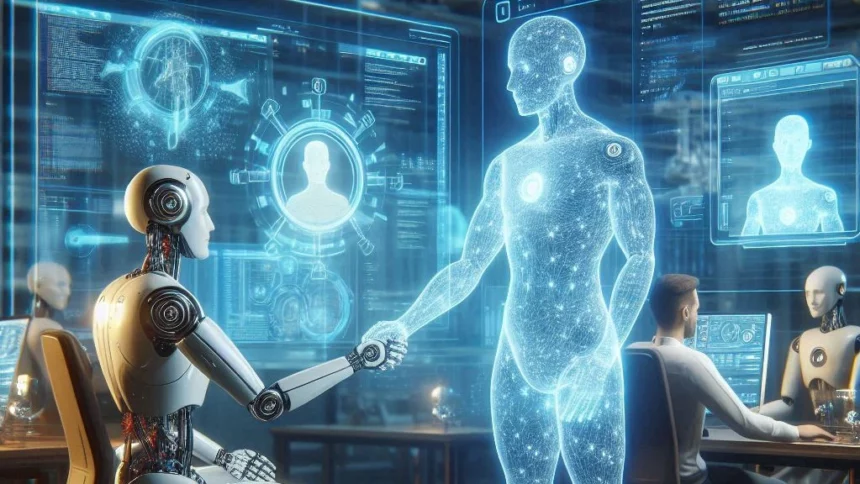
Every week, we witness new innovations in AI and robotics, but this week has seen some groundbreaking announcements that could redefine the future of AI. OpenAI, Google, Microsoft, Alibaba, DeepSeek, Mistral, and many other tech giants have launched new AI models, robots, and software upgrades. Let’s dive into these developments—what new AI models have emerged, how robotics is evolving, and why companies like Meta are investing billions in AI infrastructure.
Major Announcements in AI and Robotics
- DeepSeek’s Janus-Pro: The Chinese startup DeepSeek has launched an open-source image-generation model, Janus-Pro, which is outperforming DALL-E 3 and Stable Diffusion in benchmarks. This model generates high-quality and accurate images, making AI more accessible to developers and artists.
- OpenAI’s o3-mini: OpenAI has introduced its latest small AI model, o3-mini, which is 24% faster and 93% more cost-effective than previous models. This will make AI adoption easier and more widespread.
- Unitree’s Humanoid Robots: At China’s Spring Festival Gala, Unitree’s robots performed a synchronized folk dance, showcasing the power of AI-driven robotics.
- Google’s New AI Features: Google has released two experimental features that automate phone calls through AI, improving customer service interactions.
- Microsoft’s ‘Think Deeper’ Mode: This new feature, integrated with OpenAI’s o1 model in Copilot, enhances AI’s ability to analyze and structure complex answers logically.
Investments in AI Infrastructure
Meta plans to invest $65 billion in AI infrastructure by 2025, building an AI supercomputer with 1.3 million GPUs and 1GW of compute power. The Stargate project will further accelerate AI processing efficiency. Other major players like Alibaba, OpenAI, and Google are also intensifying their AI investments, making the global AI race more competitive.
The Future of Jobs in the AI Era
As AI and robotics expand, they pose a significant challenge to traditional jobs. Automation is expected to impact repetitive and predictable jobs first, affecting blue-collar workers, data entry professionals, and customer support representatives. To stay relevant, young professionals must focus on AI-resistant skills such as creativity, problem-solving, and leadership.
India’s Role in the AI Revolution
India is making rapid strides in AI through initiatives like Digital India and Make in India, which support AI research and startups. Organizations like ISRO, DRDO, and India’s fintech sector are leveraging AI for innovation. Reliance Jio and Tata Group are investing in AI and semiconductor manufacturing, positioning India as a key player in the global AI supply chain.
The AI and robotics revolution is not just about technology companies—it is reshaping economies and geopolitics. India has the potential to emerge as a leader in this AI race, provided it focuses on skill development and AI opportunities. Do you think India can become a global leader in AI and robotics? Share your thoughts and be a part of this technological revolution!
Watch full video here: https://www.youtube.com/watch?v=xg_w4nfEecQ