It has been a week since the ceasefire between India and Pakistan, following 100 hours of intense conflict. While tensions have eased, the truce remains delicate and uncertain.
India’s Operation Sindoor emerged as a decisive success. Pakistan suffered extensive damage — eight of its airbases were neutralised, several of its fighter jets were destroyed, and at least 50 of its soldiers lost their lives.
According to reports, it was Islamabad that reached out to New Delhi with a plea to halt the offensive. Pakistan also requested India to reconsider its decision to suspend the Indus Waters Treaty.
Post-ceasefire, both sides held military-level talks and agreed to avoid further firing and to consider troop reduction along the borders. However, Pakistan has already been accused of violations, with drone sightings reported across Indian border states.
Turkish Weapons Backed Pakistan’s Defence
As more details of Operation Sindoor emerge, it is becoming evident that Pakistan’s military response leaned heavily on weapons and drones sourced from China and Turkey.
This has triggered a wave of resentment in India against Ankara. Across sectors like tourism, education, aviation, and trade, Indians are now calling for a boycott of Turkey.
Prime Minister Narendra Modi made India’s new approach clear — that terrorism will no longer be tolerated. He outlined a “new normal”, saying, “Terror and talks cannot go together. Terror and trade cannot go together. Blood and water cannot flow together.” His visit to the Adampur airbase in Punjab underscored this message.
US Mediation and Pakistan’s Desperation
On April 22, just when the conflict seemed headed towards full-blown war, US President Donald Trump announced that both India and Pakistan had agreed to a ceasefire. But this came after Pakistan’s repeated appeals to India to stop the strikes — appeals seen by many as prompted by the immense damage inflicted by Indian forces.
Propaganda, Denial, and Admission
During Operation Sindoor, Pakistan’s propaganda machinery worked overtime, pushing false narratives. However, the truth soon caught up. Post-ceasefire, Islamabad admitted it had not captured any female Indian Air Force officer, confirmed damage to its fighter aircraft, and declared the Rahim Yar Khan airbase’s sole runway non-operational for a week. It also acknowledged the loss of military personnel. Ultimately, Pakistan was forced to accept its setbacks.
General Asim Munir’s Role and Disappearance
Pakistan Army Chief Asim Munir is believed to have played a key role in provoking the standoff. His controversial speech is being linked to the Pahalgam terror attack, which prompted India’s retaliatory Operation Sindoor. Strikingly, during the Indian strikes, Munir was reportedly untraceable — with speculation that he had taken shelter in a bunker.
Radiation Leak Rumours
Following India’s attacks, rumours of a radiation leak surfaced in Pakistan. The epicentre of these concerns was Kirana Hills, home to the Mushaf Air Force Base in Sargodha and allegedly a nuclear site. Although the rumours eventually subsided, they stirred panic and drew international attention.
Satellite Surveillance and Pakistan Links
Months before the April 22 attack, a spike in requests for high-resolution satellite images of Pahalgam and surrounding areas was observed, reportedly made to a satellite imaging firm. Later, questions were raised about this firm’s potential links to Pakistan — raising eyebrows about possible pre-attack reconnaissance.
Foreign Secretary Misri Faces Online Abuse
During the standoff, Foreign Secretary Vikram Misri was at the forefront of India’s diplomatic briefings. After the ceasefire, however, he and his family became the target of online trolling. While some voices expressed disappointment over the truce, several diplomats and former officials rallied in support of Misri, lauding his conduct during the crisis.
BrahMos Supersonic Missile Shines Again
The BrahMos supersonic cruise missile played a pivotal role in India’s offensive strategy. It targeted key Pakistani military assets deep across the border, reaffirming the power and precision of India’s indigenous defence capabilities. In April, India also dispatched a second batch of BrahMos missiles to the Philippines, with more countries — from Vietnam to Saudi Arabia — showing growing interest.
A New Chapter on the Indus Waters Treaty
Just ahead of Operation Sindoor, India had suspended the Indus Waters Treaty, delivering a strong message to Pakistan. Now, with the neighbour pleading for its reinstatement, the diplomatic fallout continues. Islamabad fears the move could have dire consequences for its people and economy.
Turkey and Azerbaijan Back Pakistan
While most nations stood by India, a few — including Turkey and Azerbaijan — chose to support Pakistan. Turkey not only issued favourable statements but also provided drones used by Pakistan in its attacks on India. Calls for boycotts of both countries are now gaining momentum in India, with possible economic consequences for both Ankara and Baku.
Trouble Mounts for Turkey’s Erdoğan
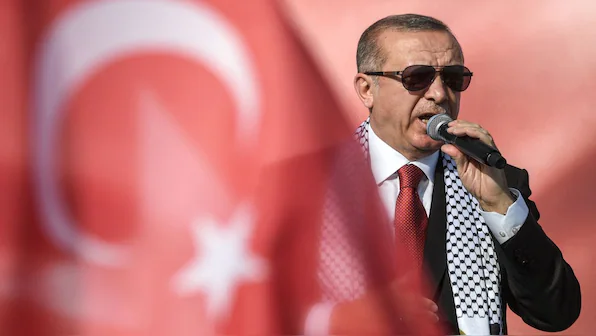
Turkey’s involvement in the India-Pakistan conflict has landed President Recep Tayyip Erdoğan in the spotlight. The Indian government recently cancelled the licence of a major Turkish aviation services company that operated at nine Indian airports, citing national interest.
Speculation is rife that Erdoğan’s daughter, Sümeyye, has a stake in this company. She is married to Selçuk Bayraktar — the chairman of the Turkish drone manufacturer BAYKAR, whose drones were supplied to Pakistan. This controversy is adding to Turkey’s growing list of diplomatic headaches.
The India-Pakistan conflict may have paused for now, but the diplomatic ripples are far from over. As India navigates this complex geopolitical web, Turkey’s role cannot be ignored. The time has come to reassess not just the enemy across the western border — but also those aiding it from beyond.