A powerful earthquake with a magnitude of 7.1 struck Tibet’s holy Shigatse city early Tuesday morning, resulting in at least 53 confirmed deaths and 62 injuries. The quake, which occurred around 09:00 local time (01:00 GMT), was followed by multiple aftershocks, according to data from the US Geological Survey. The tremor’s depth was recorded at 10 kilometers (six miles), causing widespread damage across the mountainous Tibet region.
The earthquake’s impact extended beyond Tibet, as tremors were also felt in neighboring Nepal and parts of India. Shigatse, a sacred city in Tibet, is home to the Panchen Lama, the second most significant spiritual figure in Tibetan Buddhism after the Dalai Lama. The region is known for its seismic activity, as it lies on a major geological fault line, making earthquakes relatively common.
One of the areas most affected by the tremor is Tingri county, located near the earthquake’s epicenter. Tingri is a popular base for climbers preparing to ascend Mount Everest. Tours to the Everest region, which were initially scheduled for Tuesday morning, were immediately canceled due to safety concerns, with local authorities closing the sightseeing area. Three visitors in the area were evacuated to an outdoor location for safety, according to tourism staff.
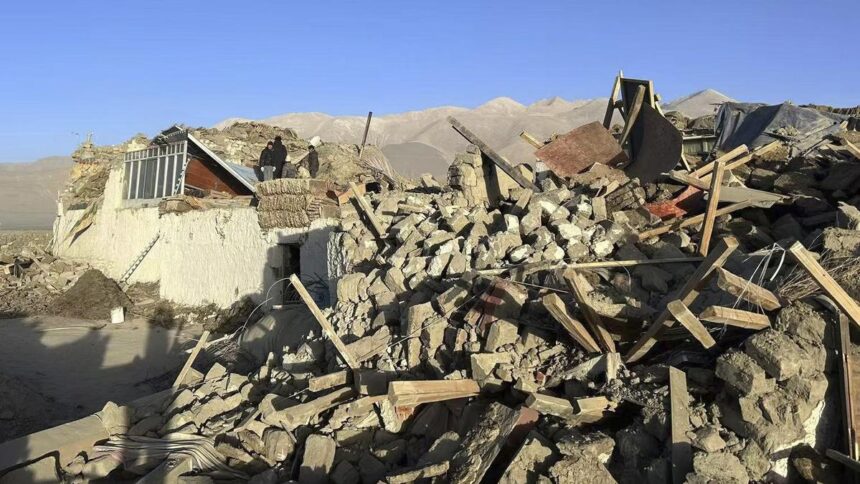
Chinese state media reported a slightly lower magnitude of 6.8 for the earthquake, but the damage was extensive, with more than 1,000 houses reported to have been damaged. The region has experienced several strong aftershocks since the initial quake. Jiang Haikun, a researcher at the China Earthquake Networks Center, spoke to CCTV, stating that while the possibility of another earthquake with a magnitude of around 5 remains, the likelihood of a larger tremor is low.
Since China annexed Tibet in the 1950s, the region has been under strict control, with limited access to media and internet services. Despite the government’s tight grip, social media posts from the affected area have surfaced, showing collapsed buildings and damaged infrastructure. One hotel resident in Shigatse described being violently shaken awake during the quake. He recounted grabbing his socks and rushing outside, where he saw helicopters circling above as the city began to recover from the tremors.
The earthquake also left the region without power and water, further complicating rescue and recovery operations. In response to the disaster, the Chinese government has launched an extensive rescue effort, deploying the air force and drones to the affected area, which sits at the base of Mount Everest. With temperatures below freezing, the situation remains dire for many residents. President Xi Jinping has ordered all-out search and rescue efforts to minimize casualties and ensure the relocation of those affected.
Tremors from the earthquake were also felt in Nepal, though no damage or casualties have been reported there, according to local officials in Nepal’s Namche region, located near Mount Everest. The region’s proximity to a major fault line between the Indian and Eurasian tectonic plates makes it prone to frequent seismic activity. In 2015, Nepal was struck by a devastating 7.8 magnitude earthquake, which killed nearly 9,000 people and injured more than 20,000.
As rescue operations continue, authorities are working to stabilize the affected areas and provide much-needed assistance to the injured and displaced. The earthquake has once again highlighted the seismic risks in the region, underscoring the need for continued vigilance and preparedness in the face of such natural disasters.