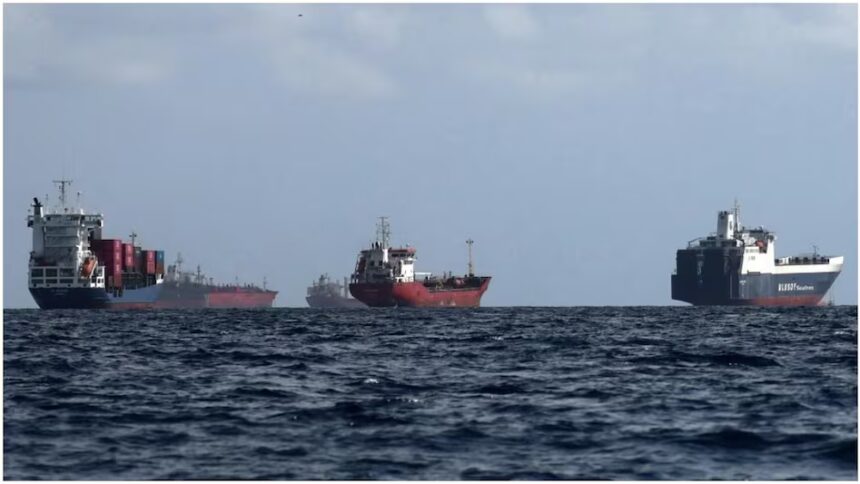
Dozens of Indian Ships Stuck Near Strait of Hormuz
At least 37 Indian-flagged ships carrying more than 1,100 seafarers are currently stranded near the strategic Strait of Hormuz as tensions escalate in West Asia.
The ships are located across the Persian Gulf and the Gulf of Oman, with some vessels waiting to load cargo while others are already fully loaded and awaiting safe movement.
The situation has triggered concern among maritime authorities and trade stakeholders, given the crucial role of the region in global oil and cargo transport.
Seafarers and Cargo Facing Uncertainty
According to reports, 1,109 Indian seafarers are currently onboard these vessels.
The ships are engaged in transporting cargo related to energy, trade, and essential supplies, making the situation significant for both maritime safety and supply chains.
The rising tensions between Iran and the alliance involving United States and Israel have created uncertainty in the region.
The Strait of Hormuz is one of the most important shipping lanes in the world, and any disruption can affect global trade and oil supply.
Shipowners’ Association Seeks Government Intervention
The Indian National Shipowners’ Association (INSA) confirmed the presence of Indian ships in the region and appealed to the Government of India for assistance.
In a statement, the association said several vessels were operating on both sides of the Strait of Hormuz.
Some ships are waiting for cargo instructions, while others are already carrying shipments.
The association requested the government to help ensure safe passage for Indian vessels through the strait.
It also urged authorities to coordinate with charterers so that ships currently awaiting instructions can receive clear guidance.
Strategic Importance of the Strait of Hormuz
The Strait of Hormuz is one of the world’s most critical maritime chokepoints.
A large portion of global oil and gas shipments pass through this narrow waterway connecting the Persian Gulf to the Arabian Sea.
Any disruption in the region can significantly impact global energy markets and shipping routes.
For India, the waterway is especially important because a major share of the country’s crude oil imports from West Asia passes through the strait.
Safety Concerns for Crew and Vessels
The presence of Indian ships in a tense geopolitical environment has raised concerns about the safety of both vessels and crew members.
Shipping companies and maritime bodies are closely monitoring developments in the region.
Ensuring the safety of seafarers remains a priority for shipping authorities.
Experts believe that coordinated diplomatic efforts and maritime security measures may be necessary to prevent disruption to shipping operations.
Impact on Global Trade and Energy Supply
The situation around the Strait of Hormuz is being closely watched by international markets.
If tensions escalate further, shipping delays and increased insurance costs could affect trade routes.
Higher shipping risks can also influence global oil prices and energy supply chains.
For India, which imports a large share of its energy requirements, stability in the region is critical.
Government Monitoring the Situation
Authorities in India are expected to closely monitor developments in the region and coordinate with international maritime bodies if necessary.
Government intervention could involve diplomatic engagement, maritime advisories, and safety coordination with shipping companies.
The priority remains ensuring the safe passage of Indian vessels and the protection of Indian seafarers in the region.
As tensions in West Asia continue, the situation around the Strait of Hormuz remains a key concern for global shipping and energy security