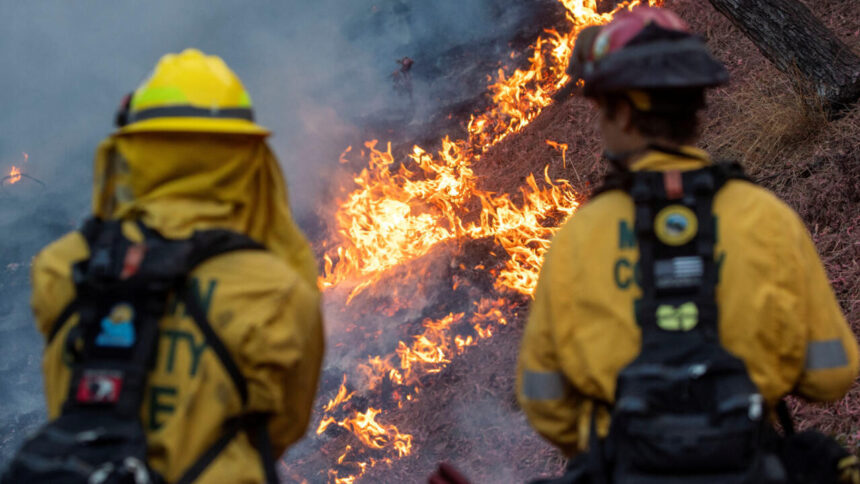
The devastating wildfires in and around Los Angeles have claimed at least 24 lives, leaving California grappling with one of the worst natural disasters in its history. California Governor Gavin Newsom described the crisis as potentially the most catastrophic event the state has ever witnessed. The fires, which have ravaged thousands of homes, continue to wreak havoc, with damages estimated between $135 billion and $150 billion.
The fires have been raging for six consecutive days, with two major zones of destruction identified as the Palisades Fire and the Eaton Fire. Over the weekend, eight casualties were reported in the Palisades Fire zone and 16 in the Eaton Fire zone. Among the deceased is former Australian child star Rory Sykes, known for his role in the British TV series Kiddy Kapers during the 1990s.
The Palisades Fire has consumed 23,600 acres of land and is currently only 11% contained, while the Eaton Fire has burned through 14,000 acres and is 15% contained. The intensity of the fires has been further amplified by strong winds, including reports of a fire tornado tearing through the San Fernando Valley, a rare and dangerous phenomenon caused by extreme heat and wind conditions.
The wildfires have displaced over 1 lakh residents, forcing them to evacuate their homes. More than 12,000 structures have been damaged or completely destroyed. The destruction has not spared prominent figures, with Hollywood actors like Anthony Hopkins, Paris Hilton, Mel Gibson, and Billy Crystal among those who have lost their homes, making the scenes eerily reminiscent of a disaster movie.
Firefighters battling the blazes experienced temporary relief over the weekend as the infamous Santa Ana winds, which had earlier reached hurricane-like speeds, subsided briefly. However, officials have warned that the winds are expected to pick up again from Sunday night through Wednesday, with gusts potentially reaching speeds of up to 96 km/h, adding to the firefighters’ challenges.
Governor Newsom, a member of outgoing President Joe Biden’s Democratic Party, has vowed to rebuild the affected areas and reimagine Los Angeles in the wake of this disaster. “We already have a team looking at reimagining L.A. 2.0,” he stated, expressing hope and resilience amidst the destruction.
Meanwhile, President-elect Donald Trump has criticized California’s handling of the crisis, accusing state officials of incompetence. In a scathing statement, Trump remarked, “This is one of the worst catastrophes in the history of our country. They just can’t put out the fires. What’s wrong with them?” His comments have added a political dimension to the unfolding tragedy.
Federal and local authorities have launched a massive investigation to determine the cause of the wildfires. While some wildfires are intentionally set, many are natural occurrences and play a role in the ecosystem’s life cycle. However, the scale and intensity of these fires have raised questions about climate change, land management, and fire preparedness in California.
As the flames continue to spread and residents brace for more destruction, the Los Angeles wildfires stand as a grim reminder of the destructive power of nature and the urgent need for comprehensive strategies to combat and mitigate such disasters in the future.