The third day of the 2025 winter session of Parliament opened with renewed political energy as the deadlock over the Special Intensive Revision (SIR) of the electoral roll finally ended following an agreement between the government and the Opposition to hold a full debate in the Lok Sabha next week. This breakthrough, reached late Tuesday evening, set the stage for a comparatively smoother legislative day even as the Opposition regrouped to plan fresh protests over the newly implemented labour codes. Meanwhile, Prime Minister Narendra Modi prepared to meet Bharatiya Janata Party lawmakers from West Bengal, a move viewed as politically significant amid a charged national atmosphere.
SIR Logjam Ends After Heated Standoff as Parliament Rebalances Agenda with Vande Mataram Debate
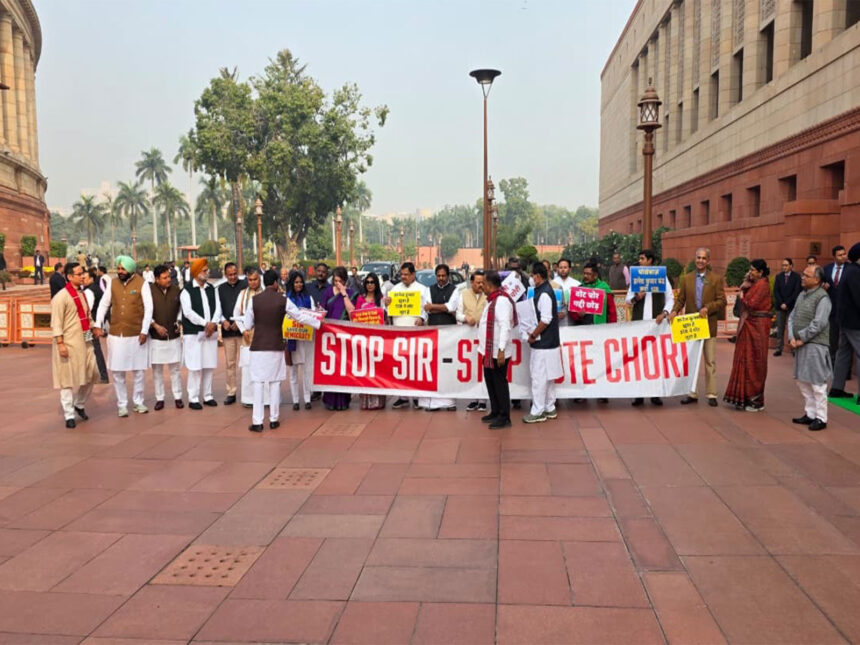
The winter session had been marred by repeated disruptions as Opposition parties demanded an immediate debate on the SIR, arguing that the matter was too significant to be delayed. Their agitation intensified when both the Lok Sabha and Rajya Sabha witnessed multiple adjournments on Tuesday, with MPs from the Congress, Trinamool Congress, and Dravida Munnetra Kazhagam storming the well of the House and raising slogans. The protests stemmed from long-standing concerns regarding the alleged irregularities during the electoral roll revision process, including the reported deaths of at least twenty-eight booth level officers (BLOs) involved in field duties during the revision exercise.
Speaker Om Birla convened an all-party meeting to quell the rising tensions. According to senior leaders present, Birla conveyed that both items—SIR and the special sitting to commemorate 150 years of the national song, Vande Mataram—would be taken up. The Speaker emphasised that the Vande Mataram discussion must be held first due to its historical relevance, a proposition that the Opposition initially rejected. Hours later, after further informal consultations led by Parliamentary Affairs Minister Kiren Rijiju, Opposition leaders agreed to the sequencing.
This compromise paved the way for a more orderly schedule, averting what many feared would become a prolonged legislative impasse. The winter session carries significant business, and the SIR debate is now expected to unfold with full participation next week, potentially becoming one of the most closely watched parliamentary discussions this year.
In Rajya Sabha, floor leaders met early on Wednesday to chart their approach to both discussions. As per parliamentary procedure, the upper house will hold its debates only after the Lok Sabha concludes its own deliberations. Opposition figures expressed guarded optimism, remarking that while consensus on the timing had been reached, the substance of the SIR discussion would determine whether the session continues smoothly or returns to turbulence.
The breakthrough also reflects a strategic recalibration among Opposition parties that form the INDIA bloc. Leaders including Mallikarjun Kharge, Rahul Gandhi and other senior MPs met ahead of the session to coordinate their stance, especially following the government’s acceptance of their core demand. The INDIA bloc, despite its internal variations, appeared unified in pushing for accountability on the SIR process, a theme that may intensify as the debate approaches.
Meanwhile, Prime Minister Narendra Modi is scheduled to meet MPs from West Bengal belonging to the BJP in both the Lok Sabha and Rajya Sabha. The meeting assumes relevance within the context of the party’s larger political plans for the state, especially as the winter session continues to unfold against a backdrop of governance debates and national narratives that have wide regional implications.
Another key agenda item in the Lok Sabha is the Central Excise (Amendment) Bill, 2025, slated to be introduced for consideration and passing. Finance Minister Nirmala Sitharaman is expected to push the bill, which proposes increasing excise duties and cess on tobacco products. This amendment to the Central Excise Act, 1944, forms part of the government’s wider public-health-oriented fiscal strategy. Political observers believe the bill may evoke varied responses from the Opposition, though not to the disruptive extent seen during the SIR confrontations.
Opposition Launches Fresh Agitation Over Labour Codes as Government Accuses MPs of Wasting Two Days of Session
With the SIR dispute temporarily defused, the Opposition shifted its focus to another contentious set of reforms—the four labour codes that came into effect on November 21. Congress MP Manickam Tagore announced that Opposition parties would stage demonstrations outside Parliament beginning Wednesday morning, asserting that the labour codes jeopardised worker rights, weakened protective measures, and lacked adequate consultative processes.
The labour codes—composed of the Code on Wages (2019), the Industrial Relations Code (2020), the Code on Social Security (2020), and the Occupational Safety, Health and Working Conditions Code (2020)—represent one of the most sweeping overhauls of India’s labour regulatory framework. The government has promoted the reforms as progressive measures promising timely wages, expanded job opportunities for women in night shifts, and crucial social security access for gig and platform workers. Critics from the Opposition and labour unions dispute these claims, insisting that the codes dilute workers’ bargaining power, undermine collective rights, and risk deepening vulnerabilities in India’s vast informal sector.
Senior leaders from the Congress and the Left argued that several provisions of the new laws could lead to job insecurity, arbitrary layoffs, and erosion of protections previously guaranteed to workers. They contended that the government rushed their implementation without sufficient deliberation or parliamentary scrutiny, a charge that aligns with broader Opposition complaints regarding legislative processes in recent years.
BJP MP Dinesh Sharma responded by accusing the Opposition of deliberately stalling parliamentary business. He criticised them for “wasting two days of the winter session” by disrupting proceedings over the SIR debate even after, according to him, consensus had already been reached. Sharma claimed that the Opposition’s conduct amounted to “political theatre” rather than substantive legislative engagement.
Despite the acrimony, Wednesday’s session promised to proceed more smoothly inside the chambers, even as protests outside Parliament began to gather momentum. With competing narratives being shaped by the two sides, analysts expect the labour codes to become a defining flashpoint of the winter session, with political, economic and social implications extending well beyond the corridors of Parliament.
Rajya Sabha leaders also prepared to align their strategies for the upcoming discussions on both SIR and Vande Mataram, though the legislative tempo in the upper house will largely depend on the lower house’s pace. Given the steady build-up of political tensions, the winter session appears poised to become a stage where procedural negotiations, ideological disputes and regional political strategies intersect.
Amid all this, the winter session continues to carry a packed legislative agenda. The government has listed fourteen major items, including important amendment bills relating to excise duties, security frameworks, and administrative reforms. Parliamentary Affairs Minister Kiren Rijiju has emphasised that the government stands fully prepared to discuss any issue permitted under House rules, reiterating that constructive cooperation is essential to ensuring that the session delivers meaningful outcomes.
Within this dynamic and occasionally tense environment, the SIR breakthrough stands out as a rare moment of consensus forged through behind-the-scenes negotiation and parliamentary diplomacy. Whether similar cooperation will emerge regarding labour reforms, fiscal legislation or other contentious proposals is a question that will shape the tone of the remaining days of the winter session.