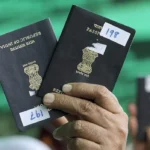
The upcoming Canadian federal elections are not only important for Canadians but have significant implications for Indian students as well. On April 28, Canada will vote on whether to continue with the Liberal Party under Prime Minister Mark Carney or hand over the reins to opposition leader Pierre Poilievre and the Conservative Party. The outcome of the election will impact various sectors, particularly immigration policies, which are of great interest to Indian students planning to study abroad.
Indian Students and Canada’s Immigration Policies
Over the past year, the number of Indian students heading to Canada has dropped significantly. This decrease is primarily due to tougher immigration rules, the real estate crisis, and deteriorating diplomatic ties between New Delhi and Ottawa. Indian students, who have traditionally viewed Canada as one of the top destinations for higher education, are now more hesitant to pursue opportunities there. Data from the Bureau of Immigration shows that the number of Indians studying in Canada dropped by 41%, from 233,532 in 2023 to 137,608 in 2024.
The decline in numbers is tied to several factors, including the diplomatic tensions between India and Canada. The situation worsened after former Canadian Prime Minister Justin Trudeau accused India of involvement in the killing of Sikh separatist Hardeep Singh Nijjar in September 2023. This led to retaliatory measures, including India’s withdrawal of security protection for Canadian diplomats and a recall of 41 Canadian diplomats from India.
Amid these tensions, Canada also tightened its visa and student permit rules. The Immigration, Refugees and Citizenship Canada (IRCC) began to grant more authority to officials to cancel study and work permits under certain circumstances, further discouraging Indian students from coming to Canada.
The Impact of Canada’s Immigration Policies on Indian Students
For many Indian students, immigration policies directly influence their decision to study abroad. India is home to a large population of STEM (Science, Technology, Engineering, and Mathematics) students, as well as students pursuing agriculture, healthcare, trade, and transport courses. Many of these programs include co-op or internship opportunities, which provide practical experience that is highly valued by students.
However, despite these opportunities, the recent changes in Canada’s visa policies and the deterioration of diplomatic relations have made students reconsider their options. Canada remains one of the top destinations for Indian students, along with the US, UK, and Australia, but interest has been waning. Study abroad consultants in Punjab have reported that fewer students are now choosing Canada as their preferred destination due to stricter regulations and the uncertainty surrounding visa approvals.
The Effect of US Immigration Policies
While Canada’s immigration policies have become more stringent, the policies in the United States under former President Donald Trump have also made it difficult for international students to secure long-term visas. The possible scrapping of the Optional Practical Training (OPT) benefit in the US could push more Indian students to choose Canada once again, as it remains a more affordable alternative. The tuition fees in the US for top-ranked universities can exceed $70,000 per year, compared to CAD 60,000 in Canada, making Canada a more economical choice for many students.
Mark Carney vs Pierre Poilievre: The Debate Over Immigration
Mark Carney, who is seeking another term as Prime Minister, is associated with the Century Initiative, which aims to boost Canada’s population to 100 million by 2100. Carney has not explicitly stated his position on reducing immigration numbers, but his connections to the Century Initiative suggest that he may continue with policies that attract immigrants, including students from India.
On the other hand, Pierre Poilievre, leader of the Conservative Party, has been critical of Canada’s immigration policies. He has stated that any changes to immigration should be based on the country’s capacity to provide adequate housing, healthcare, and jobs. Poilievre has also expressed opposition to the Temporary Foreign Worker Program, stating that he would reduce the number of foreign workers and foreign students, emphasizing the need to prioritize Canadian citizens.
What Indian Students Can Expect from the Election Outcome
For Indian students, the election results could mean significant changes in the country’s immigration policies. Carney’s potential victory could mean a continuation of the current policies that are more favorable to immigrants, including students, while Poilievre’s approach could lead to stricter immigration controls. Indian students are particularly interested in how these changes could impact their ability to study and work in Canada, as well as the ease of obtaining student visas.
While both parties have expressed their commitment to improving Canada’s immigration system, the direction of that improvement will have a lasting impact on Indian students who view Canada as a gateway to better education and career opportunities.
Canada’s Geopolitical Importance for India’s Students
For Indian students, Canada has always been a beacon of educational excellence and a source of opportunities. However, with the evolving geopolitical situation and changes in immigration policies, Indian students are now more cautious. The outcome of the Canadian election will be crucial in determining whether Canada remains a preferred destination for higher education or whether students will turn to other countries with more favorable policies.
Indian students are closely monitoring Canada’s federal election results, as the outcome will directly affect their prospects for studying and working in the country. The direction that Canada’s immigration policies take, particularly regarding foreign students, will determine whether Canada can maintain its status as a top destination for Indian students or if it will lose ground to other countries that offer more attractive opportunities.