In a historic shift in media engagement, the Donald Trump administration has announced a groundbreaking move to allocate seats in the White House press briefing room to representatives from the burgeoning world of “new media.” This includes podcasters, social media influencers, and content creators who have significantly reshaped how millions of Americans, particularly young people, consume news. The decision marks a significant step toward providing representation for groups that have traditionally been excluded from the briefing room, which has long been reserved for journalists from mainstream media outlets.
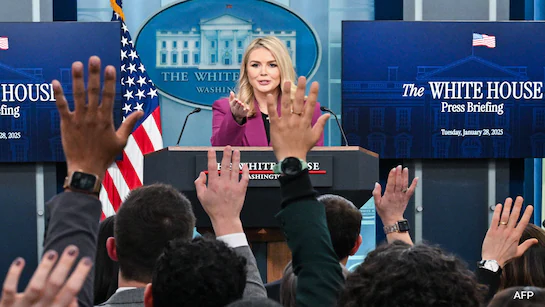
The announcement was made by Press Secretary Karoline Leavitt during her first daily press briefing, where she revealed the administration’s intention to open up the press room to those who represent the modern, digital-first news landscape. Leavitt, who is just 27 years old, is the youngest press secretary in White House history, and her leadership has already brought a new energy to the administration’s media relations.
“Millions of Americans, especially young people, have shifted away from traditional television and newspapers, choosing instead to consume news through podcasts, blogs, social media, and other independent platforms,” Leavitt said, underscoring the evolving media habits of the American public. “It is crucial for our team to share President Donald Trump’s message widely and adapt the White House to the evolving media landscape of 2025,” she added.
As part of this initiative, Leavitt invited independent journalists, podcasters, social media influencers, and content creators to apply for White House press credentials via a newly launched website, whitehouse.gov/newmedia. The move is part of an ongoing effort to democratize access to information and ensure that the White House engages with all sectors of media, not just the traditional ones.
Leavitt also introduced a major change to the seating arrangements in the press briefing room. Traditionally, a front-row seat has been reserved for the press secretary’s staff. However, this seat will now be designated as the “New Media Seat,” exclusively for representatives of the new media outlets. Applications for this seat will be reviewed by Leavitt’s team, and credentials will be granted to those who meet the necessary criteria and pass the U.S. Secret Service’s security requirements.
In her briefing, Leavitt addressed questions from new media representatives, including outlets that have long ranked among the most-viewed news websites in the country, but until now, had never been allowed a seat in the briefing room. The decision to open up the space to these emerging voices was a direct response to the changing nature of news consumption in the United States, and Leavitt reiterated the administration’s commitment to upholding the First Amendment. “It’s a fact that Americans, especially young people, are consuming news from a variety of platforms. As the youngest press secretary in history, thanks to President Donald Trump, I take great pride in opening this room to new media voices to ensure the president’s message reaches as many Americans as possible,” she said.
Leavitt also took the opportunity to emphasize the administration’s commitment to reinstating press passes for journalists who had been denied credentials during the previous administration. She announced plans to restore press passes to 440 journalists whose credentials were revoked, a move that further underscores the administration’s dedication to upholding the principles of the First Amendment. “This White House strongly believes in the First Amendment, which is why we are working diligently to restore press passes to journalists who were wrongly denied access,” Leavitt explained.
The new initiative is expected to reshape the way the White House interacts with the media and represents a major shift in how news is disseminated to the American public. By providing a platform for new media outlets to have a direct presence in the press briefing room, the Donald Trump administration is embracing the rapidly changing digital media landscape and acknowledging the growing influence of content creators and influencers.
Leavitt’s announcement was met with enthusiasm by many new media figures, including TikTok creators, bloggers, and podcasters, who have long sought greater recognition in mainstream media spaces. The initiative is expected to increase the diversity of voices in the White House press room and ensure that news consumers have access to a broader range of perspectives. It also reflects the growing importance of independent platforms in shaping public discourse, particularly among younger generations who have moved away from traditional forms of media.
The move to invite new media representatives into the White House press room is a significant step in the ongoing evolution of media coverage of political events. As the media landscape continues to shift and diversify, the Donald Trump administration’s decision to embrace new forms of journalism highlights the increasing importance of digital and independent platforms in the dissemination of news and information. Through this initiative, the White House is opening the doors to a new era of media engagement, one that reflects the changing ways in which Americans consume and engage with news.