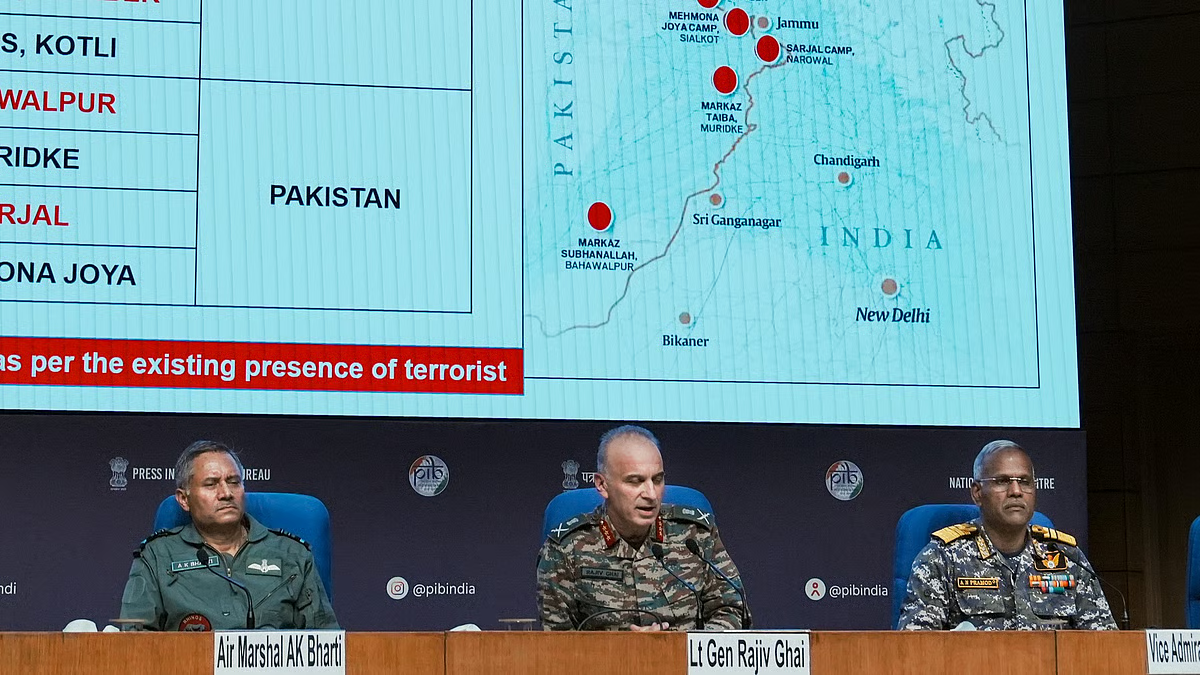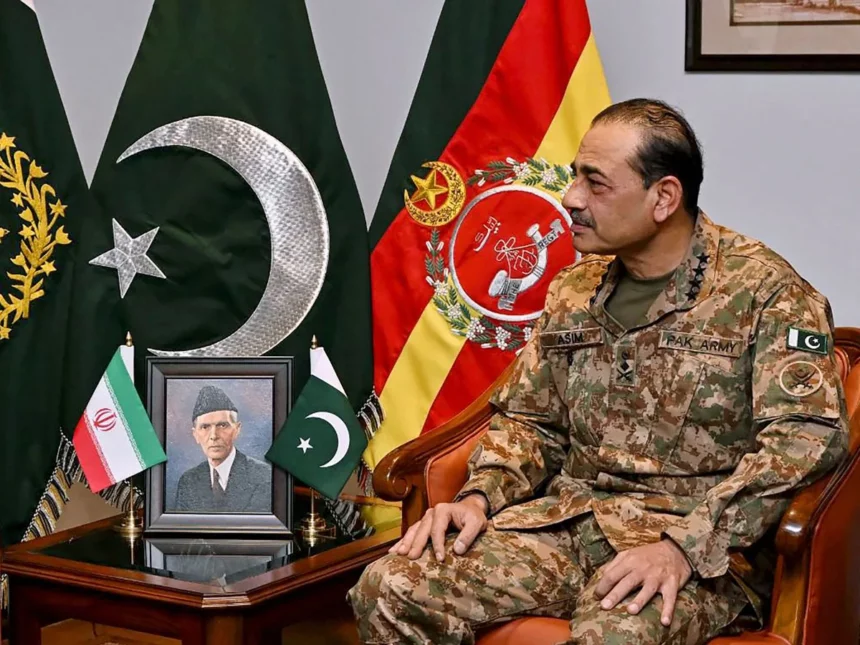
As tensions continue to rise between India and Pakistan, the whereabouts of Pakistan’s Army Chief General Asim Munir have become a point of speculation. Following India’s precision strikes under Operation Sindoor on Pakistan and Pakistan-occupied Kashmir (PoK) on May 7, Pakistan retaliated with missile and drone attacks. In response to this escalation, Indian forces launched a counterattack on May 10, targeting several key military airbases in Pakistan, including the significant Nur Ali Khan airbase located near Pakistan’s military headquarters in Rawalpindi.
According to various reports, the intensity of India’s strikes prompted General Munir to take shelter in a fortified bunker within the General Headquarters (GHQ) complex in Rawalpindi. This has fueled widespread speculation about his absence from the public eye. Furthermore, reports suggest that Munir’s family was moved out of Pakistan using diplomatic passports following the attack, further adding to the rumors regarding his current position.
Munir’s Absence Sparks Rumors
The rumors surrounding General Munir’s whereabouts have been circulating for some time. The speculation peaked shortly after the Pahalgam terror attack on April 22, when some reports claimed that Munir was “missing in action” or had fled Pakistan. The hashtag #MunirOut gained traction on social media as users questioned his sudden disappearance. This sparked a frenzy of rumors about Munir hiding in a bunker in Rawalpindi.
In an attempt to quell these speculations, the Pakistan government released a photo of Munir attending a public event with Prime Minister Shehbaz Sharif in Abbottabad on April 26. However, despite these efforts, the mystery surrounding Munir’s whereabouts persists, especially after the recent attacks and the reports of him being relocated to a bunker during India’s strikes.
Who is General Asim Munir?
General Asim Munir assumed the role of Pakistan’s Army Chief in 2022, following a career marked by rapid advancements and significant military positions. Unlike many of his predecessors, Munir did not graduate from the prestigious Pakistan Military Academy but instead entered the army through the Officers’ Training School. He quickly rose through the ranks, becoming the director of military intelligence in 2016, and later, the head of Pakistan’s Inter-Services Intelligence (ISI) in 2018.
Munir’s tenure as ISI chief was marked by a turbulent relationship with then-Prime Minister Imran Khan, which ultimately led to his removal in 2019. However, following a reshuffle in Pakistan’s military leadership, Prime Minister Shehbaz Sharif appointed Munir as Army Chief in 2022.
Known for his hardline views on India, Munir has been an outspoken advocate for the “two-nation theory,” which posits that Muslims in Pakistan and Hindus in India cannot coexist within the same nation. He has been particularly vocal about Kashmir, calling it Pakistan’s “jugular vein” and reaffirming that the issue remains central to Pakistan’s foreign policy.
What Does Munir’s Absence Mean?
General Munir’s absence during such a critical time could indicate more than just a physical hiding; it could be a symbolic gesture of Pakistan’s vulnerability amid heightened tensions with India. Munir has historically been at the forefront of Pakistan’s military decisions, particularly in terms of its approach to India. His absence raises questions about the military leadership’s stability and its readiness to confront India, especially considering the current standoff.
India’s strong response, particularly with the use of advanced airstrikes and precision-guided munitions during Operation Sindoor, has sent a clear message of deterrence. This could have played a role in influencing Pakistan’s military strategy and perhaps even in the movements of its senior leadership.
With the potential of Pakistan’s military operations becoming increasingly unpredictable, the question remains whether the current leadership under Munir will continue to pursue a policy of aggression, particularly through proxy warfare, or whether India’s determined actions will deter further escalation.
General Asim Munir’s current whereabouts and his reaction to India’s strikes shed light on the fragility of Pakistan’s military leadership during heightened tensions with India. His absence has sparked significant speculation, especially considering the strategic importance of his role in overseeing military decisions. As the situation continues to unfold, it remains to be seen how this will impact Pakistan’s military strategy and whether India’s actions will lead to a recalibration of Pakistan’s approach.