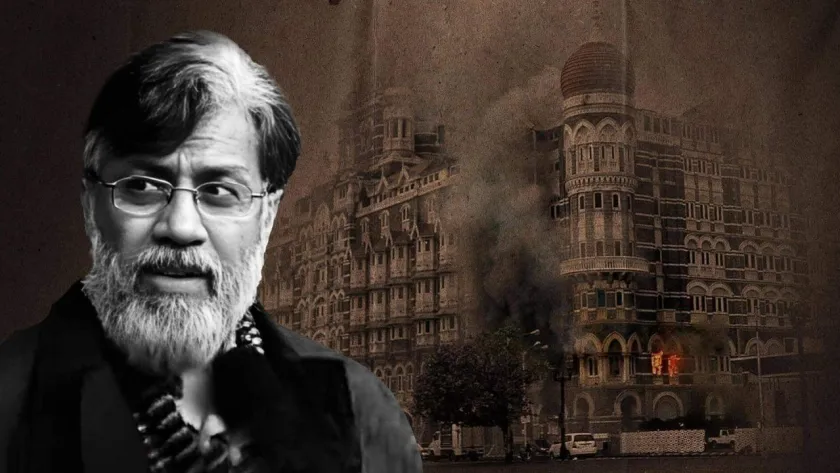
The United States Supreme Court has rejected an emergency application filed by Tahawwur Rana, an accused in the 26/11 Mumbai terror attacks, challenging his extradition to India. Tahawwur Rana, a Canadian national of Pakistani origin, had sought to block his extradition, arguing that he would face torture in India due to his religious and ethnic background.
Tahawwur Rana’s petition, filed with the Associate Justice of the Supreme Court of the United States and the Circuit Justice for the Ninth Circuit, contended that his extradition would violate US law and the United Nations Convention Against Torture. He claimed that there were substantial grounds to believe he would be at risk of torture if sent to India. The petition further emphasized that the danger was heightened because he is a Muslim of Pakistani origin accused of involvement in the Mumbai attacks.
Additionally, Tahawwur Rana cited severe medical conditions as another reason to halt his extradition. He claimed that being detained in Indian facilities would effectively be a death sentence, referencing medical records from July 2024 that document multiple critical health issues. These include past heart attacks, Parkinson’s disease with cognitive decline, a mass suggestive of bladder cancer, stage 3 chronic kidney disease, chronic asthma, and multiple COVID-19 infections. His legal appeal stated that without a stay, there would be no opportunity for judicial review, and his extradition could lead to his death.
The rejection of Tahawwur Rana’s plea comes just weeks after Indian Prime Minister Narendra Modi met with former US President Donald Trump in Washington, where the latter had announced that Tahawwur Rana’s extradition was imminent. Trump had referred to him as “very evil” and stated that he would face justice in India for his role in the 26/11 attacks.
The 2008 Mumbai attacks were among the deadliest terror incidents in India’s history, with terrorists targeting eight locations across south Mumbai. The assault, which lasted from November 26 to November 29, resulted in the deaths of 166 people. Tahawwur Rana, now 64 years old, is known to have been associated with Pakistani-American terrorist David Coleman Headley, one of the key conspirators behind the attacks.
With the Supreme Court’s decision, legal obstacles to Tahawwur Rana’s extradition have been largely removed, setting the stage for his transfer to Indian authorities, where he is expected to face trial for his alleged involvement in the terror plot.