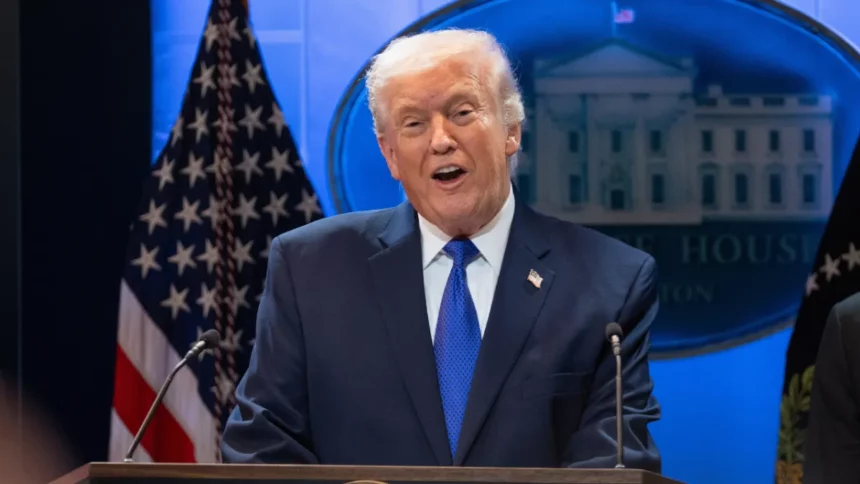
US President Donald Trump has threatened to impose even higher tariffs on countries that attempt to “play games” with existing trade agreements, following a Supreme Court ruling that blocked many of the sweeping global tariffs his administration had imposed last year, triggering uncertainty across international trade negotiations.
Supreme Court ruling reshapes tariff landscape and global response
The controversy erupted after the US Supreme Court struck down a significant portion of the broad tariffs imposed by President Trump last year. The ruling invalidated many of the global levies that had been central to his administration’s trade strategy, creating immediate questions about the legal status of existing trade arrangements and retaliatory measures negotiated in response to those tariffs.
In the wake of the decision, governments across the world began reassessing their positions. Many countries had entered into negotiations or adjusted trade policies in response to the earlier tariffs. With the legal basis for many of those levies now removed, uncertainty has emerged about whether prior concessions, agreements, or countermeasures would still stand.
The European Union announced that it would suspend ratification of a trade deal struck during the summer, citing the need to evaluate the implications of the court’s decision. The move signaled that Brussels was reconsidering its commitments in light of the altered legal and economic environment.
India also indicated that it would defer previously scheduled talks aimed at finalizing a recent agreement. Officials suggested that more clarity was needed regarding the future of US tariff policy before proceeding further. The pause reflected broader caution among trading partners who are weighing how the Supreme Court’s intervention could reshape bilateral and multilateral trade frameworks.
The ruling effectively removed a major pressure tool that had shaped negotiations over the past year. Many countries had adjusted market access terms, regulatory concessions, or tariff commitments under the assumption that the US tariffs would remain in force. With that foundation disrupted, governments are recalculating their strategic positions.
Trump escalates rhetoric, warns of tougher tariffs ahead
President Trump responded sharply to signs that countries might revisit or delay commitments made during earlier trade negotiations. Writing on his social media platform Truth Social, he issued a pointed warning to governments considering what he characterized as exploiting the court’s ruling.
Trump stated that any country seeking to “play games” with what he described as a “ridiculous” Supreme Court decision would face consequences. He singled out nations that he claimed had “ripped off” the United States for years or even decades, asserting that they would be met with tariffs much higher and harsher than those recently agreed upon.
His message concluded with a cautionary note: “Buyer beware.” The phrase underscored his administration’s willingness to escalate trade measures if it perceives partners as reneging on commitments.
The President’s remarks suggest that despite the judicial setback, he intends to maintain a confrontational posture in trade policy. While the Supreme Court limited certain tariff authorities, the executive branch retains other statutory mechanisms that could potentially be used to impose new or revised trade measures.
Trump’s warning appears aimed at preserving leverage in ongoing negotiations. By signaling readiness to impose even higher tariffs, he is attempting to deter countries from reversing concessions secured during earlier talks. The rhetoric reflects a continuation of his long-standing approach of using tariff threats as a negotiating strategy.
However, the situation has injected fresh uncertainty into global markets. Investors and policymakers alike are monitoring how the administration might respond legislatively or through alternative trade authorities. The potential for renewed tariff escalation raises concerns about volatility in supply chains, commodity markets, and cross-border investment flows.
For now, countries are proceeding cautiously, seeking clarity on the future direction of US trade policy. The Supreme Court ruling has reshaped the legal framework, but the political and economic consequences remain fluid. As governments reassess agreements and Washington weighs its next steps, the balance between judicial authority and executive trade strategy continues to influence the global economic landscape.