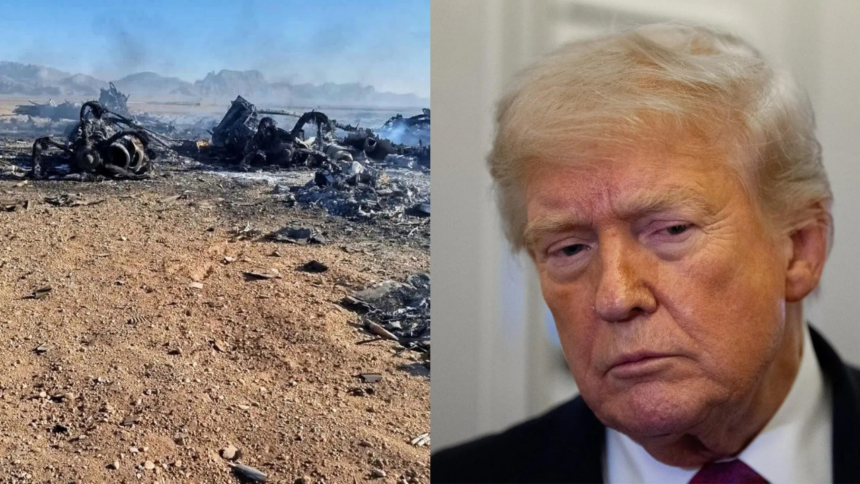
Tensions escalated during the Iran conflict after an American F-15 fighter jet was shot down, triggering a high-stakes rescue operation and raising questions about decision-making within the US administration. According to a report by The Wall Street Journal, Donald Trump reacted angrily to the incident and was subsequently kept away from real-time operational briefings by senior officials. The White House, however, has rejected the report, maintaining that the President remained fully engaged in decision-making processes.
Jet Crash and Escalation of Crisis
The incident occurred on April 3, when a US F-15 aircraft was downed over Iran amid ongoing hostilities. Two airmen were aboard the aircraft at the time of the crash. While one was rescued quickly, the second pilot remained stranded in hostile territory for over 24 hours, intensifying the urgency of the situation.
The report suggests that the crash marked a critical moment in the conflict, prompting immediate military and intelligence responses. The US military faced significant operational challenges, as conducting a rescue mission inside Iranian territory involved high risks and required careful coordination.
Claims of Exclusion From War Room
According to The Wall Street Journal, senior officials limited Trump’s involvement in real-time briefings due to concerns over his temperament and impatience. The report claims he was updated selectively through phone calls rather than being present in continuous Situation Room meetings.
During the rescue mission, key officials including Vice President JD Vance and senior White House staff reportedly monitored developments from the Situation Room for nearly 24 hours. Trump was not physically present during these sessions, the report states, though he remained informed of major developments.
The report further alleges that Trump expressed anger upon learning about the crash, reportedly demanding immediate action to recover the missing airman. He is said to have pushed for swift intervention despite the complexities involved in executing a military operation within Iranian territory.
High-Risk Rescue Operation
The rescue mission, described by officials as highly complex, involved coordination between multiple US agencies, including the CIA. Intelligence teams worked to locate the missing airman, reportedly using advanced surveillance and deceptive tactics to mislead opposing forces.
By April 4, the stranded airman was successfully rescued. Officials described the mission as akin to “finding a needle in a haystack,” highlighting the difficulty of locating and extracting the individual from enemy territory.
Following the operation, Trump publicly praised the mission and the rescued airman, calling him a “brave warrior” in a social media post. The successful rescue was seen as a significant achievement amid an otherwise tense and uncertain conflict environment.
Controversial Statements and Global Reaction
In the aftermath of the rescue, Trump issued a series of strong statements directed at Iran. He warned of severe consequences if tensions escalated further and called for the reopening of the Strait of Hormuz, a critical global oil transit route.
The report notes that some of Trump’s statements included aggressive language and references intended to send a strong message to Iranian leadership. These remarks drew international attention and raised concerns among policymakers and analysts.
Subsequent comments warning of large-scale destruction if the situation worsened added to global anxiety. However, within hours of issuing one such warning, Trump announced a two-week ceasefire beginning April 8, signaling a shift toward de-escalation.
Political and Institutional Implications
The report has sparked debate in the United States over leadership dynamics during crisis situations. Lawmakers reportedly sought clarifications from the administration regarding decision-making processes and the President’s role during the operation.
While the White House has dismissed the claims as inaccurate, the episode has highlighted the complexities of managing military operations and political leadership simultaneously. It also underscores the challenges faced by governments during high-intensity conflicts, where rapid decisions can have far-reaching consequences.
As tensions in the region continue to evolve, the incident remains a focal point in discussions about military strategy, executive leadership, and crisis management in modern warfare.