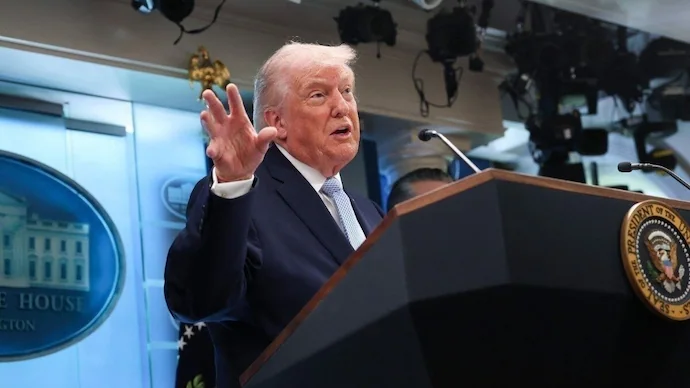
Donald Trump rejects Iran’s latest proposal, signaling continued deadlock as tensions escalate and global economic risks increase.
The ongoing standoff between the United States and Iran has intensified after Donald Trump expressed dissatisfaction with Tehran’s latest proposal for peace talks. His remarks suggest that a resolution to the conflict remains distant, even as diplomatic communication continues through indirect channels.
The situation reflects a fragile balance between negotiation and confrontation, with both sides maintaining firm positions on critical issues such as military presence, sanctions, and nuclear policy.
Trump Rejects Iran’s Peace Proposal
Speaking to reporters, Donald Trump stated that the Iranian proposal included demands that the United States could not accept. He described the Iranian leadership as divided and suggested that this internal complexity was affecting the negotiation process.
Trump emphasized that although discussions are ongoing, he does not view the current proposal as acceptable. His remarks indicate that significant gaps remain between the two sides, making a breakthrough unlikely in the near term.
He also reiterated that the United States would not accept any agreement that fails to address its core concerns, particularly regarding security and long term stability.
Iran Signals Conditional Willingness for Talks
Iran has responded by stating that it remains open to diplomacy, but only if the United States changes its approach. Abbas Araqchi indicated that Tehran is willing to engage in negotiations if Washington reduces what it considers aggressive rhetoric and actions.
Iranian officials have made it clear that while they are open to dialogue, they will not compromise on key national interests. At the same time, they have stressed that their military remains prepared to respond to any escalation.
This combination of diplomatic openness and strategic caution highlights the complexity of the situation.
Ceasefire Holds but Core Issues Unresolved
Although a ceasefire has been in place since early April, the fundamental disagreements between the United States and Iran remain unresolved. Key issues include Iran’s nuclear program, US military presence in the region, and economic sanctions.
The absence of a second round of formal negotiations has added to uncertainty. While communication continues, there has been little visible progress toward a comprehensive agreement.
Both sides appear to be using the ceasefire as a temporary pause rather than a step toward lasting peace.
Strategic Importance of the Strait of Hormuz
Control over the Strait of Hormuz remains one of the most critical aspects of the conflict. This narrow waterway is a major route for global energy supplies, with a significant portion of the world’s oil and gas passing through it.
Iran’s restrictions on shipping in the region have raised concerns about global supply chains and energy security. In response, the United States has taken measures to ensure safe passage for vessels while also enforcing pressure on Iranian exports.
The situation has contributed to volatility in global oil prices and increased uncertainty in international markets.
Strained Relations with Allies
The conflict has also affected relations between the United States and its allies. The decision to withdraw thousands of troops from Germany has added tension to transatlantic relations.
This move followed criticism from German leadership regarding US strategy in the conflict. American officials responded by describing those remarks as unhelpful, highlighting growing disagreements among allies.
Such developments demonstrate that the impact of the conflict extends beyond the Middle East and influences broader geopolitical dynamics.
Domestic Pressure in the United States
Within the United States, the conflict has sparked debate among lawmakers and the public. Some political leaders have called for reducing military involvement, arguing that the conflict is costly and lacks clear objectives.
Others have warned against a premature withdrawal, emphasizing the importance of maintaining pressure on Iran to address security concerns.
This internal division adds complexity to policy decisions and increases pressure on the administration to find a balanced approach.
Economic Impact and Oil Market Volatility
The ongoing tensions have had a noticeable impact on global energy markets. Oil prices recently surged to multi year highs before easing slightly following reports of diplomatic engagement.
The blockade of Iranian exports and disruptions in the Strait of Hormuz have contributed to supply concerns. These factors have raised fears of broader economic consequences if the conflict escalates further.
Markets remain sensitive to any developments, with even minor changes in the situation affecting global prices.
Military Options Remain Under Consideration
Despite ongoing diplomatic efforts, Trump has not ruled out the possibility of renewed military action. He indicated that strikes could be considered if Iran takes actions deemed unacceptable by the United States.
At the same time, he expressed a preference for reaching a negotiated settlement rather than escalating the conflict. This dual approach reflects the ongoing tension between diplomatic and military strategies.
Iran has also signaled that it is prepared to respond to any attack, increasing the risk of further escalation.
International Reactions and Diplomatic Efforts
Global leaders are closely monitoring the situation, emphasizing the importance of maintaining stability and avoiding escalation. Calls for dialogue and restraint have come from multiple countries.
The issue is expected to be a key topic in upcoming international discussions, as the outcome of the conflict has implications for global security and economic stability.
The involvement of multiple stakeholders highlights the need for coordinated diplomatic efforts.
Human and Strategic Consequences
The conflict has resulted in significant human and economic costs. Thousands of people have been affected, and infrastructure damage has added to the challenges faced by the region.
The ongoing uncertainty has also created instability that affects trade, investment, and regional development.
Both sides face increasing pressure to find a solution that minimizes further damage and restores stability.
Conclusion
The rejection of Iran’s proposal by the United States highlights the deep divisions that continue to define the conflict. While communication remains open, the path to a comprehensive agreement is uncertain.
With key issues unresolved and the possibility of escalation still present, the situation remains one of the most significant geopolitical challenges today.
The coming weeks will be critical in determining whether diplomatic efforts can lead to progress or whether tensions will intensify further.