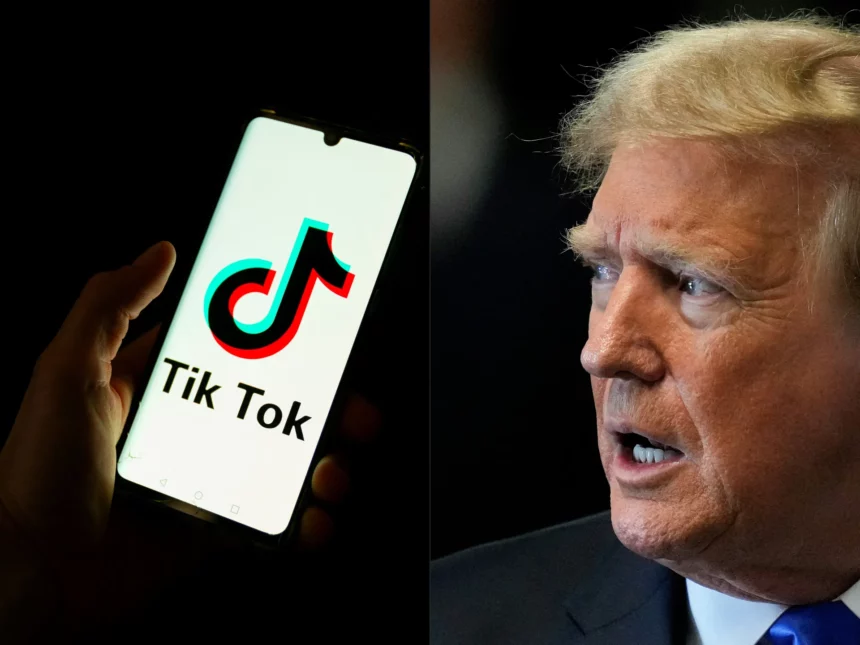
In a significant development, TikTok has begun restoring its services for U.S. users after President-elect Donald Trump provided crucial assurances regarding the company’s future in the country. The Chinese-owned social media app, which has faced intense scrutiny in the United States over concerns related to national security, was temporarily suspended on Saturday night. However, TikTok resumed its services on Sunday, after Trump stated that he would sign an executive order on Monday to delay the federal ban that was set to take effect.
The legal battle surrounding TikTok has been ongoing, with the Trump administration pushing for a ban due to fears that the app could be used to collect data on U.S. citizens and potentially compromise national security. On Sunday morning, Trump took to his social media platform, Truth Social, to announce that he would take executive action to postpone the ban. He also expressed his support for TikTok, calling on companies to continue providing the app to American users and not to “let TikTok stay dark.”
Following Trump’s statements, TikTok issued a message on X (formerly Twitter), thanking the President for his intervention. The company confirmed that it was in the process of restoring service for American users in collaboration with its service providers. “In agreement with our service providers, TikTok is in the process of restoring service,” the company wrote. “We thank President Trump for providing the necessary clarity and assurance to our service providers that they will face no penalties for providing TikTok to over 170 million Americans and allowing over 7 million small businesses to thrive.”
TikTok also emphasized the importance of the First Amendment, stating that Trump’s decision was a “strong stand against arbitrary censorship.” The company expressed its commitment to working with Trump on a long-term solution that would allow TikTok to remain operational in the United States.
The sudden halt of TikTok’s services had caused widespread concern among its millions of users and small business owners who rely on the platform for marketing and engagement. While the app was removed from the Apple and Google app stores, some users were able to log back into the platform through their mobile apps and desktop versions on Sunday.
The legal context surrounding TikTok’s temporary suspension stems from a law that was set to take effect on Sunday. The law mandated that TikTok’s parent company, ByteDance, divest the app to a non-Chinese entity or face a ban in the U.S. Despite the ruling from the U.S. Supreme Court on Friday, which upheld the law, ByteDance had not yet agreed to sell TikTok to a company outside of China. The Supreme Court’s decision meant that if TikTok had not complied with the law, internet service providers such as Apple and Google would face penalties for continuing to host the app on their platforms.
While TikTok’s restoration of service is a temporary relief, the company’s long-term future in the U.S. remains uncertain. Trump has previously suggested that the U.S. should have a 50% ownership stake in TikTok through a joint venture, which he believes would ensure the app is managed in “good hands” and allow it to remain operational. However, ByteDance has not yet indicated any willingness to sell the company or change its current ownership structure.
As the situation continues to evolve, TikTok’s efforts to maintain its presence in the U.S. will be closely monitored. The company’s response to Trump’s intervention highlights the complex relationship between the app and U.S. lawmakers, with national security concerns remaining at the forefront of the debate. Despite the recent developments, the future of TikTok in the U.S. remains in flux, with both political and legal factors likely to play a pivotal role in shaping its trajectory moving forward.
With millions of American users and small businesses relying on the platform, the outcome of this ongoing battle could have far-reaching implications for the global tech landscape and for the future of social media in the United States.