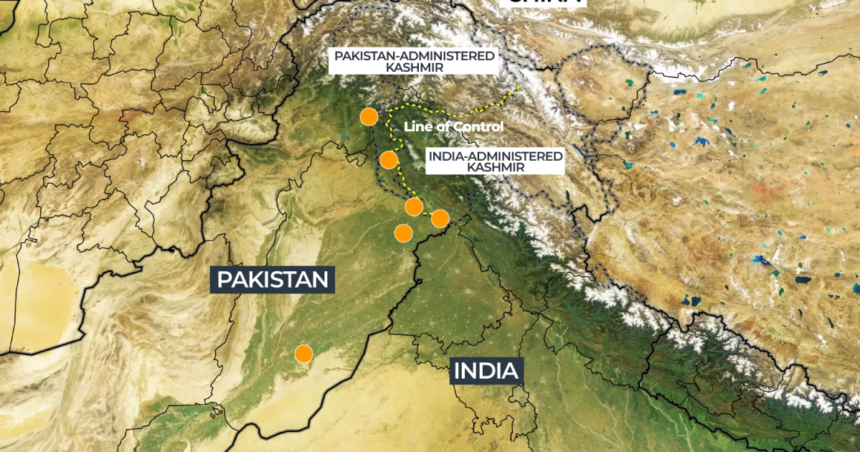
In the wake of India’s Operation Sindoor, tensions have spiked dramatically between India and Pakistan, reigniting fears of a wider military confrontation between South Asia’s two nuclear-armed rivals. While India has maintained that the operation targeted terror camps, Islamabad has vowed to retaliate at a time and place of its choosing. Amid this high-stakes standoff, former Indian military commanders and diplomats have outlined a range of strategic responses that Pakistan may consider — from cross-border aggression to backchannel diplomacy.
Cross-border military escalation likely to continue
Operation Sindoor appears to have derailed the 2021 ceasefire agreement between the two nations, as Pakistan has already ramped up shelling across the Line of Control (LoC), resulting in civilian casualties on the Indian side. According to former Northern Army Commander Lt. Gen. DS Hooda, the ceasefire is effectively “dead,” and both sides may now witness increased military engagements along the LoC. Other experts, like Lt. Gen. BS Jaswal, suggest Pakistan might escalate further through limited air strikes targeting Indian military airfields. Though such strikes would be a significant step up from recent tensions, any attack on military assets would provoke a strong Indian response, including retaliatory shelling and possible air operations.
Terrorism and diplomatic isolation as strategic tools
Another possibility is the resurgence of Pakistan-supported terrorism. Lt. Gen. AS Lamba warns that Pakistan may opt for an intensified campaign of terror strikes, particularly against sensitive Indian installations. However, any such move could backfire by inviting a severe Indian military response, something Pakistan might struggle to handle amid its ongoing economic and internal security crises. Diplomatically, the options appear even more limited. Both countries have cut off formal ties, from trade to diplomatic representation. Former Indian Ambassador to the UN, Syed Akbaruddin, asserts that any meaningful diplomatic engagement now would likely have to occur through secret backchannels, given the complete breakdown of formal communication. While multilateral support for Pakistan has been lukewarm, experts believe Islamabad may adopt a more assertive stance in the coming weeks.
With traditional diplomatic routes closed and military options fraught with risk, the path forward remains deeply uncertain. Yet the strategic decisions made in the coming days will shape not just the trajectory of this crisis, but possibly the broader regional balance in South Asia.