

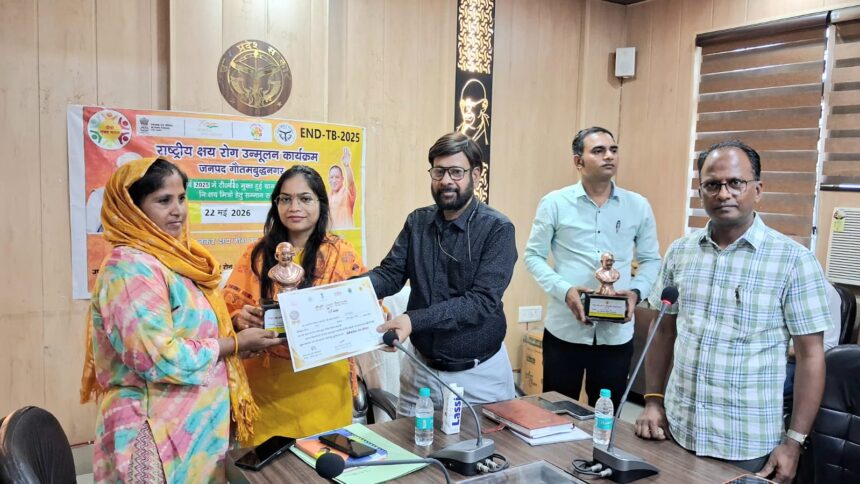
Gautam Buddh Nagar achieved a significant milestone in its fight against tuberculosis as 17 gram panchayats were officially declared TB-free under the TB-Free Gram Panchayat Programme. The felicitation ceremony was organized at the Vikas Bhavan auditorium in Surajpur, Greater Noida, where district administration and health department officials honored the panchayats for their contribution to the anti-TB campaign.
The programme highlighted the growing importance of community participation in eliminating tuberculosis from rural areas. Officials stated that awareness campaigns, early identification of patients, and timely medical intervention played a major role in helping these villages achieve TB-free status.
Panchayats Honored Across Multiple Categories
During the ceremony, gram panchayats were recognized in different categories based on their performance and contribution to the campaign. Chachura and Dalelpur were awarded in the silver category for their efforts in TB eradication and awareness activities.
Meanwhile, Chhaysa, Raipur Kala, Shahpur Khurd, Lodona, Mahara, and Chuhadpur Bangar were also honored under another recognition category for their active participation in health awareness and patient identification programmes.
Nine additional gram panchayats, including Islamabad Kalda, Bairangpur alias Nai Basti, Gulawathi Khurd, Kamerala Chakrasenpur, Noorpur, Dhanubash, Makanpur Khadar, Modalpur, and Jahangirpur, received bronze category recognition. All awarded panchayats were presented with Mahatma Gandhi statues and certificates of appreciation.
Health department officials described the awards as a symbol of community leadership and collective responsibility in improving public health standards in rural areas.
Village Leaders Played Key Role in TB Elimination
District Tuberculosis Officer Dr Raghavendra Pratap Singh stated that gram pradhans and local representatives played a crucial role in making the campaign successful. According to officials, village leaders actively participated in door-to-door identification of suspected TB patients and encouraged residents to undergo screening and treatment.
The campaign also focused on removing misconceptions related to tuberculosis. Awareness drives were conducted in several villages to educate people that TB is a curable disease if diagnosed and treated on time. This approach helped improve patient reporting and treatment compliance.
Officials said that social participation at the village level significantly strengthened the healthcare system’s outreach. Panchayat representatives also motivated patients to continue their medication without interruption, which is considered essential in TB treatment.
Villages Pledge to Maintain TB-Free Status
Representatives of the honored gram panchayats expressed satisfaction over the recognition and pledged to continue working actively to maintain TB-free status in their villages. They emphasized that the campaign should not stop with receiving awards and that sustained awareness and monitoring are necessary to prevent future cases.
Village leaders assured the administration that awareness campaigns would continue regularly and coordination with health officials would remain strong. They also stressed the importance of early detection and timely treatment in keeping rural communities safe from infectious diseases.
According to health officials, the TB-Free Panchayat Programme is not only improving healthcare indicators but is also creating a culture of health awareness and community participation in rural regions.
Campaign Emerging as Rural Healthcare Model
The TB-Free Panchayat initiative in Gautam Buddh Nagar is gradually emerging as a model for rural healthcare development. District authorities believe that involving local governance bodies in public health programmes has improved both awareness and service delivery at the grassroots level.
The administration plans to include more gram panchayats in the campaign in the coming months to move closer to the goal of making the entire district TB-free. Officials also indicated that monitoring mechanisms and public awareness drives would be intensified further.
Several officers and staff members from the health department attended the programme. The district administration described the initiative as a major step toward strengthening healthcare infrastructure and disease prevention efforts in rural areas.