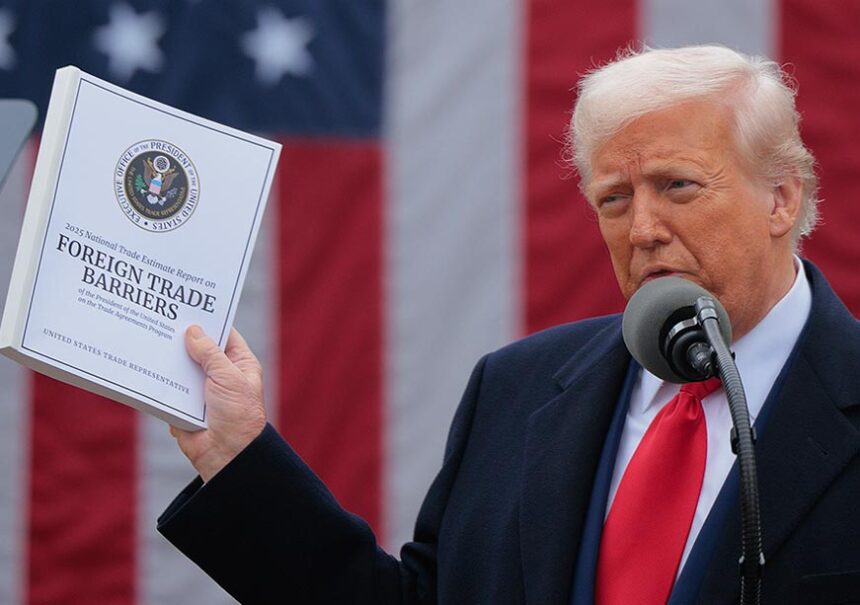
The first 90 days of Donald J. Trump’s second term as President of the United States (US) have proven to be a whirlwind of disruption in global economics and international relations. Under the banner of “America First” and “Make America Great Again,” Donald Trump has made bold and controversial decisions that have thrown the world into chaos. What was once a period focused on growth and prosperity is now a time of uncertainty, risk, and survival.
The consequences of Donald Trump’s disruptive actions are being felt across various sectors—households, consumers, businesses, and countries. His policies have created an environment where the questions on everyone’s mind are, “Are we next?” There is no clear plan, no predictability of actions, and a growing erosion of trust in the international arena. Trust, a cornerstone of global relations, is quickly fading, and its absence could prove to be the undoing of the world’s diplomatic structures.
The need for trust and predictability in international relations is highlighted by the confusion and lack of clarity caused by Donald Trump’s actions. While trust is built on being predictable in actions and relations, it is now at risk as the international community is left grappling with uncertainty.
The Impacts on Households: Job Loss, Spending, and Investing
In the midst of this disruption, households are among the most vulnerable. The impact of Donald Trump’s policies, such as trade wars and tariff impositions, will inevitably result in job losses and layoffs as companies struggle to maintain profitability. Households should brace for tough times, with the need to double their resilience. If families had planned for a six-month buffer to deal with job losses, they should extend this to 12 months or more.
Non-discretionary spending such as rent, utilities, healthcare, and taxes will remain essential. However, discretionary spending—such as vacations, eating out, or buying new gadgets—can be curbed to reduce financial strain. On the investment front, households must reassess their portfolios and asset allocations. While equities may take a hit, strategic long-term goals like retirement or children’s education should remain a priority.
This period may also be an opportunity for households to rethink the concept of a second income or side business. Families should start preparing for the second half of their life post-retirement to begin now, while they still have time to adjust.
Lower Margins, Capital Safety, and Technology Integration
Businesses must quickly adapt to the changing economic environment. With tariffs affecting raw material prices and the profitability of firms, companies must plan for lower margins and find ways to cut costs. The focus should be on increasing EBITDA (earnings before interest, taxes, depreciation, and amortization) while reducing unnecessary expenditures. It is also crucial to diversify supply chains and find alternatives to vulnerable raw materials.
Managing capital will be essential. Companies need to maintain a strong interest cover, which measures their ability to pay off debts, ensuring that they can continue business operations without hindrance. Expansion plans should be reviewed, and cash reserves must be used strategically, perhaps to acquire land at cheaper prices.
Technology will play a key role in this adjustment. Firms should leverage technology for efficiency in operations, supply chains, and customer feedback. Artificial Intelligence and automation can improve productivity and streamline processes to ensure companies stay competitive in the market.
The Role of the State in Managing Geoeconomic Shocks
For countries, the disruption extends beyond the economy. They need to recalibrate their strategic dependencies. The current geopolitical tensions, exemplified by the US-China trade war, require nations to rethink their positions in global trade and security.
Nations need to focus on strategic decision-making, learning from the mistakes made by others like the European Union (EU), which outsourced its security to the US and energy to Russia, only to realize the vulnerability it created. As Donald Trump continues to push tariffs and trade wars, countries must prepare for the fallout and manage their finances more efficiently.
Public sector expenditure in countries like Italy, France, and Greece, which hover close to 45% of their GDPs, makes them especially vulnerable to economic shocks. Governments should avoid relying on debt to solve the problem, focusing instead on empowering private enterprises and markets to drive growth and innovation.
Global Collaboration and Innovation
In the face of this global disruption, nations must find common ground on key issues like peace, economic stability, and prosperity. While each country has unique strengths and weaknesses, the overarching goal must be to work together to mitigate risk and foster collaboration.
As the world navigates this unprecedented uncertainty, one thing is clear: the time for blind ideologies and unchecked actions is over. The future demands a new approach—one based on trust, cooperation, and mutual benefit. The global community must move past outdated narratives and focus on building wealth and prosperity through collaboration and innovation.
The first 90 days of Donald Trump’s second term have shown the world how fragile global systems can be. From households to governments, everyone is forced to adapt to a new reality where risk and survival take precedence over growth and prosperity. The world’s ability to navigate this disruption will depend on how well countries, firms, and households can manage their resources, make strategic decisions, and collaborate on common challenges. In the end, while the disruption brought on by Donald Trump’s policies may have brought the world to a standstill, it also presents an opportunity for reinvention, provided the right steps are taken. The road ahead may be uncertain, but it is in these moments of crisis that new ideas and alliances can emerge.