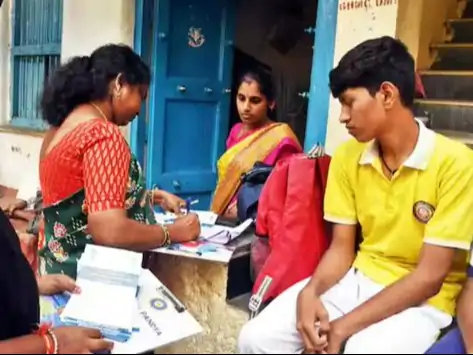
The Supreme Court’s latest hearing on the safety of Booth Level Officers involved in the Special Intensive Revision process in West Bengal has drawn national attention, highlighting deep concerns about violence, intimidation and the potential breakdown of administrative cooperation during a crucial voter roll verification exercise. With the SIR underway in twelve states, the Court has signaled that failure by state governments to assist the Election Commission could lead to systemic destabilisation of the electoral process.
Court Seeks Answers from Election Commission and Bengal Government on Escalating Threats
During Tuesday’s proceedings, the Supreme Court examined a petition filed by the Sanatani Parliament Organisation, which sought urgent measures to ensure the security of Booth Level Officers in West Bengal. The petition also requested that the Bengal Police be placed under Election Commission supervision during the SIR process, citing reports of violence, harassment and even suicides linked to the heavy workload and threats faced by officials on the ground.
The Court issued notice to the Election Commission, asking it to respond to the plea for central forces to be deployed until the updated voter list is published. A parallel notice was issued to the West Bengal government, directing it to propose alternative security arrangements to ensure the safety of officials responsible for carrying out the revision exercise.
Chief Justice Suryakant voiced serious concern over increasing attacks on BLOs in West Bengal, emphasising that if the situation deteriorates further, the deployment of central armed forces may become inevitable. The Court underscored the gravity of protecting those tasked with essential electoral duties, particularly when violence or obstructions jeopardise the integrity of the voter roll revision.
The petition comes at a tense time for Bengal, where political clashes and allegations of interference in administrative work have created a challenging environment for officials conducting the SIR. The Court noted recent incidents, including a reported suicide of a BLO allegedly due to the pressures associated with the process, and expressed that such developments demand immediate intervention.
The Election Commission, presenting its stance before the Bench, stated that if obstruction to SIR work intensifies, it may have no option but to deploy police personnel on deputation. The Commission asserted that it possesses full constitutional authority to address intimidation and ensure smooth conduct of the exercise across all participating states.
The Court, however, made it clear that any reluctance or lack of cooperation from state governments must be taken seriously. It warned that a failure to maintain order and support SIR activities could fuel instability at the grassroots administrative level. The Bench instructed that all incidents of intimidation, obstruction or non-cooperation should be reported to the Court promptly so that further directions may be issued.
EC counsel Rakesh Dwivedi reiterated that policing falls primarily under the jurisdiction of state governments, and cooperation from them is essential. Should the Bengal government refuse to cooperate, the Commission may be compelled to deputise local police or, in circumstances where trust deficits persist, employ central forces to safeguard officials.
The Court’s statements reflect a growing concern that unless decisive action is taken, rising hostility and politicisation in some regions—especially West Bengal—may jeopardise the entire SIR operation.
Judicial Concerns Reflect Broader National Anxiety Over the Integrity of the SIR Process
The SIR exercise, currently underway in twelve states, is designed to produce a more accurate and reliable electoral roll. However, the ongoing tensions in West Bengal have cast a shadow over the nationwide process, raising questions about the feasibility of conducting a uniform and secure revision operation across regions with varying political climates.
The Supreme Court’s warning of “anarchy” signals a serious assessment of the consequences of non-cooperation. The Court is increasingly concerned that the combination of obstructive environments, security threats and administrative resistance could compromise the integrity of voter lists. At stake is not only the safety of Booth Level Officers but also the legitimacy of electoral preparation in the world’s largest democracy.
The SIR process has been contentious since its announcement, drawing petitions, protests and legal challenges across multiple states. In West Bengal, Chief Minister Mamata Banerjee has vocally opposed the measure, arguing that it is unconstitutional and politically motivated. Her government has questioned the legitimacy and necessity of the process, setting up a confrontation with the Election Commission over administrative authority.
Petitioners before the Supreme Court have blamed this political climate for creating conditions in which BLOs are exposed to intimidation or violence. The Court expressed the view that state governments hold a fundamental obligation to assist the Election Commission, irrespective of political disagreements. It noted that free and fair elections depend on orderly cooperation between institutional authorities.
A critical aspect of the Court’s inquiry focuses on whether state governments are not only failing to provide adequate protection but are also erecting barriers that impede the conduct of SIR activities. The Bench emphasised that in a constitutional democracy, state agencies cannot selectively withdraw cooperation from election-related responsibilities.
The case also underscores the heavy burden placed on Booth Level Officers, who serve as the crucial link between electoral authorities and communities. Reports of harassment or high-pressure working conditions during the SIR have raised broader concerns about employee welfare and accountability of local administration.
As arguments continue, legal observers note that the Supreme Court’s final stance may influence how the Election Commission manages security in other states where political tensions could similarly disrupt the exercise. While West Bengal currently occupies the spotlight, the Court’s remarks highlight a national need for clarity, stability and cooperation in the execution of large-scale voter roll revisions.
When the matter resumes in coming hearings, the Court is expected to further scrutinise the roles of the state government, the Election Commission and the central forces in ensuring safe and uninterrupted SIR operations. The proceedings will likely determine the legal and administrative precedent for addressing violence against election officials, and may establish broader principles on the