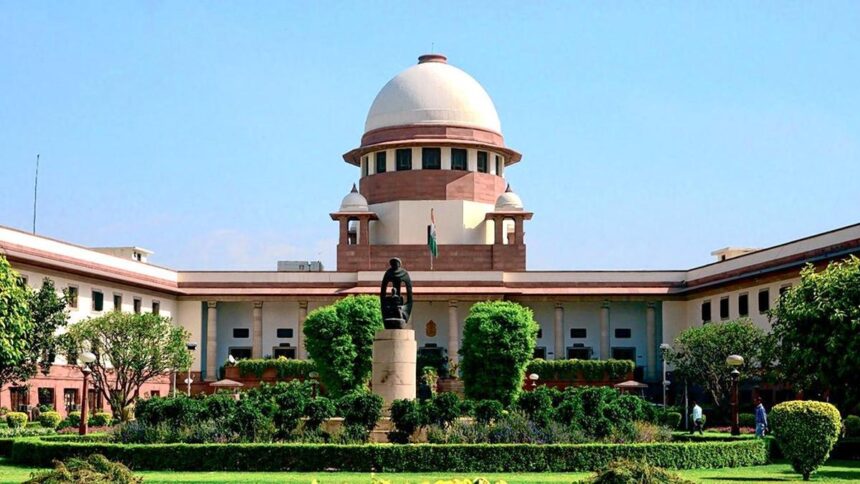
The Supreme Court of India has delivered a landmark judgment declaring that the denial of permanent commission to women officers in the armed forces was a result of systemic discrimination. The ruling came while hearing a batch of petitions, including those filed by Sucheta Edan and other short service commission officers who challenged policy changes and earlier tribunal decisions. The judgment marks a significant step toward gender equality within the armed forces. It reinforces the constitutional principle of equal opportunity. The court emphasized fairness in career progression.
The bench, led by Chief Justice Surya Kant along with Justices Ujjal Bhuyan and N Kotiswar Singh, observed that male officers cannot assume vacancies to be exclusively reserved for them. The court invoked Article 142 of the Constitution to ensure “complete justice” in the matter. This provision allows the court to pass extraordinary orders to correct systemic injustice. The judgment reflects a strong stance against institutional bias. It also sets a precedent for future cases.
Systemic Bias and Career Disadvantages
The court highlighted that evaluation systems within the armed forces were historically biased against women officers. It noted that Annual Confidential Reports were prepared with the assumption that women would not have long-term careers. This directly affected their merit and promotion opportunities. Such practices created structural disadvantages over time. The court termed this approach unfair and discriminatory.
Because women were initially not eligible for permanent commission, they were denied access to important career-enhancing opportunities. These included key postings and training programs that were routinely available to male officers. As a result, when women were later considered for permanent roles, their records appeared weaker. This created an uneven playing field. The court recognized this as a major flaw in the system.
The judgment stressed that merit cannot be evaluated in isolation from opportunity. When opportunities are unequal, outcomes cannot be considered fair. The court’s observations underline the need for systemic reform. It emphasized that institutional practices must align with constitutional values. Equality must be reflected in both policy and implementation.
Pension Relief and Article 142 Intervention
In a significant move, the court granted pension benefits to affected women officers by invoking Article 142. It ruled that those who were denied permanent commission would be deemed to have completed 20 years of service. This is the minimum requirement for pension eligibility. The decision applies even to those who were released earlier from service. It provides financial relief to many officers.
The court specified that pension benefits would be effective from November 1, 2025, for certain categories. For others, including cases related to the Army and Navy, benefits would apply from January 1, 2025. This ensures uniformity in implementation. The ruling acknowledges the injustice faced by these officers. It seeks to compensate for lost career opportunities.
However, the court declined to order reinstatement of officers, citing operational effectiveness as a concern. It clarified that while reinstatement may not be feasible, financial compensation cannot be denied. This balanced approach addresses both institutional requirements and individual rights. The judgment reflects a pragmatic yet progressive stance.
New Transparent Selection System Mandated
To prevent future discrimination, the court has directed the armed forces to adopt a transparent selection process. Authorities must now disclose the number of vacancies, evaluation criteria and marking system before conducting selection boards. This ensures that decisions are based on clear and objective standards. It eliminates the scope for arbitrary judgments.
The court emphasized that career progression should not depend on undisclosed parameters or subjective assessments. Transparency will enhance fairness and accountability. It will also build trust among officers. The new system is expected to bring structural changes in how selections are conducted. It marks a shift toward a more equitable framework.
The judgment also addressed issues in the Air Force, where certain criteria introduced in 2019 were implemented abruptly. The court found that officers were not given sufficient time to meet these requirements. This further contributed to unfair outcomes. The ruling calls for careful implementation of policies in the future. It stresses the importance of reasonable timelines.
Broader Impact on Armed Forces and Gender Equality
The decision is being seen as a milestone in advancing gender equality within the armed forces. It recognizes the contributions of women officers and affirms their right to equal opportunities. The ruling sends a strong message against discrimination. It reinforces the principle that merit must be evaluated fairly.
The judgment is also expected to influence future policies and reforms. It highlights the need for continuous review of institutional practices. By addressing systemic issues, the court has set a benchmark for fairness. The impact of this ruling may extend beyond the armed forces. It could shape discussions on gender equality in other sectors.
The Supreme Court’s ruling represents a significant step toward correcting long-standing inequalities faced by women officers. By acknowledging systemic discrimination and providing meaningful relief, the court has upheld constitutional values. The introduction of transparent processes ensures that similar issues do not arise in the future. This landmark judgment strengthens the foundation of equality and justice. It marks a turning point in the evolution of policies within the armed forces.