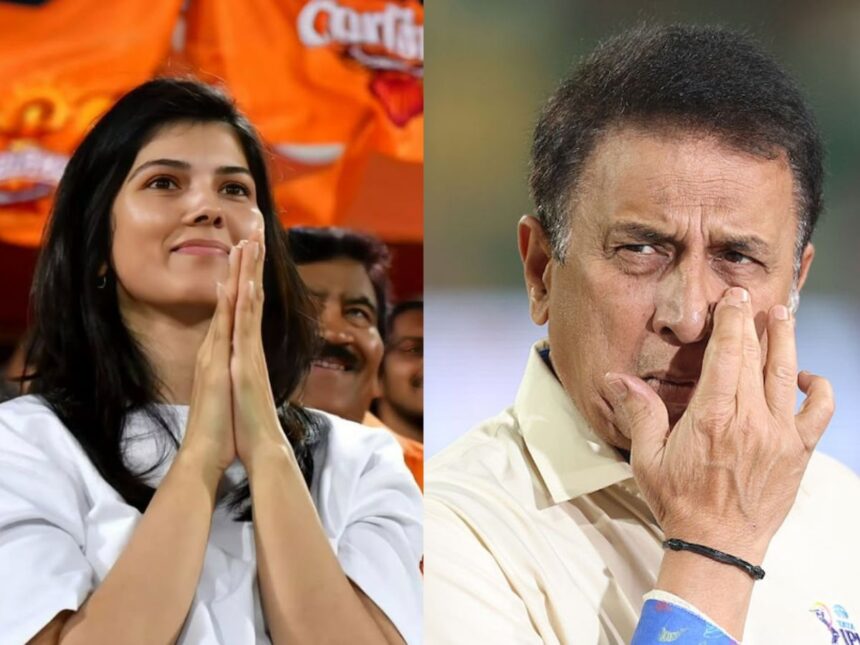
Former India captain Sunil Gavaskar has strongly criticised the Sunrisers franchise following the signing of Pakistani spinner Abrar Ahmed by its sister team in The Hundred 2026 auction. The move has sparked widespread debate among cricket fans and analysts, particularly in India, where Pakistani players have not participated in the Indian Premier League for more than a decade due to political tensions between the two countries. Gavaskar expressed strong disapproval of the decision and suggested that such deals could indirectly support activities that harm Indian soldiers and civilians.The controversy began after Sunrisers Leeds, a franchise linked to the IPL team Sunrisers Hyderabad, signed Abrar Ahmed during The Hundred 2026 auction in England. Abrar Ahmed is one of Pakistan’s emerging spin bowlers and has gained recognition in international cricket for his performances in recent years. However, his signing by a franchise owned by an Indian company has triggered strong reactions in India because of the long-standing boycott of Pakistani players in the IPL. Since the 2008 Mumbai terror attacks, Indian franchises have largely avoided signing Pakistani cricketers for IPL teams due to public sentiment and geopolitical tensions between the two countries.
Gavaskar Questions Decision to Sign Pakistani Player
Reacting to the development, Sunil Gavaskar said the outrage over the signing was not surprising given the history of tensions between India and Pakistan. In a column, he noted that ever since the 2008 Mumbai attacks, Indian franchise owners have consciously avoided signing Pakistani players in the IPL out of respect for the sentiments of Indian citizens. According to Gavaskar, the decision by an Indian-owned franchise to sign a Pakistani player in an overseas league could send the wrong message at a time when relations between the two countries remain strained.He further argued that the money paid to Pakistani players in such leagues could eventually reach the Pakistani establishment through taxation or other channels. Gavaskar suggested that such financial flows might indirectly contribute to actions that have historically harmed Indian soldiers and civilians. His comments were strongly worded and reflected the deep emotional and political sensitivities that continue to shape sporting relations between the two countries.Gavaskar’s remarks quickly gained attention across social media and sports media outlets. Many fans supported his stance, arguing that Indian companies and franchise owners should avoid signing Pakistani players even in foreign leagues because of the ongoing political conflict. Others, however, took a more nuanced view and argued that sports should remain separate from politics. They pointed out that The Hundred is an England-based competition and that franchise owners participating in it must follow the rules of the league and the decisions made during the auction process.
Debate Over Sports and Politics Intensifies
The controversy has reignited a long-standing debate about whether sports and politics should be kept separate. Critics of Gavaskar’s comments argue that international leagues such as The Hundred involve players from multiple countries and that restricting participation based on nationality could undermine the spirit of global sport. Supporters of Gavaskar’s view, however, believe that Indian businesses and franchise owners have a moral responsibility to consider national sentiment when making such decisions.The Hundred, a relatively new cricket tournament organised by the England and Wales Cricket Board, features franchises that often have ownership links with IPL teams and global investors. In recent years, several IPL owners have invested in teams in other leagues around the world, including tournaments in South Africa, the UAE and the United States. These global investments mean that player signings can sometimes involve athletes from countries that do not participate in the IPL itself.The signing of Abrar Ahmed has therefore highlighted the complexities of modern franchise cricket, where business interests, global leagues and national politics often intersect. While Pakistani players remain excluded from the IPL, they continue to participate in many other international leagues such as the Pakistan Super League, the Caribbean Premier League and The Hundred. As cricket becomes increasingly globalised, franchise owners are facing new questions about how to balance commercial opportunities with political sensitivities.For Sunrisers Hyderabad and its associated franchises, the controversy has placed the spotlight on the challenges of operating in multiple cricket leagues across different countries. While the franchise has not yet issued a detailed response to Gavaskar’s comments, the debate surrounding the signing of Abrar Ahmed continues to generate discussion among fans and analysts. The incident reflects the continuing influence of geopolitical tensions on cricketing decisions and highlights how player signings in global leagues can quickly become politically sensitive topics.