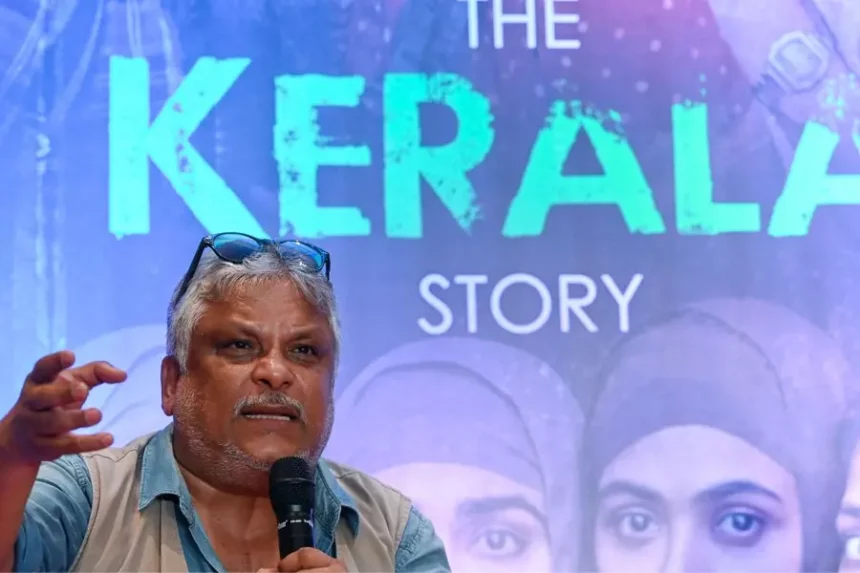
Sudipto Sen Speaks About Threats, Controversies and Why He Is Not Directing The Kerala Story 2
Film director Sudipto Sen has once again found himself in the middle of national conversation. After the massive attention generated by his earlier film The Kerala Story, the filmmaker is now preparing to bring another socially driven narrative to the big screen through his upcoming project Charak: Fear of Faith.
Sen has built a reputation for making films that deal with difficult and sensitive subjects. Instead of focusing only on entertainment, his films often attempt to explore social realities, belief systems and issues that many people hesitate to discuss openly. With Charak, the filmmaker aims to explore the complex relationship between faith, tradition, superstition and rational thinking.
In recent interviews, Sudipto Sen has openly spoken about the extensive research behind the film, the controversies surrounding his work, the threats he faced after previous releases and the reason he stepped away from directing The Kerala Story 2.
The Cultural Background of the Charak Festival
The Charak festival has a long and deeply rooted cultural history in eastern India. Historical records indicate that the festival has been celebrated for more than a thousand years in regions such as Bengal, Bihar, Assam, Odisha and Jharkhand.
The celebration usually takes place during the month of Chaitra, which generally falls between mid-March and mid-May. During this period devotees worship Goddess Kali and Lord Shiva and participate in a series of rituals and festivities.
For many communities, the Charak fair is not just a religious event but also an important cultural gathering. Folk songs, cultural performances, traditional rituals and local fairs are organized during this period, drawing large crowds from nearby villages and towns.
Sudipto Sen recalls that he also experienced the excitement of this festival during his childhood. Like many children in eastern India, he would eagerly wait for the fair and save his pocket money to spend at the festival.
However, the festival also has a controversial and darker side. Some historical accounts mention extreme ritualistic practices associated with tantric traditions and ascetic rituals. Over time many such practices have been banned by law due to concerns about safety and ethics.
According to Sen, the central idea of the film is to question where society should draw the boundary between genuine faith and harmful superstition.
Cinema as a Medium to Raise Social Questions
Sudipto Sen believes cinema can play a powerful role in shaping public conversations. In his view, films should not only entertain but also encourage people to reflect on social realities.
He explains that in modern society people often use science and logic selectively. When rational thinking supports their convenience or personal interests, it is easily accepted. But when logic challenges traditional beliefs, many people prefer to ignore it.
Sen points out that several social practices continue without any scientific reasoning simply because they have been followed for generations. For instance, in many households young women are advised not to go outside at night with open hair or avoid wearing certain colors on specific occasions.
Although such beliefs may appear harmless, the filmmaker argues that they demonstrate how deeply superstition can be embedded in everyday life.
The problem becomes far more serious when blind belief leads to violence or exploitation. Sen mentioned that certain disturbing incidents involving harmful rituals deeply affected him while researching the film.
In some cases, innocent individuals were harmed in the name of superstition or ritual practices. These incidents strengthened his belief that society must openly discuss such issues.
Through Charak, Sen hopes to encourage audiences to think critically about the beliefs they inherit from tradition.
Why Sudipto Sen Stepped Away from The Kerala Story 2
Following the commercial success of The Kerala Story, discussions about a sequel quickly gained momentum. Many people expected Sudipto Sen to direct the second installment as well.
However, the filmmaker clarified that he will not be directing The Kerala Story 2.
He explained that the decision was not related to any disagreement with the production team. Instead, it was mainly a creative choice.
According to Sen, the original research he conducted over nearly a decade was primarily focused on Kerala. His understanding of the subject developed through years of study, fieldwork and documentation related to that specific region.
Later, the scope of the sequel expanded beyond Kerala and began to include a broader narrative involving multiple regions.
Since his research was deeply rooted in Kerala itself, Sen felt that continuing as director might not allow him to present the expanded story with the same level of authenticity.
He emphasized that he prefers working on subjects only after conducting detailed and long-term research.
“I cannot make a film based only on newspaper reports or social media messages,” he explained in an interview.
For Sen, authenticity and depth of research are essential elements of filmmaking.
Threats and Online Harassment After Previous Films
Sudipto Sen also spoke about the threats he received following the release of his previous films.
After the release of The Kerala Story and later Bastar, several hostile reactions appeared on social media platforms. Among them was a disturbing “rate card” circulating online that listed money amounts for violent acts against him.
The incident shocked the filmmaker and initially created a sense of fear.
He admitted that the situation affected him for a few days. However, he soon realized that fear cannot become a reason to stop telling stories.
“If fear controls creativity, then filmmakers will stop addressing important issues,” he said.
Sen believes that audiences ultimately decide the success of a film.
In his view, no film can achieve widespread success solely because of propaganda. If a movie resonates with viewers, it is because they connect with the story or its emotional truth.
Responding to Criticism from Other Filmmakers
The debate around The Kerala Story also attracted criticism from several filmmakers and public figures.
Sudipto Sen responded by stating that criticism is an essential part of a democratic society.
Everyone has the right to express their opinions about a film. Differences of opinion, debates and discussions are natural in an open cultural environment.
However, he also believes that films should not be judged based only on trailers or rumors.
According to him, a film should be evaluated only after watching it completely.
If someone disagrees with a film, they can write articles, post their opinions on social media or engage in public discussion.
But demanding that a film be banned or prevented from being released is not a healthy tradition in a democratic society.
“Art is like a flowing river,” Sen said. “It cannot be permanently stopped.”
Disturbing Findings During Research
While researching for Charak, Sudipto Sen studied numerous documents, police reports and eyewitness testimonies.
Some of the materials he encountered were extremely disturbing. Certain images and videos were so graphic that they were difficult to watch.
These findings made him realize that the issues explored in the film are not merely historical.
In some parts of society, similar beliefs and practices still exist today, although often in hidden or subtle forms.
This realization became one of the driving forces behind the film.
The story of Charak attempts to ask viewers a simple yet powerful question: should society stand with blind belief or rational thinking?
Expectations from Charak
Sudipto Sen’s previous film reportedly earned more than 300 crore at the box office.
Despite that achievement, he insists that financial success is not the ultimate goal of his work.
For him, the real measure of success is the number of people who watch the film and engage with its ideas.
If millions of viewers enter theaters and leave with new questions about society, belief systems and traditions, he considers that a meaningful accomplishment.
The film combines vibrant festival visuals, music and cultural traditions with a deeper social message.
Sudipto Sen hopes that audiences from both urban and rural backgrounds will connect with the story.
According to him, if viewers begin questioning harmful beliefs after watching the film, the purpose of Charak will be fulfilled.