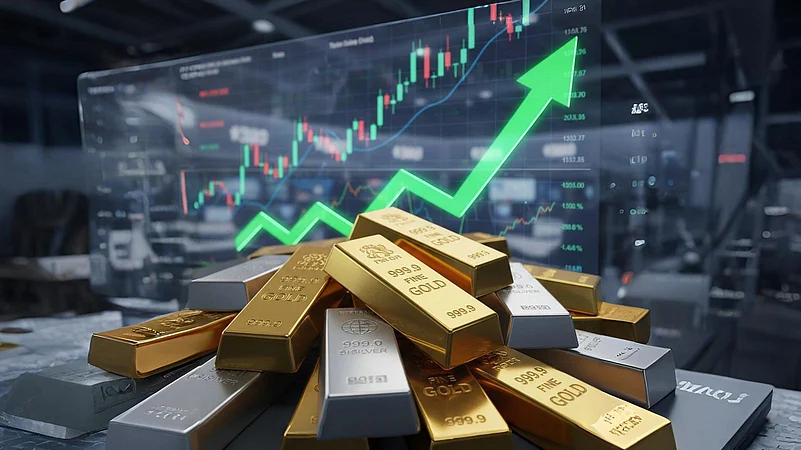
Gold and silver prices recorded a sharp rise on March 10, reflecting strong movements in the bullion market. According to the India Bullion and Jewellers Association, the price of 24-carat gold increased by ₹1,700 per 10 grams to reach ₹1.60 lakh. Earlier, the precious metal was trading at around ₹1.59 lakh per 10 grams. Along with gold, silver also witnessed a significant surge, with its price increasing by ₹13,000 in a single day to reach ₹2.73 lakh per kilogram. The previous price of silver stood at ₹2.60 lakh per kilogram, making the sudden rise one of the most notable daily increases in recent weeks.
The latest surge in bullion prices has attracted attention from investors and buyers across the country. Precious metals such as gold and silver are often viewed as safe-haven assets during uncertain economic or geopolitical situations. Market analysts note that recent fluctuations in global markets, combined with geopolitical tensions, have increased demand for these assets. As a result, both gold and silver have experienced noticeable price movements in recent weeks, drawing renewed interest from investors as well as retail buyers.
Data from bullion markets indicates that gold and silver have witnessed substantial price increases in 2026 so far. At the end of the previous year, gold was trading at around ₹1.33 lakh per 10 grams. With the latest increase, the price has now reached ₹1.60 lakh per 10 grams, reflecting a rise of approximately ₹27,000 during the year. Silver prices have also shown a strong upward trend. Compared to their levels at the end of last year, silver prices have increased by roughly ₹24,000 per kilogram. This steady rise in bullion prices highlights the growing demand for precious metals as both an investment option and a hedge against economic uncertainty.
Despite the recent increases, experts point out that both metals had reached significantly higher levels earlier this year before experiencing a correction. On January 29, gold prices touched an all-time high of around ₹1.76 lakh per 10 grams, while silver climbed to approximately ₹3.86 lakh per kilogram. After reaching those peaks, both metals experienced a noticeable decline, which encouraged buying activity in the market. Many investors and jewellery buyers took advantage of the price drop to purchase gold and silver, leading to renewed demand in the bullion market.
Analysts believe that the future movement of gold and silver prices will largely depend on global economic conditions and geopolitical developments. One of the most significant factors influencing the market currently is the ongoing tension in West Asia, particularly between Iran and the United States. Escalation in the conflict could drive oil prices higher and increase uncertainty in financial markets. In such situations, investors often move towards safe-haven assets like gold and silver, which could push prices further upward.
Another key factor affecting bullion prices is the performance of the US economy. Economic indicators from the United States, including inflation data and employment figures, have a strong influence on global commodity markets. If economic data from the US comes in stronger than expected, the US dollar tends to strengthen. A stronger dollar can put pressure on gold prices because it makes the metal more expensive for buyers using other currencies. As a result, gold prices may experience downward pressure despite strong demand.
Experts also suggest that fluctuations in global interest rates can significantly affect the demand for precious metals. When interest rates rise, investors may shift towards interest-bearing assets such as bonds or fixed deposits, which could reduce demand for gold. Conversely, when interest rates remain stable or decline, gold often becomes more attractive as an investment option. Therefore, decisions taken by major central banks around the world play a crucial role in determining future bullion price trends.
For buyers planning to purchase gold jewellery, market specialists recommend paying close attention to quality and pricing before making a purchase. One of the most important factors is ensuring that the gold is properly certified. Buyers are advised to purchase only hallmarked gold approved by the Bureau of Indian Standards. Hallmark certification confirms the purity of the gold and ensures that the buyer is receiving the correct quality. The hallmark number is typically an alphanumeric code printed on the jewellery.
Another important precaution for buyers is verifying the current market price before purchasing gold or silver. Since bullion prices change frequently based on market conditions, checking the latest rates from reliable sources such as the India Bullion and Jewellers Association can help buyers avoid paying higher prices. Prices may also vary depending on the purity of the metal, with different rates for 24-carat, 22-carat and 18-carat gold.
Overall, the recent rise in gold and silver prices reflects the dynamic nature of the global bullion market. Economic uncertainty, geopolitical developments and investor sentiment continue to influence price trends. As the year progresses, market observers expect further fluctuations depending on international developments and economic indicators. For investors and buyers alike, monitoring these factors will remain crucial in understanding the direction of precious metal prices.