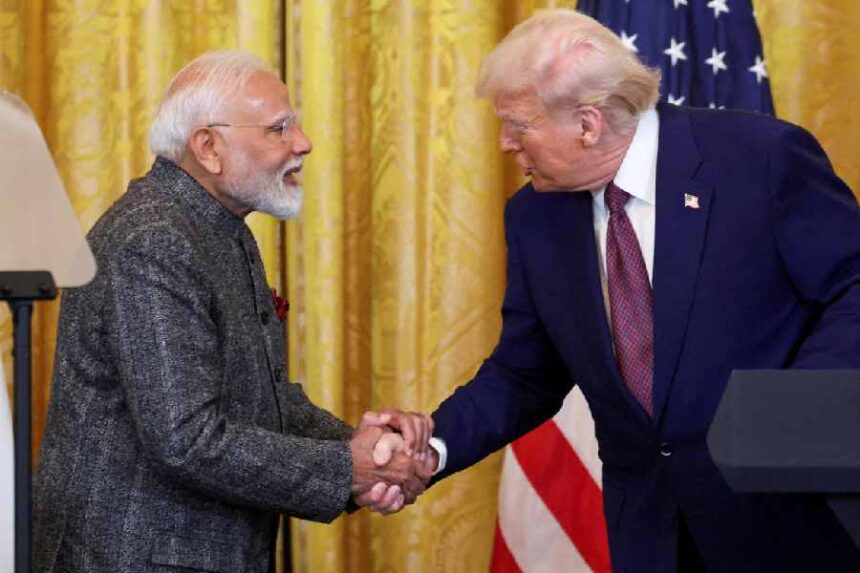
Indian Prime Minister Narendra Modi and US President Donald Trump appear poised to engage in a high-level phone conversation soon, potentially marking the first substantive step toward mending relations since their tense June 17 discussion. That call, which lasted 35 minutes, reflected the underlying strains in the bilateral relationship over trade disputes, tariffs, and geopolitical differences, including issues surrounding Russia and the ongoing conflict in Ukraine. Both leaders have now signaled their eagerness to reconnect, with statements exchanged on social media highlighting a forward-looking tone and the potential for broader engagement, including upcoming international summits. Analysts suggest that this phone call may pave the way for addressing key trade negotiations, diplomatic divergences, and the possibility of a future meeting, signaling a strategic reset in India-US relations.
A Renewed Opportunity for Dialogue
Since the June phone call, relations between New Delhi and Washington have been closely monitored, with tensions largely revolving around trade tariffs, India’s energy partnership with Russia, and divergent positions on regional security issues. President Donald Trump, speaking on Wednesday, expressed his anticipation to converse with “my very good friend, Prime Minister Modi, in the upcoming weeks,” signaling a possible thaw in bilateral communications. PM Modi reciprocated quickly through social media, stating, “I am also looking forward to speaking with President Donald Trump. We will work together to secure a brighter, more prosperous future for both our people.” The public nature of these statements suggests a deliberate attempt by both leaders to demonstrate commitment to diplomatic engagement, projecting optimism despite underlying challenges.
Government sources confirmed that the potential phone conversation could cover several high-priority topics, including scheduling for the QUAD summit and discussions related to the upcoming United Nations General Assembly in New York. Beyond procedural coordination for these summits, the call may provide a platform to address substantive issues such as the stalled India-US trade deal, which has been a contentious point since Washington imposed a 50 percent tariff on certain Indian goods. While India has resisted US demands on sectors such as agriculture and dairy, both sides have expressed interest in concluding trade negotiations without further complications, indicating a mutual willingness to explore compromise where feasible.
The timing of this phone conversation is critical, as it comes ahead of key multilateral engagements and amid broader geopolitical uncertainties. Analysts note that a successful dialogue may create momentum for a formal meeting, though locations and scheduling remain contingent on each leader’s itinerary. PM Modi is not scheduled to travel to the US for the UNGA in September, while President Donald Trump’s attendance is primarily linked to ASEAN meetings in Kuala Lumpur in October. These logistical considerations suggest that any physical meeting may be deferred until October in Malaysia or potentially beyond, with both leaders using the phone call as a preliminary step to rebuild personal rapport and clarify shared objectives.
Strategic, Trade, and Regional Challenges
The India-US relationship remains multifaceted, encompassing trade, strategic security, and regional stability. The ongoing US tariffs on Indian goods continue to be a point of friction, with Washington seeking access to India’s agricultural and dairy sectors, areas India has clearly indicated will remain off-limits. This tension highlights a broader challenge in reconciling domestic economic priorities with international trade expectations. PM Modi has emphasized that India’s position on trade and tariffs is non-negotiable, reflecting a commitment to safeguard national interests while engaging in global commerce.
Geopolitical considerations further complicate the bilateral equation. Donald Trump’s continued engagement with Pakistan, including his close relationship with military leadership figures such as Asim Munir, introduces friction points for New Delhi. Additionally, the US President has occasionally promoted the idea of a “ceasefire” between India and Pakistan, which India consistently resists as interference in its sovereign affairs. These diplomatic nuances underscore the complexity of reviving a fully collaborative partnership, as any engagement must navigate both trade ambitions and sensitive regional security concerns.
The phone conversation may also provide an avenue to discuss broader international cooperation, including the progress of the QUAD initiative and shared approaches to the Russia-Ukraine conflict. Since 2023, India and the US have maintained coordination within multilateral frameworks, but divergences in foreign policy—particularly regarding Russia—have occasionally strained bilateral communications. A constructive discussion between PM Modi and Donald Trump could help recalibrate expectations, allowing both countries to align their strategic priorities while managing public perceptions of their partnership.
Political analysts also note that public and media engagement plays a critical role in shaping the narrative around India-US relations. The use of social media statements by both leaders, particularly Donald Trump’s reposting of PM Modi’s tweet on Truth Social, indicates an effort to signal goodwill and optimism to domestic and international audiences alike. By projecting a positive outlook, both leaders aim to generate momentum for policy discussions while demonstrating responsiveness to stakeholders, including businesses, trade bodies, and the electorate, in both nations.
If the phone conversation succeeds in establishing constructive dialogue, it may open the door for a formal meeting in the near future. Malaysia, hosting the ASEAN summit in late October, has emerged as a potential venue, given that PM Modi plans to attend and Donald Trump’s schedule aligns with a leaders’ meeting there. Other potential international forums, such as the G20 summit in Johannesburg in November, are unlikely options for a face-to-face encounter, as Donald Trump has indicated he will not attend. Consequently, strategic planning around the phone conversation and subsequent meetings will be essential to maximize diplomatic outcomes while minimizing misunderstandings or misaligned expectations.
Moreover, trade negotiations remain central to the bilateral agenda. The recent standoff over tariffs has created economic pressure on Indian exporters, particularly in sectors targeted by US duties. A phone call that re-establishes direct dialogue between PM Modi and Donald Trump may provide the impetus for technical teams to finalize an agreement, potentially easing trade tensions and offering economic relief. Both leaders have publicly acknowledged the importance of concluding these negotiations, suggesting a shared understanding of the mutual benefits of resolving outstanding trade issues.
The broader geopolitical landscape adds layers of complexity to the engagement. US-India relations intersect with global developments, including China’s growing assertiveness, evolving energy markets, and ongoing conflicts such as the Russia-Ukraine war. For India, maintaining strategic autonomy while engaging the US is crucial, balancing defense cooperation, technological collaboration, and market access with its independent foreign policy objectives. For Donald Trump, reaffirming strong ties with India aligns with domestic political narratives emphasizing leadership in global affairs and the ability to secure advantageous trade agreements.
In addition to these substantive discussions, the phone conversation will likely serve as a litmus test for the durability of personal diplomacy. Historically, the PM Modi-Donald Trump relationship has been characterized by a focus on direct communication, including phone calls, summit meetings, and public expressions of camaraderie. Leveraging this personal rapport may help smooth over bureaucratic challenges, create informal channels for negotiation, and generate momentum for formal agreements. The June 17 phone call demonstrated both the potential for progress and the fragility of bilateral ties under pressure, making the upcoming conversation particularly significant for both sides.
Both leaders must also navigate domestic considerations. In India, public perception of the US relationship influences economic and political expectations, especially in the context of upcoming elections and ongoing trade negotiations. In the US, Donald Trump’s messaging on trade, foreign policy, and regional security is closely monitored by political allies and critics, adding further complexity to the dialogue. Any missteps or perceived concessions could have domestic ramifications, making careful coordination and messaging vital during and after the phone conversation.
The strategic, economic, and diplomatic stakes are thus intertwined. A productive phone discussion between PM Modi and Donald Trump has the potential to alleviate trade tensions, reinforce regional cooperation, and improve the overall trajectory of India-US relations. Conversely, misalignment or misunderstandings could exacerbate existing frictions, underscoring the importance of careful planning, clear communication, and a mutually agreeable agenda.
While uncertainties remain regarding timing, venue, and specific outcomes, the upcoming phone conversation represents a critical opportunity to rebuild trust and advance cooperation. By addressing trade, geopolitical, and strategic issues in a structured manner, PM Modi and Donald Trump could set the stage for a more stable and productive phase in bilateral relations. The discussion will also provide a foundation for potential face-to-face meetings, facilitating direct engagement on pressing regional and international matters and signaling a renewed commitment to collaboration between two major democracies.