A controversial IPL signing has ignited debate on nationalism, pluralism, and the uneasy intersection of politics and sport.
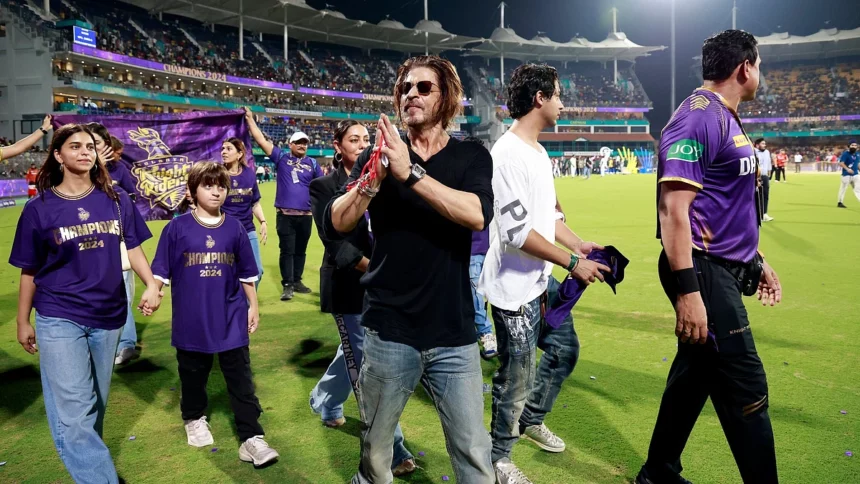
The signing of Bangladeshi fast bowler Mustafizur Rahman by the Kolkata Knight Riders for the Indian Premier League 2026 has triggered a sharp and polarising debate that goes far beyond cricket. What began as a routine sporting decision by an IPL franchise has escalated into a political and cultural controversy after Hindu seer Jagadguru Rambhadracharya publicly criticised Bollywood superstar and KKR co-owner Shah Rukh Khan, calling him a “traitor” and alleging that the decision runs counter to national interest. The remarks have drawn strong reactions across the political spectrum, reopening long-standing debates about nationalism, identity, and the role of sport in a deeply plural society.
The controversy reflects how high-profile sporting decisions in India often intersect with wider social and political currents. The IPL, though primarily a commercial and entertainment-driven league, has long been a platform where global talent converges under Indian franchises. Yet, in a climate marked by strained regional relations and heightened sensitivities around national identity, even player signings are increasingly scrutinised through political and ideological lenses. Shah Rukh Khan’s prominence as both a cultural icon and a franchise owner has only amplified the intensity of the response.
criticism from religious figures and nationalist framing of the issue
The strongest criticism came from Jagadguru Rambhadracharya, who, in an interview, accused Shah Rukh Khan of acting against national interest by backing the inclusion of a Bangladeshi cricketer in the KKR squad. Referring to recent reports of violence against Hindus in Bangladesh, Rambhadracharya framed the signing as morally and politically unacceptable, arguing that sporting decisions cannot be detached from geopolitical and communal realities. His remarks described Shah Rukh Khan’s actions as consistently “anti-national,” language that immediately drew attention for its severity.
Such statements resonated with a section of nationalist voices who believe that cultural figures and sporting institutions should align explicitly with what they perceive as national sentiment. For these critics, the IPL is not merely a sporting event but a high-visibility representation of India on the global stage, and therefore subject to expectations of symbolic loyalty. The presence of foreign players has long been a feature of the league, but geopolitical tensions often sharpen scrutiny when players hail from neighbouring countries.
The criticism was not limited to religious figures. Some members and supporters of the Bharatiya Janata Party echoed concerns about the timing and optics of the signing, arguing that it sends the wrong message amid strained relations and reports of minority persecution in Bangladesh. While not all party leaders used the same language as Rambhadracharya, the underlying sentiment reflected a broader discomfort with separating sport from political context.
At the centre of the storm is Mustafizur Rahman, a 30-year-old left-arm fast-medium bowler with extensive international and IPL experience. Known for his cutters and death-over skills, Rahman has previously represented multiple IPL franchises and is widely regarded as a seasoned professional. Supporters of the signing argue that his inclusion is based purely on cricketing merit and team strategy, not political considerations.
political pushback and the debate on pluralism in indian sport
The backlash against Shah Rukh Khan also prompted a swift and forceful response from opposition leaders, who framed the controversy as an attack on India’s pluralistic ethos. Manickam Tagore, a Member of Parliament from the Indian National Congress, condemned the “traitor” remarks and described them as deeply damaging to the idea of inclusive nationalism. In a public statement, he argued that branding a global sports franchise decision as anti-national undermines the very diversity that defines India.
Tagore also targeted the Rashtriya Swayamsevak Sangh, accusing it of fostering a climate of division and intolerance. His comments reflected a broader opposition narrative that sees such controversies as attempts to politicise culture and sport, turning personal or professional decisions into ideological battlegrounds. According to this view, the IPL’s success lies precisely in its openness to international talent and its ability to transcend borders through sport.
This political pushback highlights a recurring fault line in Indian public discourse: the tension between cultural nationalism and constitutional pluralism. For decades, Indian sport has thrived on international exchange, from foreign coaches in hockey to overseas players in cricket leagues. Critics of the current backlash argue that singling out one nationality or player risks undermining the cosmopolitan character that has helped Indian cricket achieve global prominence.
The debate has also revived discussions about the role of celebrities in public life. As one of India’s most recognisable global figures, Shah Rukh Khan has often found himself at the centre of political controversies, whether for his public statements or, as in this case, his business decisions. Supporters argue that holding him personally accountable for franchise signings ignores the professional management structures that govern IPL teams, while critics maintain that his influence makes him a legitimate target for scrutiny.
Beyond politics, the episode raises questions about the future of the IPL as a global league. If player signings increasingly become politicised, franchise owners and administrators may find themselves navigating not just sporting considerations but also ideological expectations. This could have implications for recruitment strategies, fan engagement, and the league’s international reputation.
For now, neither Shah Rukh Khan nor the Kolkata Knight Riders have issued a detailed public response to the criticism, choosing instead to focus on preparations for the upcoming season. The IPL governing framework has also remained silent, consistent with its long-standing position that franchise decisions fall within the professional domain of teams.
As the controversy continues to unfold, it underscores how deeply sport is embedded in India’s social fabric. Cricket, more than any other game, reflects the country’s passions, anxieties, and debates. The reaction to KKR’s signing of Mustafizur Rahman reveals not only the intensity of fandom but also the broader cultural conversations shaping contemporary India, where questions of identity, nationalism, and inclusion increasingly intersect with arenas once considered apolitical.