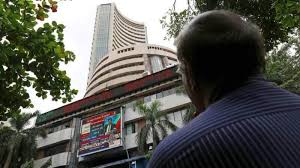
Indian stock markets opened lower on Friday, March 7, 2025, amid weak global cues and rising concerns over trade policies in the United States. Investors remained cautious as US President Donald Trump’s new tariff policies threatened to slow down the global economy. Although Trump announced a delay in implementing tariffs on certain goods imported from Canada and Mexico under the United States-Mexico-Canada Agreement (USMCA) until April 2, the move failed to ease market jitters.
In early trade, the BSE Sensex slipped by 281 points, or 0.38%, to trade at 74,059, while the Nifty50 declined by 77 points, or 0.34%, to settle at 22,468. The broader markets also witnessed selling pressure, with the Nifty MidCap index down 0.41% and the Nifty SmallCap index losing 0.07%. Market experts pointed out that the Nifty50 index could face resistance around the 22,700 mark, aligning with the 20-day exponential moving average (DEMA), while the 22,250-22,400 range is expected to act as a support zone if the downtrend continues.
The decline in Indian equities was driven by selling pressure in the IT and banking sectors. Heavyweights such as Infosys, TCS, HDFC Bank, and ICICI Bank were among the top drags. Investors remained watchful ahead of key global economic data releases and ongoing geopolitical uncertainties.
Meanwhile, global markets reflected a similar downward trend. In Asian markets, Japan’s Nikkei dropped 1.5%, Australia’s ASX200 lost 1.4%, Hong Kong’s Hang Seng declined by 0.7%, South Korea’s Kospi slipped 0.35%, and China’s Shanghai Composite was down 0.22%. The negativity in global equities was further fueled by overnight losses on Wall Street, where the Nasdaq Composite plunged 2.61%, marking its entry into ‘correction’ territory. The Dow Jones Industrial Average fell 0.99%, while the S&P 500 ended 1.78% lower.
Investors are closely monitoring key economic indicators expected in the coming days. China is set to release combined trade data for January and February, which could provide crucial insights into global trade patterns. Additionally, the Eurozone’s fourth-quarter GDP data and the US jobless claims and non-farm payroll reports will be key factors influencing market sentiment. Given the uncertain macroeconomic environment, analysts suggest that investors should remain cautious and watch for any major policy developments that could impact global financial markets in the near term.