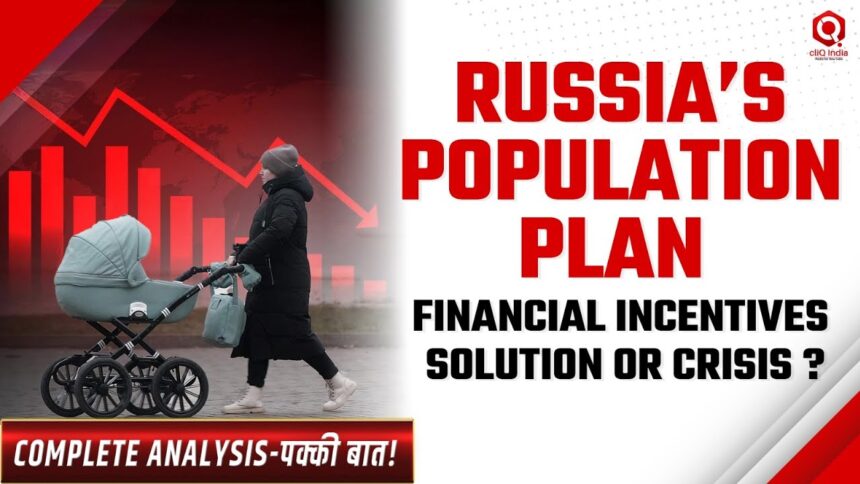
Moscow: In a bold move to counter its alarming population decline, Russia has introduced a controversial cash incentive policy, offering financial rewards to female students under 24 who have their first child. This initiative, launched in regions like Chelyabinsk, aims to address the country’s falling birth rate and aging workforce—two critical issues threatening its long-term economic and social stability.
Russia’s Population Crisis: A Growing Concern
Russia’s fertility rate has plummeted to 1.5 children per woman—well below the replacement level of 2.1. This decline is largely attributed to post-Soviet economic instability, lower living standards, and a lack of robust family support systems. Moreover, an aging population is exacerbating the crisis, with fewer young workers available to sustain the economy and support the growing elderly demographic. By 2030, an estimated 22% of Russia’s population will be elderly, placing immense pressure on the country’s pension and healthcare systems.
Adding to the challenge are high mortality rates caused by poor healthcare infrastructure and lifestyle-related diseases, further shrinking Russia’s working-age population. These factors have collectively contributed to a significant slowdown in GDP growth, which stood at just 1.5% in 2023.
A Strategy to Reverse the Decline
In response, the Russian government has rolled out several measures:
- Cash Incentives for Young Mothers: Female students under 24 receive financial rewards for having their first child, with Chelyabinsk leading the initiative.
- Maternity Capital: Financial assistance is provided to families with multiple children to offset parenting costs.
- Cultural Campaigns: National messaging campaigns, particularly in rural areas, are promoting larger families.
- Family-Friendly Policies: Expanded childcare facilities and parental leave aim to create a more supportive environment for young families.
Potential Benefits and Concerns
The immediate benefits of these policies include a potential short-term boost in birth rates and economic stimulation through increased household spending. Aligning with Russia’s national goal of demographic stability, these efforts could provide a temporary solution to the crisis.
However, critics argue that such policies could lead to unintended consequences, including:
- Disruptions in Education and Careers: Young mothers may struggle to balance parenting and education, limiting their future job prospects.
- Short-Term Fix for a Long-Term Problem: The policy does not address deeper systemic issues such as healthcare access and work-life balance.
- Reinforcement of Traditional Gender Roles: By incentivizing motherhood among students, the policy risks placing disproportionate parenting responsibilities on women, potentially hindering gender equality.
Lessons from Global Demographic Struggles
Other countries facing similar population crises have adopted different approaches:
- Japan offers subsidized childcare and parental leave but struggles with cultural resistance to immigration, worsening labor shortages.
- South Korea, despite spending billions on family incentives, continues to face record-low fertility rates due to long work hours and social pressures.
- Italy provides financial aid and tax benefits but battles economic uncertainty and high unemployment, deterring young families from having children.
- China, once known for its strict one-child policy, now promotes a three-child policy with tax breaks and housing benefits, but high living costs continue to discourage large families.
A Sustainable Path Forward
Experts suggest that while financial incentives may provide a short-term boost, long-term reforms are essential. Implementing affordable childcare, flexible education policies for young parents, and skilled immigration programs could help Russia navigate its demographic crisis more effectively.
As Russia grapples with its declining birth rate, the key question remains—will financial incentives be enough, or is a broader, more holistic approach needed? The success of this policy will ultimately depend on whether it can address the root causes of Russia’s demographic decline.
watch full video here: https://youtu.be/GOS1oRp0TiQ