• English
  • Hindi
  • Punjabi
  • Marathi
  • German
  • Gujarati
  • Urdu
  • Telugu
  • Bengali
  • Kannada
  • Odia
  • Assamese
  • Nepali
  • Spanish
  • French
  • Japanese
  • Arabic
  • Home
  • Noida
  • National
    • BulletsIn
    • cliQ Explainer
    • Government Policy
    • New India
  • International
    • Middle East
    • Foreign
  • Entertainment
  • Business
    • Tender News
  • Sports
    • IPL2025
  • Services
    • Lifestyle
    • How To
    • Spiritual
      • Festival and Culture
    • Tech
Notification
  • Home
  • Noida
  • National
    • BulletsIn
    • cliQ Explainer
    • Government Policy
    • New India
  • International
    • Middle East
    • Foreign
  • Entertainment
  • Business
    • Tender News
  • Sports
    • IPL2025
  • Services
    • Lifestyle
    • How To
    • Spiritual
      • Festival and Culture
    • Tech
  • Home
  • Noida
  • National
    • BulletsIn
    • cliQ Explainer
    • Government Policy
    • New India
  • International
    • Middle East
    • Foreign
  • Entertainment
  • Business
    • Tender News
  • Sports
    • IPL2025
  • Services
    • Lifestyle
    • How To
    • Spiritual
      • Festival and Culture
    • Tech
  • Noida
  • National
  • International
  • Entertainment
  • Business
  • Sports
CliQ INDIA > International > Foreign > Research Roundup: American Metal | Newswise
ForeignInternational

Research Roundup: American Metal | Newswise

cliQ India
cliQ India
Share
21 Min Read
SHARE

Research Roundup is a series that features Q&As with UNC faculty to share insights about their research in an approachable, bite-sized format. Each installment highlights the questions driving their work, why it matters and how it connects to broader topics in our community and beyond. 

Newswise — On July 4, 2026, the United States will celebrate its 250th birthday.

With such a significant anniversary on the horizon, it’s natural for thoughts to turn to the past — reflecting on the history and remembering the countless stories of America. 

In many ways, during the country’s bicentennial celebration in 1976, patriotism and nostalgia hit a nationwide peak. Through commemorative clothing, cookware, coins and more, many people put their civic pride on full display.

It’s precisely that nostalgia that captured the interest of Bri Murphy, assistant professor of Sculpture and Digital Fabrication in the University of Northern Colorado’s (UNC) School of Art and Design. 

Ahead of the nation’s big day next year, Murphy is exploring what it means to be American – and how a single, humble metal can be the conduit for telling over two centuries worth of fundamentally American stories. 

  • What is the main focus of your work/research? 

    I teach sculpture, which includes woodworking, mold making and casting, digital fabrication techniques like 3D printing and all sorts of other materials and techniques.

    In addition to teaching at UNC, I’m involved with researching and creating art in a variety of ways. Currently, I’m working on a collaborative project with my partner,Belle-Pilar Fleming, who serves as UNC’s director of Galleries. 

    The project we’re working on is called “Sadware.” It’s a material investigation of pewter, specifically using pewter antiques.

    Note: Pewter is a malleable metal alloy consisting of tin, antimony, copper and occasionally other metals.

    Mugs, cups and other items made from pewter. Credit: Bri Murphy

  • What inspires you as an artist?

    The materials themselves inspire me.

    I talk extensively with my students about the choices that are involved when selecting a material to work with. When we work with any specific material, we’re participating in a tradition and a history of technical processes – potentially drawing upon thousands of years of human history as we do. 

    When we make artwork, every choice we make is an opportunity. I like to consider what assumptions we have surrounding certain materials and what happens when we change or shape those materials into new forms. 
    To not consider the material you use is to invite misunderstanding into your work if you, the artist, don’t understand the material. For instance, what does it mean to use porcelain versus terracotta?

    Porcelain has a history of wealth and opulence – you might think of Chinese imperial porcelain or porcelain in England. Associations of class and whiteness, colonialism and more. But with terracotta, it’s earthenware – clay of the earth. And that holds entirely different associations; humility, history, accessibility, the location that the clay was dug from and so much more. 

    Before they’re ever used in artwork, the materials themselves bring history and individual stories with them, and that’s one of the things that fascinates me and inspires me when I work creatively. 

    This is also one of the things I love about pewter, and it ties into our “Sadware” exhibit. Pewter is infinitely reworkable and reclaimable. You can melt it down time and again to make it into something else. It retains some of the stories and history it had in its previous form, but takes on a completely new shape entirely.

  • What is the “Sadware” project? 

    Pewter, as a material, has extensive historical ties to America at several points throughout our history. First and foremost, in the 18th century, it was widely popular because it was cheaper than silver but still looked expensive. 

    Back then, to make plates and things like that, because of how soft pewter is, they would have to cast objects very thick so that they wouldn’t deform, which meant they would be very heavy.

    The etymology relating to a feeling of heaviness can also mean sadness. Sadness, sadware. So, they called flat, heavy pewter objects sadware. And I just thought that was so perfect for this project. 

    What we’re doing with “Sadware” is going out and collecting antique or vintage pewter objects to use in an exhibition. The criteria is that we have to be able to get the items for less than the cost of what the scrap metal would be; that way, we’re basically ensuring that we’re the last stop for these items before they would end up in the dump.

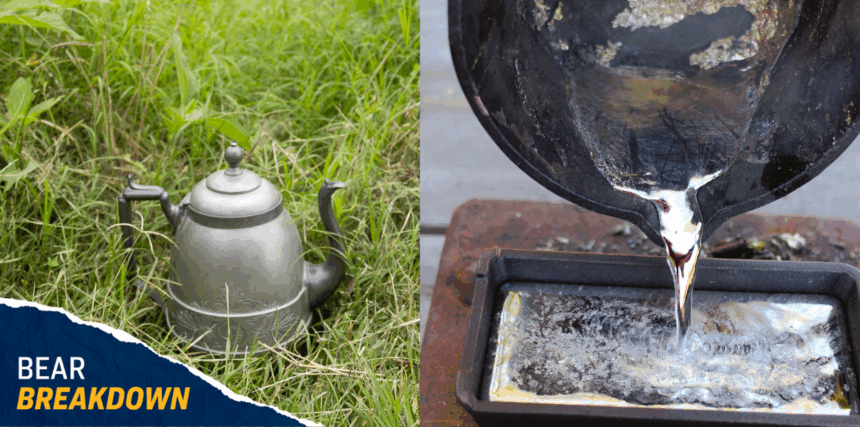
    We’re then melting them down into ingots of pewter; ingots being the iconic state that many raw materials come in. But before we do that, we commemorate every single object by hand-embroidering the silhouette of that piece onto fabric.

    Hand embroidering is one of the slowest artistic processes, but also one of the most loving and caring that exists. So, we’re acknowledging that these objects were important to somebody at some time and giving them a bit of poetic justice before they get returned to a raw material. 

    The exhibition will include all of these ingots that we’ve made, plus a whole wall of these embroideries. People will be able to see the “ghosts” of the objects in the embroideries.  

    The exhibit itself will be on display in the Lydia and Robert Ruyle Gallery from Jan. 12-22 next year, with a reception on Friday, Jan. 16, from 5:30-7:30 p.m., and then it will travel to Philadelphia in April.

  • What stories are you hoping to tell through “Sadware”? 

    As with any artistic work, people can and should take away different things based on their interpretations and experiences. 

    That said, there are a few issues and topics we had in mind when working on this project. One was concerns about the environment and overconsumption. With our economy being so globalized, things like cheap goods and fast fashion have exponentially increased the amount of waste humans produce. 

    Then, there’s the emotional side of things. I wanted to examine how we connect with objects – from family heirlooms all the way down to inconspicuous items tucked away in a thrift store and nearly lost to time.

    That relates to tying the material of pewter into the American story, specifically. Objects that some people might read as American in one way – their use as antique plates, for example – can read entirely differently to another. 

    For instance, people have melted down pewter to make bullets, which struck me as fundamentally American in a number of ways – first, going out and thrifting these pewter antiques and participating in consumption, then through this DIY attitude of making things yourself, to turn those antiques into bullets. 

    I found that just to be both terrible and poignant.

    And there are so many more aspects of America’s story to be told through pewter. We’re hoping to get people thinking about history – all the different histories – that lie within these objects. We want to tell stories of America at different moments in time, all with this one material.

  • What are your thoughts on the future of the fields of sculpture/digital fabritcation? 

    In some ways, I feel like we’re in a transitory moment when it comes to digital fabrication. Around 2010, digital fabrication was really starting to take hold and becoming more prevalent in academic spaces, maker spaces, public areas, et cetera. We’re seeing it a lot more these days.

    That said, especially with fields like ceramics or sculpture, tradition is very important. When new technologies are introduced, it can cause stress and anxiety. We saw a similar thing happen when Photoshop first came out – everybody was making “Photoshoppy” art, and there was a lot of tension in the art world; people were very stressed about the consequences of this new technology. But over time, we learned that it was just a tool, and it has become embedded in the landscape of what it means to be an artist. 

    I think a similar thing might happen with the newer digital tools of today.

    Personally, I still believe in an analog education. I feel like it’s a very empowering thing. For example, computer numerical control machines can be used to carve marble statues, but they’re almost always finished by hand. There are certain sensibilities that even machines can’t quite get right, and that’s why analogue skills will always have a place in art.

    Digital tools are wonderful opportunities in many ways, but they’re not a replacement for individual skills, and they never will be.

I teach sculpture, which includes woodworking, mold making and casting, digital fabrication techniques like 3D printing and all sorts of other materials and techniques.

In addition to teaching at UNC, I’m involved with researching and creating art in a variety of ways. Currently, I’m working on a collaborative project with my partner,Belle-Pilar Fleming, who serves as UNC’s director of Galleries. 

The project we’re working on is called “Sadware.” It’s a material investigation of pewter, specifically using pewter antiques.

Note: Pewter is a malleable metal alloy consisting of tin, antimony, copper and occasionally other metals.

Mugs, cups and other items made from pewter. Credit: Bri Murphy

The materials themselves inspire me.

I talk extensively with my students about the choices that are involved when selecting a material to work with. When we work with any specific material, we’re participating in a tradition and a history of technical processes – potentially drawing upon thousands of years of human history as we do. 

When we make artwork, every choice we make is an opportunity. I like to consider what assumptions we have surrounding certain materials and what happens when we change or shape those materials into new forms. 
To not consider the material you use is to invite misunderstanding into your work if you, the artist, don’t understand the material. For instance, what does it mean to use porcelain versus terracotta?

Porcelain has a history of wealth and opulence – you might think of Chinese imperial porcelain or porcelain in England. Associations of class and whiteness, colonialism and more. But with terracotta, it’s earthenware – clay of the earth. And that holds entirely different associations; humility, history, accessibility, the location that the clay was dug from and so much more. 

Before they’re ever used in artwork, the materials themselves bring history and individual stories with them, and that’s one of the things that fascinates me and inspires me when I work creatively. 

This is also one of the things I love about pewter, and it ties into our “Sadware” exhibit. Pewter is infinitely reworkable and reclaimable. You can melt it down time and again to make it into something else. It retains some of the stories and history it had in its previous form, but takes on a completely new shape entirely.

Pewter, as a material, has extensive historical ties to America at several points throughout our history. First and foremost, in the 18th century, it was widely popular because it was cheaper than silver but still looked expensive. 

Back then, to make plates and things like that, because of how soft pewter is, they would have to cast objects very thick so that they wouldn’t deform, which meant they would be very heavy.

The etymology relating to a feeling of heaviness can also mean sadness. Sadness, sadware. So, they called flat, heavy pewter objects sadware. And I just thought that was so perfect for this project. 

What we’re doing with “Sadware” is going out and collecting antique or vintage pewter objects to use in an exhibition. The criteria is that we have to be able to get the items for less than the cost of what the scrap metal would be; that way, we’re basically ensuring that we’re the last stop for these items before they would end up in the dump.

We’re then melting them down into ingots of pewter; ingots being the iconic state that many raw materials come in. But before we do that, we commemorate every single object by hand-embroidering the silhouette of that piece onto fabric.

Hand embroidering is one of the slowest artistic processes, but also one of the most loving and caring that exists. So, we’re acknowledging that these objects were important to somebody at some time and giving them a bit of poetic justice before they get returned to a raw material. 

The exhibition will include all of these ingots that we’ve made, plus a whole wall of these embroideries. People will be able to see the “ghosts” of the objects in the embroideries.  

The exhibit itself will be on display in the Lydia and Robert Ruyle Gallery from Jan. 12-22 next year, with a reception on Friday, Jan. 16, from 5:30-7:30 p.m., and then it will travel to Philadelphia in April.

As with any artistic work, people can and should take away different things based on their interpretations and experiences. 

That said, there are a few issues and topics we had in mind when working on this project. One was concerns about the environment and overconsumption. With our economy being so globalized, things like cheap goods and fast fashion have exponentially increased the amount of waste humans produce. 

Then, there’s the emotional side of things. I wanted to examine how we connect with objects – from family heirlooms all the way down to inconspicuous items tucked away in a thrift store and nearly lost to time.

That relates to tying the material of pewter into the American story, specifically. Objects that some people might read as American in one way – their use as antique plates, for example – can read entirely differently to another. 

For instance, people have melted down pewter to make bullets, which struck me as fundamentally American in a number of ways – first, going out and thrifting these pewter antiques and participating in consumption, then through this DIY attitude of making things yourself, to turn those antiques into bullets. 

I found that just to be both terrible and poignant.

And there are so many more aspects of America’s story to be told through pewter. We’re hoping to get people thinking about history – all the different histories – that lie within these objects. We want to tell stories of America at different moments in time, all with this one material.

In some ways, I feel like we’re in a transitory moment when it comes to digital fabrication. Around 2010, digital fabrication was really starting to take hold and becoming more prevalent in academic spaces, maker spaces, public areas, et cetera. We’re seeing it a lot more these days.

That said, especially with fields like ceramics or sculpture, tradition is very important. When new technologies are introduced, it can cause stress and anxiety. We saw a similar thing happen when Photoshop first came out – everybody was making “Photoshoppy” art, and there was a lot of tension in the art world; people were very stressed about the consequences of this new technology. But over time, we learned that it was just a tool, and it has become embedded in the landscape of what it means to be an artist. 

I think a similar thing might happen with the newer digital tools of today.

Personally, I still believe in an analog education. I feel like it’s a very empowering thing. For example, computer numerical control machines can be used to carve marble statues, but they’re almost always finished by hand. There are certain sensibilities that even machines can’t quite get right, and that’s why analogue skills will always have a place in art.

Digital tools are wonderful opportunities in many ways, but they’re not a replacement for individual skills, and they never will be.


https%3A%2F%2Fwww.newswise.com%2Farticles%2Fresearch-roundup-american-metal%2F%3Fsc%3Drsla

You Might Also Like

As DRC conflict escalates, Indian Embassy asks nationals to immediately depart from Bukavu
G42 Healthcare, Egyptian Ministry of Health discuss enhancing cooperation
Production in construction up by 0.5% in the euro area and down by 1.0% in the EU
partnering for greater inclusiveness and efficiency in agricultural systems
UAE invited to join Inter-American Institute for Cooperation on Agriculture as observer country

Sign Up For Daily Newsletter

Be keep up! Get the latest breaking news delivered straight to your inbox.
By signing up, you agree to our Terms of Use and acknowledge the data practices in our Privacy Policy. You may unsubscribe at any time.
Share This Article
Facebook Whatsapp Whatsapp Telegram Copy Link Print
Share
What do you think?
Love0
Sad0
Happy0
Angry0
Wink0
Previous Article Prince Narula, Yuvika Chaudhary reveal daughter Ekleen's face on Gurupurab
Next Article Six Indians in field in Singapore as Asian Tour golfers prepare to compete for additional LIV Golf League spots

Stay Connected

FacebookLike
XFollow
InstagramFollow
YoutubeSubscribe
TelegramFollow
- Advertisement -
Ad imageAd image

Latest News

Bengal Falta Repoll 2026: Massive Security Deployment After Election Controversy | Cliq Latest
National
May 21, 2026
Peddi Promotion Event In Bhopal: Ram Charan And AR Rahman Ready For Mega Show | Cliq Latest
Entertainment
May 21, 2026
Junior NTR Dragon Teaser Out: NTR Stuns Fans With Intense Assassin Avatar | Cliq Latest
Entertainment
May 21, 2026
KKR Vs MI IPL 2026: Manish Pandey And Bowlers Revive Kolkata Playoff Dream | Cliq Latest
Sports
May 21, 2026

//

We are rapidly growing digital news startup that is dedicated to providing reliable, unbiased, and real-time news to our audience.

We are rapidly growing digital news startup that is dedicated to providing reliable, unbiased, and real-time news to our audience.

Sign Up for Our Newsletter

Sign Up for Our Newsletter

Subscribe to our newsletter to get our newest articles instantly!

Follow US

Follow US

© 2026 cliQ India. All Rights Reserved.

CliQ INDIA
  • English – अंग्रेज़ी
  • Hindi – हिंदी
  • Punjabi – ਪੰਜਾਬੀ
  • Marathi – मराठी
  • German – Deutsch
  • Gujarati – ગુજરાતી
  • Urdu – اردو
  • Telugu – తెలుగు
  • Bengali – বাংলা
  • Kannada – ಕನ್ನಡ
  • Odia – ଓଡିଆ
  • Assamese – অসমীয়া
  • Nepali – नेपाली
  • Spanish – Española
  • French – Français
  • Japanese – フランス語
  • Arabic – فرنسي
Welcome Back!

Sign in to your account

Username or Email Address
Password

Lost your password?