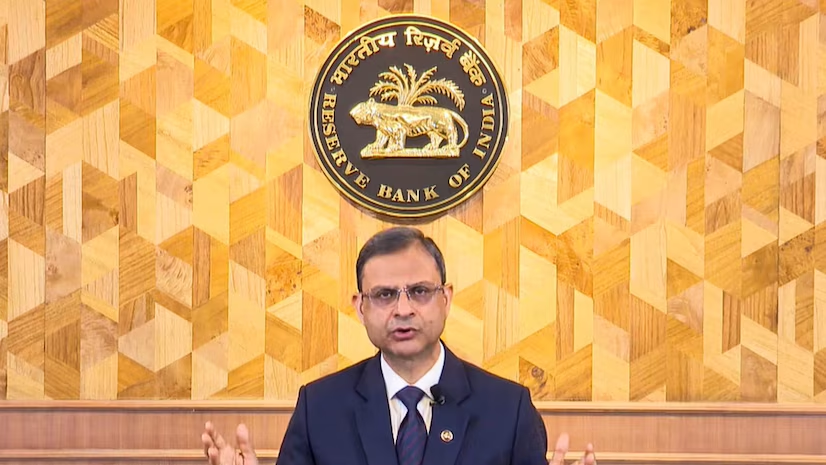
In a move that reflects growing optimism about India’s inflation outlook, the Reserve Bank of India (RBI) has revised its retail inflation projection for FY26 to 3.7%, down from the previous estimate of 4%. This development, announced during the central bank’s second bi-monthly monetary policy review on June 6, 2025, also coincided with a surprise 50 basis points cut in the repo rate to 5.5% and a 100-basis-point reduction in the cash reserve ratio (CRR). The RBI’s revised stance is rooted in improving domestic food supply conditions, cooling global commodity prices, and continued softness in core inflation.
Easing Food Prices and Core Inflation Support Forecast
The RBI’s decision to revise inflation projections downwards is largely backed by easing core inflation and positive developments in the agriculture sector. Core inflation—excluding food and fuel—has remained subdued, aided by declining international commodity prices. At the same time, a record Rabi harvest, particularly in wheat and pulses, has improved the food supply outlook. An early and above-normal monsoon, according to forecasts, is also expected to boost Kharif crop yields, reinforcing the RBI’s belief that food inflation will remain under control in the coming quarters.
Governor Sanjay Malhotra highlighted that inflation expectations among rural households are beginning to moderate, signaling a broader stability in price sentiments. He added that the softening of global oil and commodity prices will likely continue to benefit domestic inflation figures in the months ahead.
Retail Inflation at Six-Year Low and Favorable Global Trends
Retail inflation in April 2025 stood at 3.16%, the lowest in nearly six years. For three consecutive months, inflation has remained below the RBI’s 4% medium-term target, providing policymakers with headroom to adjust rates and stimulate growth. The latest inflation reading for May is due on June 12 and could further validate the central bank’s projections.
The RBI also provided a quarterly breakdown of the FY26 inflation trajectory: Q1 at 2.9%, Q2 at 3.4%, Q3 at 3.9%, and Q4 at 4.4%. While the last quarter remains close to the upper end of the RBI’s comfort zone, the overall average is comfortably within the mandated 2-6% inflation band.
Despite the positive momentum, the RBI has advised caution, flagging potential risks from monsoon variability and evolving global tariff dynamics that could affect commodity markets and inflation outcomes.