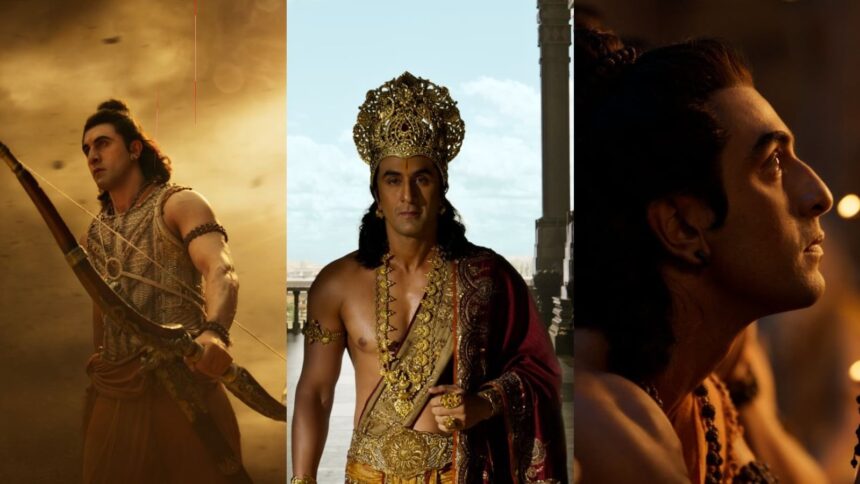
The unveiling of the first look of Lord Rama from Ramayana on the occasion of Hanuman Jayanti has generated massive buzz, but not without controversy. While many viewers praised the scale, visual effects, and cinematic ambition of the teaser, a section of fans raised concerns over its originality, pointing out similarities with popular Hollywood productions. The debate has quickly gained traction online, turning what was meant to be a celebratory reveal into a wider discussion about creative inspiration versus imitation in big-budget Indian cinema.
Comparisons With Hollywood Films Trigger Online Debate
Soon after the teaser release, social media platforms were flooded with reactions, with several users drawing parallels between the film’s war sequences and globally acclaimed series and films like Game of Thrones and The Lord of the Rings. Viewers specifically pointed to scenes set in Lanka, where large-scale battle visuals, dark-toned environments, and the design of demon-like characters appeared reminiscent of Western fantasy aesthetics.
Some users also extended these comparisons to films like The Dark Knight and Dune: Part Two, arguing that certain frames and visual compositions felt familiar. These observations have fueled a narrative that the teaser may have drawn heavily from established Hollywood visual styles, raising questions about whether the film is offering a truly original interpretation of the epic.
The criticism has been particularly sharp given the reported massive budget of the project. Many users expressed disappointment, suggesting that such a high-cost production should set new creative benchmarks rather than appear derivative. Comments circulating online reflect a broader concern among audiences about Bollywood’s perceived tendency to borrow heavily from international cinema.
At the same time, some viewers defended the film, arguing that similarities in visual language are inevitable in large-scale fantasy storytelling. They pointed out that epic narratives involving grand battles, mythical creatures, and dramatic landscapes often share common cinematic elements, regardless of cultural origin.
Larger Conversation on Creativity in Indian Epic Adaptations
The Ramayana teaser controversy has reignited a long-standing debate about originality in Indian cinema, especially when adapting culturally significant epics. Ramayana is not just another film; it represents one of the most ambitious attempts to bring a revered mythological story to the big screen using modern technology and global production standards.
For filmmakers, the challenge lies in balancing authenticity with cinematic innovation. While advanced VFX and CGI techniques enable grand visual storytelling, they also risk drawing comparisons with international benchmarks that have already defined the genre. This creates a delicate situation where audiences expect both familiarity and uniqueness.
The debate has also brought attention to the evolving expectations of Indian audiences. With increased exposure to global content through streaming platforms, viewers are more discerning and quick to identify similarities. This has raised the bar for filmmakers, who must now ensure that their work not only matches global quality but also retains a distinct cultural identity.
Interestingly, some users referenced earlier Indian blockbusters like Baahubali, noting that even those films faced similar comparisons with Hollywood productions. Over time, however, Baahubali established its own identity and became a benchmark for Indian epic cinema, suggesting that initial criticism does not necessarily define a film’s long-term reception.
As discussions continue, the Ramayana teaser controversy highlights the complex relationship between inspiration and originality in modern filmmaking. It also underscores the immense expectations placed on large-scale projects that aim to reinterpret timeless stories for a global audience.