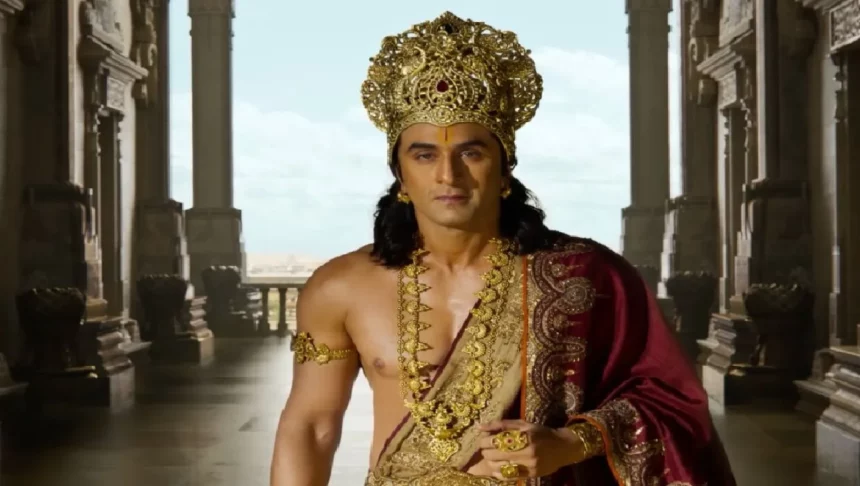
The release of the teaser for Ramayana has ignited a storm of debate, emotion, and cultural introspection across India and among the global Indian diaspora. Unveiled on the auspicious occasion of Hanuman Jayanti, the teaser was expected to be a moment of collective pride and cinematic anticipation. Instead, it quickly became the center of a controversy after it was revealed that the teaser had been screened in cities like New York and Los Angeles before its official release in India. What might have been intended as a global celebration of an epic deeply rooted in Indian culture has now triggered questions about cultural ownership, audience prioritization, and the evolving dynamics of Indian cinema in a globalized world.
The film, directed by Nitesh Tiwari and headlined by Ranbir Kapoor as Lord Ram, is one of the most ambitious projects in Indian cinematic history. With a reported budget of ₹4,000 crore, it aims to bring the ancient Indian epic to life on an unprecedented scale. However, even before its release, the discourse surrounding it has shifted from artistic expectations to ideological and emotional reactions. The decision to showcase the teaser abroad first has been perceived by many Indian fans as a slight, prompting widespread criticism on social media platforms.
Global Premiere vs Cultural Sentiment: Why the Teaser Release Sparked Outrage
The crux of the Ramayana teaser controversy lies in a simple yet emotionally charged question: who should experience a culturally significant narrative first? For millions in India, the Ramayana is not merely a story but a foundational element of cultural identity, spirituality, and moral philosophy. The decision to premiere the teaser overseas was therefore interpreted by some as prioritizing international audiences over domestic ones, particularly when the subject matter is so deeply intertwined with Indian heritage.
Social media reactions ranged from disappointment to outright anger, with users arguing that Indian audiences deserved the first glimpse of a film rooted in their own traditions. Many expressed that while globalization is inevitable, certain cultural narratives demand a degree of sensitivity in how they are presented and shared. The perception that the film’s makers overlooked this sentiment has fueled the backlash, turning what should have been a celebratory moment into a contentious one.
Responding to the criticism, co-producer Namit Malhotra urged audiences to adopt a more inclusive perspective. He emphasized that the intention behind the overseas screenings was not to sideline Indian viewers but to acknowledge the vast Indian diaspora spread across the globe. According to him, Indians living abroad also share a deep emotional connection with the Ramayana and deserve to be part of its cinematic revival. His statement, “please don’t divide, Ram belongs to everyone,” reflects an attempt to reframe the narrative from one of exclusion to one of unity.
This defense, however, has not entirely quelled the criticism. The debate has instead evolved into a broader discussion about how Indian cinema navigates its dual identity as both a cultural custodian and a global entertainment industry. On one hand, there is a clear push to position Indian films on the world stage, competing with Hollywood in terms of scale and reach. On the other, there remains a strong expectation that stories rooted in Indian tradition should prioritize domestic audiences, both in spirit and in practice.
The controversy also highlights the growing influence of social media in shaping public discourse around films. In an era where audience reactions can amplify within minutes, filmmakers are increasingly held accountable not just for their creative choices but also for their marketing strategies. The Ramayana teaser controversy serves as a case study in how quickly narratives can shift and how important it is for creators to anticipate and address audience sensitivities.
Star Power, Expectations, and Early Criticism Add Fuel to the Debate
While the teaser’s release strategy has been a major point of contention, it is not the only factor contributing to the ongoing discourse. The absence of Ranbir Kapoor from the promotional events held across major Indian cities has raised additional questions. As the face of the film and the actor portraying Lord Ram, his non-appearance at such a significant moment did not go unnoticed. Fans and media alike speculated about the reasons behind his absence, with some interpreting it as a lack of engagement with the film’s promotional efforts.
The promotional events themselves were grand affairs, held in cities like Mumbai and Delhi, with key figures such as Nitesh Tiwari and Namit Malhotra present to interact with the media. Yet, the missing presence of the lead actor created a noticeable gap, further fueling discussions around the film’s rollout strategy.
Adding another layer to the controversy was a cryptic remark by filmmaker Sanjay Gupta, who took to social media platform X to post, “dug a mountain… a mouse emerged.” Although he did not explicitly name the film, the timing of the post led many to associate it with the Ramayana teaser. This comment has been interpreted as a critique of the teaser’s impact, suggesting that it may not have lived up to the immense expectations surrounding the project.
Expectations for the film are undeniably high, given its scale, cast, and creative team. Alongside Ranbir Kapoor, the film features Sai Pallavi as Sita, Yash as Raavan, Sunny Deol as Hanuman, and Ravi Dubey as Lakshman. The inclusion of Arun Govil, who famously portrayed Ram in the iconic 1987 television adaptation Ramayan, as King Dashrath adds a nostalgic dimension to the project.
The film’s music is being composed by two global heavyweights, A. R. Rahman and Hans Zimmer, further elevating expectations. Meanwhile, its visual effects are being handled by DNEG, an Oscar-winning studio known for its work on major international films. These elements collectively position Ramayana as a project that aims to redefine the scope of Indian cinema.
However, with great ambition comes heightened scrutiny. Every aspect of the film, from casting choices to marketing decisions, is being closely examined. The teaser controversy has underscored the challenges of balancing artistic vision with audience expectations, particularly when dealing with a narrative as culturally significant as the Ramayana.
The decision to release the film in two parts, scheduled for Diwali 2026 and Diwali 2027, reflects the scale of the story being told. It also indicates the makers’ confidence in the project’s ability to sustain audience interest over an extended period. Yet, the initial controversy serves as a reminder that success in today’s cinematic landscape depends not only on the final product but also on how it is introduced to the audience.
The Ramayana teaser controversy is, at its core, a reflection of the evolving relationship between cinema and culture. It raises important questions about how stories rooted in tradition are adapted for modern audiences and how filmmakers navigate the complexities of a globalized world. As the film moves closer to its release, it will be interesting to see how the makers address these concerns and whether they can turn the controversy into an opportunity for deeper engagement with audiences.