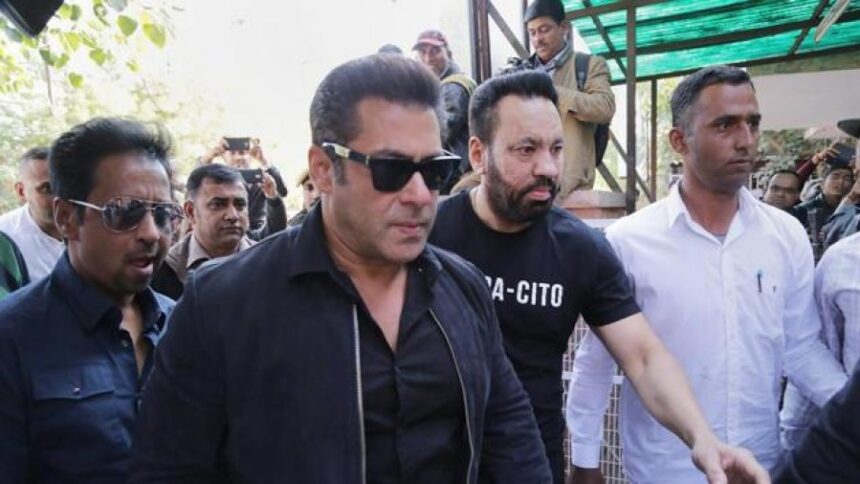
The long-pending blackbuck poaching case involving Bollywood actor Salman Khan faced another delay on February 17, 2026, when Justice Baljinder Singh Sandhu of the Rajasthan High Court recused himself from hearing the matter. This unexpected development has led to the matter being redirected to another bench, prolonging the resolution of one of India’s most high-profile wildlife-related legal cases. The case has remained under public scrutiny for decades, highlighting legal, ethical, and celebrity accountability issues, while also involving multiple co-accused, including actors Saif Ali Khan, Sonali Bendre, Tabu, and Neelam, alongside local resident Dushyant Singh.
Background and Historical Context of the Blackbuck Case
The blackbuck poaching allegations stem from the 1998 shooting of the Bollywood film Hum Saath Saath Hain, during which Salman Khan was accused of hunting two blackbucks in Kankani village, Jodhpur district. The legal proceedings that followed have spanned more than two decades, with multiple courts involved in addressing both criminal convictions and appeals. On April 5, 2018, a trial court convicted Salman Khan, sentencing him to five years of imprisonment, while other accused were acquitted. Following this, Salman Khan challenged his sentence in the sessions court, and the state government simultaneously approached the Rajasthan High Court seeking permission to appeal the acquittals.
The case has been legally complex due to the joint consideration of Khan’s appeal against his conviction and the state government’s petition challenging the acquittal of co-accused. In July 2025, the High Court allowed a transfer of Khan’s petition to be clubbed with the state’s appeal, paving the way for a joint hearing. This combination was intended to streamline proceedings but has also intensified public and media attention due to the involvement of prominent film personalities and the case’s environmental implications.
Recent Developments and Judicial Intervention
Justice Baljinder Singh Sandhu’s recusal from the case on February 17, 2026, represents a significant procedural change in this decades-long legal saga. Recusal by a sitting judge is rare and typically occurs due to potential conflicts of interest, ensuring impartiality in judicial decision-making. The recusal has forced the case to be reassigned to a different bench for further hearings, creating additional uncertainty regarding timelines and outcomes. Legal analysts suggest that such developments can affect procedural momentum, public perception, and the administration of justice, especially in high-profile cases with celebrity involvement.
The involvement of co-accused Saif Ali Khan, Sonali Bendre, Tabu, Neelam, and local resident Dushyant Singh adds layers of complexity to the case. Each individual’s legal standing, prior acquittals, and ongoing appeals contribute to a web of legal considerations that the new bench must navigate. This case not only examines allegations of wildlife poaching but also tests the legal framework surrounding accountability of public figures, adherence to environmental laws, and consistency in judicial processes.
Celebrity Accountability, Legal Precedent, and Public Scrutiny
The Salman Khan blackbuck case has become emblematic of broader societal concerns regarding celebrity influence, legal accountability, and conservation law enforcement. Public interest in the case has remained high for decades, with repeated delays, appeals, and high-profile court appearances capturing media attention. Each procedural development, including the recent recusal of Justice Sandhu, further fuels public debate over the pace and impartiality of the judicial process.
Legal observers have noted that the case serves as a precedent in evaluating how courts balance high-profile cases involving influential individuals against principles of fairness, due process, and environmental protection. The repeated delays underscore the challenges courts face in managing complex litigation involving multiple co-accused, overlapping petitions, and media scrutiny. The procedural history highlights how the intersection of celebrity, law, and conservation can generate prolonged legal disputes that attract national and international attention.
The recusal also emphasizes the judiciary’s commitment to impartiality, as judges take measures to avoid any perception of bias or conflict of interest. By stepping aside, Justice Sandhu has adhered to principles of judicial ethics, ensuring that the case will be reassigned to a bench free from potential conflicts. While this prolongs the timeline for resolution, it reinforces confidence in the judicial system’s dedication to transparency and fairness, particularly in high-profile criminal matters.
The case continues to raise public interest not only because of Salman Khan’s celebrity status but also due to its environmental significance. Blackbucks, classified as protected species under India’s Wildlife Protection Act, have been the focus of conservation efforts, making the legal implications of poaching cases particularly consequential. The court’s decisions will likely influence how wildlife-related offences are addressed in the future, shaping the enforcement of conservation laws and public perceptions of accountability.
Overall, the ongoing proceedings demonstrate the multifaceted nature of legal cases involving celebrities, where media attention, public sentiment, environmental law, and procedural fairness converge. The reassignment of the case to another bench opens a new chapter in this long-running saga, keeping the nation’s attention focused on the unfolding judicial process and its implications for both the film industry and wildlife protection in India.