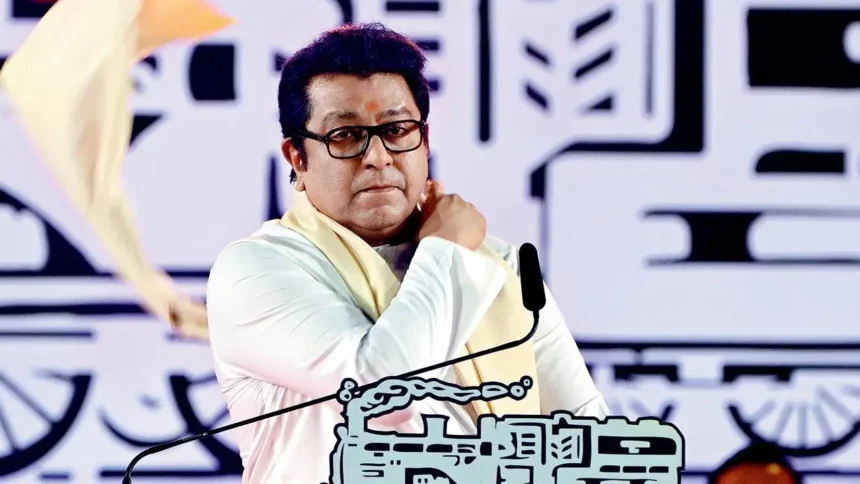
Maharashtra Navnirman Sena (MNS) chief Raj Thackeray, on Sunday, called for the unity of Marathi people across caste and religion lines, urging them to join forces ahead of the upcoming BMC and local body elections. He emphasized the importance of putting aside differences and coming together as Marathi citizens to protect the interests of Maharashtra and the Marathi language.
Speaking out against caste-based politics, Thackeray condemned the division of the Marathi community, stating that such divisions had weakened the collective strength of the people. He pointed out the contrast with Tamil Nadu, which actively defends its cultural pride and language against the imposition of Hindi by the central government, accusing Maharashtra of becoming a “surrendered society.”
The MNS chief also used the example of the murder of Beed sarpanch Santosh Deshmukh to highlight the role of caste politics in distracting people from the real issues facing society. He denounced the political narrative that sought to frame the murder as a “Vanjari versus Maratha” issue, which he believed was a deliberate attempt to sidetrack the community from the larger concerns that required immediate attention. Thackeray’s comments were aimed at the political class, whom he accused of failing to address the concerns of the Maratha community despite their significant presence in Maharashtra’s political landscape. He pointed out that many of the state’s former Chief Ministers, ministers, and MLAs had been Marathas, but their contributions to their own community were minimal. Thackeray questioned why Marathas were forced to fight for reservation, despite their long-standing political dominance.
Thackeray also expressed concern over the status of the Marathi language in the state, accusing non-Maharashtrians of undermining the use of Marathi in businesses and establishments. He instructed MNS workers to monitor all banks and offices to ensure the use of Marathi, stressing that Marathi should be respected as the language of Maharashtra. He also warned that Marathi youth were losing out on jobs and business opportunities, which were being given to people from outside the state, further exacerbating the issue of unemployment in Maharashtra.
In a significant political move, Thackeray offered conditional support to Maharashtra Chief Minister Devendra Fadnavis, stating that his support was contingent upon the Chief Minister’s commitment to working for the betterment of Maharashtra and the Marathi people. Thackeray made it clear that if Fadnavis prioritized the interests of the state and its people, MNS would stand behind him, but only if he sought the consent of the Marathi community before making key decisions that impacted the state.
Thackeray also took a firm stance against the politics of caste and religion, urging the youth to avoid falling into the trap of communal hatred. He criticized the growing trend of viewing history through the lens of caste and religion, particularly in the context of historical figures like Aurangzeb and Afzal Khan. Thackeray argued that the tombs of such historical figures should be preserved, not as a symbol of the oppression they represented, but as a testament to the resilience and bravery of the Maratha warriors who fought against them. He cautioned young people against reading history on platforms like WhatsApp, warning that this was a deliberate attempt to distract them from the real issues facing society.
The MNS leader also raised concerns about the country’s political landscape, specifically regarding the influence of business tycoon Adani. Thackeray accused the government of giving projects and businesses to Adani, describing him as a shrewd businessman who had captured key sectors of the economy. He urged the youth to recognize the true culprits behind the country’s economic challenges and not be misled by divisive politics.
Thackeray concluded his speech by reiterating his belief that religion should be practiced privately and not imposed on the public. Drawing inspiration from the example of Turkey’s Kemal Pasha, who introduced secular governance by distancing religion from politics, Thackeray advocated for a similar approach in India. He also voiced his concerns over the pollution of the Ganga, stating that his opposition to the polluted waters was not an insult to the Maha Kumbh or the river itself, but rather a call for action against the environmental degradation of one of India’s most sacred rivers.