
Iran has said reopening the Strait of Hormuz is impossible due to alleged ceasefire violations by the United States and Israel, escalating global tensions.
Iran has firmly stated that the strategically crucial Strait of Hormuz cannot be reopened under current conditions, citing ongoing ceasefire violations by the United States and Israel. The announcement comes at a time when the waterway, one of the most vital global oil transit routes, is witnessing heightened military and maritime tensions.
The statement was made by senior Iranian leadership, including remarks attributed to Mohammad Bagher Ghalibaf, who described the situation as a direct consequence of “blatant violations” of the ceasefire agreement. He specifically pointed to the US naval blockade of Iranian ports, calling it an act that effectively places the global economy under pressure and disrupts international trade routes.
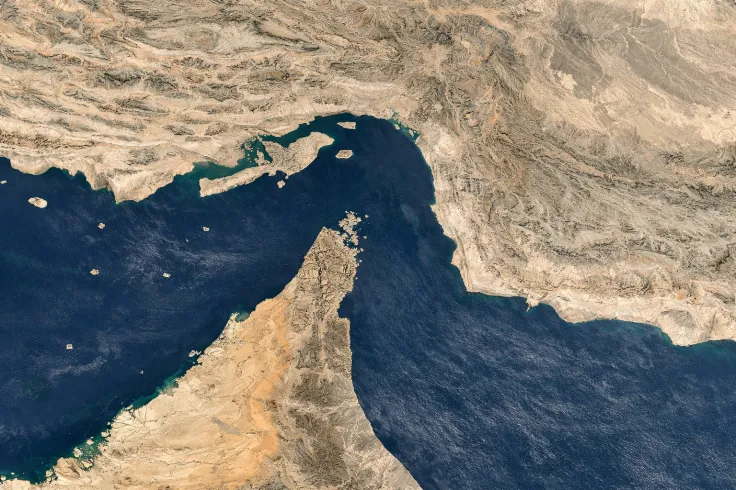
The Strait of Hormuz is a narrow but critically important passage connecting the Persian Gulf to the Arabian Sea. Nearly a fifth of the world’s oil supply passes through this route, making any disruption a matter of global concern. Iran’s refusal to reopen the strait raises fears of supply chain disruptions, rising fuel prices, and increased geopolitical instability.
Iranian President Masoud Pezeshkian reiterated that while Iran remains open to diplomatic negotiations, meaningful dialogue cannot proceed under threats, blockades, and breaches of agreed terms. He emphasized that trust is essential for negotiations, and current actions by opposing parties undermine that trust.
Meanwhile, the United States has extended the ceasefire without specifying a deadline. US President Donald Trump announced the extension, while the White House indicated that the continuation of the naval blockade is a strategic decision. Officials suggested that maintaining pressure on Iran could lead to a more favorable negotiation outcome.
White House Press Secretary Karoline Leavitt stated that the US administration believes Iran is currently in a weakened position, and that the ongoing blockade provides leverage in negotiations. She also noted that the decision to escalate or de-escalate the situation ultimately rests with the US leadership.
Despite diplomatic signals, tensions on the ground remain high. Iran has reportedly seized two cargo vessels in the Strait of Hormuz, alleging that the ships were operating without authorization and attempting to leave the area covertly. The vessels, identified as MSC Francesca and Epaminondas, were said to have sustained damage during earlier incidents.
Iran’s Revolutionary Guard Corps (IRGC) Navy issued a statement warning that it is closely monitoring all maritime movements in the region and will take firm action against any violations. Footage released by Iranian media appeared to show commandos boarding one of the vessels, highlighting the seriousness of the situation.
In a separate incident, another cargo ship, Euphoria, reportedly came under attack but managed to anchor safely near a port in the United Arab Emirates. No casualties were reported, but the incident underscores the increasing risks faced by commercial shipping in the region.
International reactions have been swift. Greece confirmed that one of its cargo ships had been attacked, while other nations expressed concern over the safety of maritime routes. The situation has prompted calls for restraint and renewed diplomatic efforts to prevent further escalation.
The ongoing standoff has also impacted global markets. Oil prices have shown signs of volatility, with analysts warning that prolonged disruption in the Strait of Hormuz could lead to significant economic consequences worldwide. Shipping companies are reassessing routes, and insurance costs for vessels operating in the region have increased sharply.
The strategic importance of the strait cannot be overstated. It serves as a critical chokepoint for energy exports from major oil-producing nations in the Middle East. Any attempt to control or restrict access to this route has far-reaching implications, not just for regional stability but for the global economy.
Experts suggest that the current situation reflects a broader power struggle in the region. Control over the Strait of Hormuz is seen as a measure of geopolitical influence, and both sides appear unwilling to уступе ground. This has led to a delicate balance where diplomatic negotiations coexist with military posturing.
At the same time, there are indications that backchannel diplomacy may still be active. Reports suggest that talks could take place in Pakistan, although no official confirmation has been made regarding the timeline. The absence of a clear negotiation framework adds to the uncertainty surrounding the crisis.
The US strategy appears to focus on maintaining economic and military pressure while avoiding a full-scale conflict. This approach allows for flexibility but also prolongs the uncertainty, leaving global markets and regional actors in a state of anticipation.
For Iran, the current stance signals a determination to assert control over its territorial waters and resist external pressure. The government has framed its actions as defensive and necessary to protect national sovereignty.
As the situation continues to evolve, the risk of miscalculation remains high. Even a minor incident in such a sensitive region could trigger a larger conflict, making diplomatic engagement crucial.
The international community is closely watching developments, with many urging both sides to de-escalate tensions and return to meaningful negotiations. The stakes are high, and the outcome will likely shape the geopolitical landscape of the region for years to come.
The refusal to reopen the Strait of Hormuz underscores the fragile nature of the current ceasefire and highlights the challenges of achieving lasting peace in a region marked by complex political dynamics.