

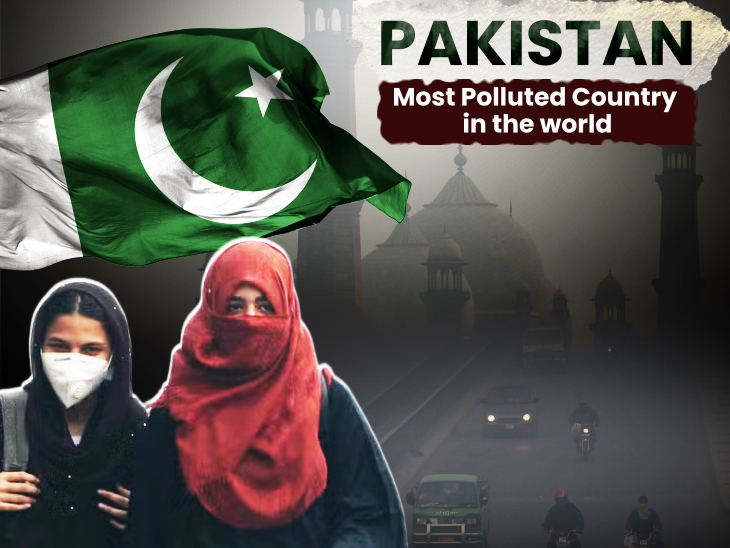
Pakistan ranked the world’s most polluted country in 2025, with dangerous PM2.5 levels far exceeding WHO guidelines, raising serious health and environmental concerns globally.
Pakistan has been identified as the most polluted country in the world in 2025, according to a report by IQAir, highlighting alarming levels of air contamination and deteriorating environmental conditions. The report revealed that concentrations of fine particulate matter, known as PM2.5, reached levels up to 13 times higher than the limits recommended by the World Health Organization. This places Pakistan at the top of global pollution rankings, reflecting a severe public health crisis. The findings are based on data collected from thousands of monitoring stations worldwide. The situation underscores the urgent need for policy intervention.
According to the report, Pakistan recorded an average PM2.5 concentration of 67.3 microgrammes per cubic metre in 2025, significantly exceeding the WHO’s safe limit of 5 microgrammes. Although slightly lower than the 2024 average of 73.7 microgrammes, the levels remain dangerously high. PM2.5 particles are extremely small and can penetrate deep into the lungs and bloodstream. This makes them particularly harmful to human health. The continued presence of such high concentrations indicates persistent environmental challenges.
The data was compiled from 9,446 cities across 143 countries and territories, providing a comprehensive overview of global air quality. Out of these, 130 countries failed to meet the WHO’s recommended standards. Only a small number of countries managed to maintain safe air quality levels. This highlights the widespread nature of air pollution as a global issue. However, Pakistan’s position at the top of the list is particularly concerning. It reflects both local and regional environmental pressures.
Health Risks and Environmental Impact
The high levels of PM2.5 in Pakistan pose significant health risks to the population. Prolonged exposure to these fine particles has been linked to respiratory diseases, cardiovascular conditions and neurological disorders. Studies have shown that air pollution can increase the likelihood of dementia, Parkinson’s disease and Alzheimer’s disease. It also contributes to premature births and reduced life expectancy. These health impacts place a heavy burden on healthcare systems.
Air pollution affects not only human health but also the environment. It contributes to climate change and reduces visibility, affecting daily life and economic activities. In cities like Lahore, smog has become a recurring problem, especially during winter months. Factors such as crop burning, industrial emissions and vehicle exhaust play a major role. These sources combine to create hazardous air quality conditions. Addressing these issues requires coordinated efforts.
The impact of pollution extends to vulnerable groups such as children and the elderly. These populations are more susceptible to the harmful effects of polluted air. Schools and workplaces are often disrupted due to severe smog conditions. This affects productivity and quality of life. The situation calls for immediate and sustained action. Public awareness is also crucial in addressing the problem.
Global Rankings and Regional Trends
In the global rankings, Bangladesh and Tajikistan followed Pakistan as the second and third most polluted countries respectively. Chad, which was the most polluted country in 2024, ranked fourth in 2025. However, experts suggest that the apparent improvement in Chad’s ranking may be due to gaps in data rather than actual environmental progress. This highlights the importance of reliable data in assessing global pollution levels. Accurate monitoring is essential for effective policy making.
The report also revealed that all of the world’s top 25 most polluted cities are located in China, India and Pakistan. In India, the city of Loni recorded the highest pollution levels globally, with PM2.5 concentrations reaching 112.5 microgrammes per cubic metre. This indicates that air pollution is a major issue across South Asia. Regional factors such as industrial activity, population density and climate conditions contribute to the problem. Collaborative efforts may be needed to address it.
Globally, only 14 percent of cities met the WHO air quality standards in 2025, a decline from 17 percent in the previous year. This suggests that air quality is worsening in many parts of the world. However, some countries have made progress. Nations such as Australia, Iceland, Estonia and Panama managed to maintain safe air quality levels. These examples demonstrate that improvement is possible with effective policies.
Data Gaps and Monitoring Challenges
The report also highlighted challenges related to data collection and monitoring. The discontinuation of a global air quality monitoring programme by the United States has created gaps in data for several countries. This has affected the accuracy of global rankings. Some countries, including Burundi, Turkmenistan and Togo, were excluded from the report due to insufficient data. These gaps make it difficult to assess the true extent of pollution in certain regions.
Experts have warned that missing data can lead to misleading conclusions. For example, the apparent decline in pollution levels in Chad may not reflect actual improvements. Instead, it could be due to reduced monitoring. This highlights the need for consistent and reliable data collection systems. Without accurate data, it is difficult to develop effective environmental policies. Monitoring plays a critical role in addressing pollution.
Climate Change and Rising Pollution Levels
Climate change has also contributed to worsening air quality globally. The report noted that wildfires, driven by changing climate conditions, were a major factor in increasing pollution levels. Record levels of biomass burning in regions such as Europe and Canada released significant amounts of carbon into the atmosphere. This has had a global impact on air quality. It shows the interconnected nature of environmental issues.
Weather patterns also influence pollution levels. In some countries, increased rainfall and wind helped reduce PM2.5 concentrations. For example, Laos, Cambodia and Indonesia saw improvements due to favorable weather conditions linked to the La Nina phenomenon. However, such changes are often temporary. Long-term solutions require structural changes in energy use and industrial practices.
The findings highlight the need for global cooperation in addressing air pollution. While some countries have made progress, many continue to struggle with rising pollution levels. The situation in Pakistan serves as a warning of the consequences of inaction. It underscores the importance of sustainable development and environmental protection.
The ranking of Pakistan as the world’s most polluted country in 2025 highlights a critical environmental and public health challenge. With PM2.5 levels far exceeding safe limits, urgent action is needed to address the sources of pollution and protect public health. The report by IQAir provides valuable insights into global air quality trends. It emphasizes the need for stronger policies and international cooperation. As air pollution continues to affect millions of people worldwide, addressing this issue must remain a top priority for governments and communities alike.