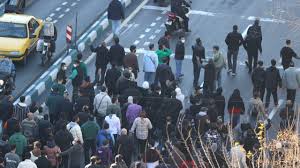
Iran is facing a fresh wave of nationwide unrest as protests against soaring inflation, rising living costs and a collapsing national currency have erupted in more than 100 cities, drawing thousands of people onto the streets and exposing deep economic and social strains across the country. What began as scattered demonstrations over price hikes and currency depreciation has rapidly transformed into a broad-based movement reflecting frustration among traders, workers, students and ordinary citizens struggling to cope with worsening financial conditions. The scale and speed with which the protests have spread underline the depth of public anger, as economic grievances increasingly intersect with wider concerns about governance, accountability and everyday survival.
The demonstrations first gained momentum after the Iranian rial plunged to record lows, sharply increasing the cost of imported goods and pushing up prices of essential items. Shopkeepers, particularly in major commercial centres, were among the earliest groups to voice their anger, shutting down markets and chanting slogans against economic mismanagement. As images and videos circulated widely, similar scenes began to unfold in provincial towns and smaller cities, transforming localized protests into a nationwide expression of discontent. The unrest has now spanned nearly all provinces, making it one of the most extensive protest movements Iran has witnessed in recent years.
Inflation has long been a source of pressure in Iranian society, but recent price surges have intensified daily struggles for millions. Households report difficulty affording food, fuel and medicine, while savings have eroded rapidly due to currency depreciation. For many protesters, the demonstrations are not driven by ideology but by desperation, as economic insecurity disrupts livelihoods and undermines confidence in the future. The protests reflect a collective sense that existing policies have failed to shield ordinary citizens from the impact of prolonged economic challenges.
Inflation shock, currency collapse and the spread of protests
At the heart of the unrest lies Iran’s deepening economic crisis, marked by persistent inflation and the sharp decline of the rial. As prices climbed at an accelerating pace, merchants and consumers alike felt the strain, particularly in urban centres where living costs are already high. The situation became especially volatile when the currency lost significant value in a short span, triggering panic buying, hoarding and further price escalation. Markets that traditionally serve as economic barometers became focal points of protest, with traders accusing authorities of failing to stabilize the economy.
The demonstrations quickly expanded beyond commercial hubs, drawing participation from students, industrial workers, transport operators and unemployed youth. In many cities, protesters voiced anger over shrinking wages, unpaid salaries and diminishing job prospects. Economic frustration soon blended with broader grievances, including perceptions of inequality and a lack of transparency in decision-making. Chants and placards increasingly reflected demands not only for price controls but also for accountability and meaningful reforms.
The decentralized nature of the protests has been a defining feature. Rather than being led by a single organization or political figure, demonstrations have emerged organically in multiple locations, often coordinated through social networks and word of mouth. This has made the movement difficult to contain, as local grievances feed into a shared national narrative of economic distress. In several cities, protests turned confrontational, with reports of clashes between demonstrators and security forces as tensions escalated.
Despite regional differences, common themes run through the protests. Rising food prices, unaffordable housing, fuel costs and declining purchasing power dominate conversations among demonstrators. For many, the protests are a last resort to draw attention to hardships that have accumulated over years. The breadth of participation suggests that inflation is no longer viewed as a temporary problem but as a systemic issue affecting nearly every segment of society.
Government response, security measures and social impact
The Iranian authorities have responded to the protests with a combination of public messaging, security deployment and appeals for calm. Officials have acknowledged economic difficulties and emphasized the need to distinguish between peaceful protesters and those accused of engaging in violence or vandalism. Security forces have been deployed in several cities to prevent damage to public property and maintain order, leading to tense standoffs in some areas. In certain instances, clashes have resulted in injuries, further fueling public anger and international scrutiny.
At the same time, government leaders have attempted to reassure citizens that measures are being considered to address inflation and stabilize the economy. Statements have highlighted plans to review pricing policies, adjust subsidies and support vulnerable sections of society. However, many protesters remain skeptical, citing past promises that failed to translate into lasting relief. The gap between official assurances and lived experience continues to widen, reinforcing mistrust and prolonging unrest.
The protests have had a visible social impact, disrupting daily life in multiple cities. Markets and shops have closed intermittently, public transport has been affected, and schools and universities in some areas have seen reduced attendance. Families report anxiety over safety and uncertainty about the future, while social media has become a crucial space for sharing information, organizing gatherings and expressing solidarity. The visibility of the protests has also encouraged discussions within Iranian society about economic resilience, governance and the balance between stability and reform.
Beyond immediate economic concerns, the unrest has reopened debates about long-term structural issues. Analysts note that inflation is closely tied to broader challenges, including sanctions, fiscal constraints and limited economic diversification. For ordinary citizens, however, these factors translate into concrete hardships, such as the inability to afford necessities or plan for the future. The protests highlight how macroeconomic pressures can quickly spill over into social and political spheres when daily survival becomes uncertain.
As demonstrations continue, their outcome remains uncertain. While some protests have subsided after heavy security presence, others have re-emerged, indicating persistent underlying tensions. The widespread nature of the unrest suggests that addressing isolated incidents may not be sufficient to restore calm. Many observers believe that lasting stability will depend on credible economic measures that directly alleviate inflationary pressures and rebuild public trust.
The current wave of protests underscores a critical moment for Iran, where economic realities are shaping social dynamics on a national scale. Inflation, once a technical issue discussed by policymakers, has become a catalyst for mass mobilization. As citizens across cities and towns voice their grievances, the protests stand as a stark reminder that economic hardship, when prolonged and unaddressed, can evolve into a powerful force of collective dissent.