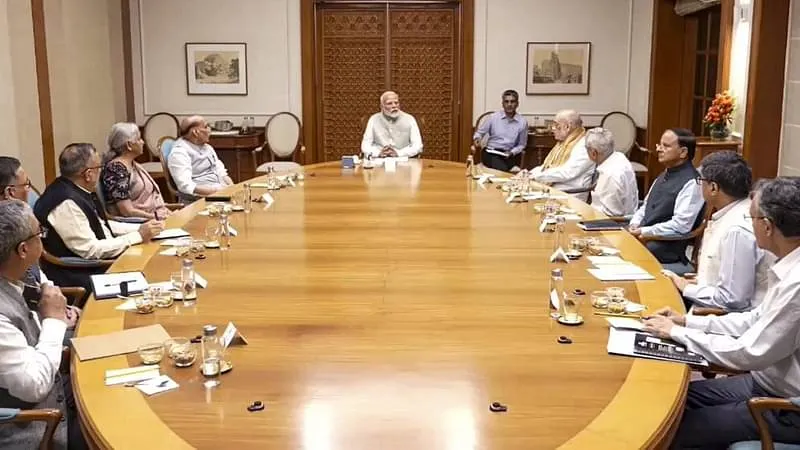
Amid heightened tensions with Pakistan following the Pahalgam terror attack, Prime Minister Narendra Modi will lead a series of high-level meetings today, including a Cabinet Committee on Security (CCS) meeting and the first Cabinet Committee on Political Affairs (CCPA) gathering since the 2019 Pulwama attack. The day’s agenda signals the gravity of the current national security environment, especially with recent measures already taken in response to cross-border aggression.
Today’s CCPA meeting is particularly significant, as this powerful body—often referred to as the “Super Cabinet”—last met under similar circumstances in 2019, following the deadly Pulwama terror strike that killed 40 CRPF personnel. That session resulted in major decisions including the withdrawal of Pakistan’s ‘Most Favoured Nation’ trade status, which was followed by the Balakot airstrikes. The gravity of that meeting offers insight into the potential direction of today’s discussions.
The recent CCS meeting, chaired by the Prime Minister Narendra Modi on April 23, came a day after the Pahalgam terror attack that claimed around 28 lives. In its aftermath, the Indian government announced tough non-military actions, including suspending the Indus Waters Treaty, halting cross-border movement at the Attari-Wagah border, and cancelling all visas issued to Pakistani nationals residing in India. The swift and sweeping nature of these actions underlines the strategic posture India has adopted in response to escalating hostilities.
The CCPA holds the mandate to deliberate on key political, economic, and foreign policy matters, especially during periods of national importance. It plays a critical role in shaping Centre-state relations and fostering coordinated decision-making across ministries when politically sensitive issues arise. Additionally, the committee helps assess internal security situations and ensures ministries align their approaches on issues that could carry significant political consequences.
Chaired by PM Narendra Modi, today’s meeting includes heavyweight ministers such as Rajnath Singh (Defence), Amit Shah (Home), Nitin Gadkari (Road Transport), Nirmala Sitharaman (Finance), and JP Nadda (Health), among others. Their presence reflects the political and strategic weight of the discussions expected.
With the border situation still volatile and recent attacks intensifying national concern, today’s meetings are set to shape India’s next steps both politically and strategically. The decisions taken could have far-reaching consequences, not only for bilateral ties with Pakistan but also for internal security management going forward.