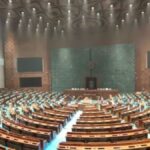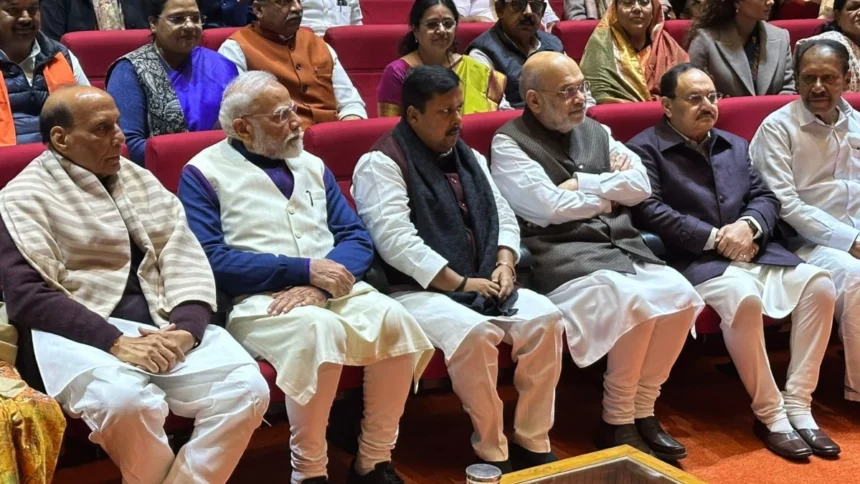
Prime Minister Narendra Modi is set to chair a meeting of the National Democratic Alliance parliamentary party on Tuesday, February 3, at the Parliament House complex in New Delhi, as the ongoing Budget Session of Parliament moves into a politically significant stage.
The meeting, scheduled for 9:30 am, will bring together Members of Parliament from all NDA constituents, including the Bharatiya Janata Party, Telugu Desam Party, Janata Dal (United), Lok Janshakti Party (Ram Vilas), Shiv Sena, Janata Dal (Secular), and other alliance partners. Senior leadership from the ruling coalition is expected to be present, underlining the importance of coordination during a session marked by repeated disruptions and high-stakes legislative business.
Focus on parliamentary strategy and governance priorities
Prime Minister Narendra Modi is expected to address the MPs during the meeting, offering guidance on parliamentary conduct, legislative priorities, and broader political messaging. According to reports, the Prime Minister is likely to outline the government’s agenda for the remainder of the Budget Session and emphasize the need for unity and discipline among NDA members inside Parliament.
The meeting will also be attended by Home Minister Amit Shah, Defence Minister Rajnath Singh, BJP national president Nitin Nabin, along with all NDA ministers and MPs. Such gatherings traditionally serve as a platform for the Prime Minister to communicate key talking points that MPs can take back to their constituencies, particularly on economic policies, welfare measures, and national issues highlighted in the Union Budget.
With the opposition stepping up its protests and raising contentious issues in both Houses, the NDA leadership is expected to discuss floor management strategies to ensure smoother conduct of business. The emphasis is likely to be on keeping the focus on legislative work while responding effectively to opposition attacks.
Budget Session timeline and pending legislation
The Budget Session of Parliament is scheduled to have 30 sittings spread over 65 days and will conclude on April 2. The first phase began on January 28 and will continue until February 13, after which Parliament will reconvene for the second phase starting March 9. The extended session reflects the government’s intention to push through key legislation while accommodating detailed scrutiny of bills by parliamentary committees.
Currently, nine bills are pending in the Lok Sabha. These include the Developing India Education Foundation Bill, 2025, the Securities Markets Code, 2025, and the Constitution (129th Amendment) Bill, 2024. Several of these bills are under examination by parliamentary standing committees or select committees, and their progress will be closely watched during the remaining sittings.
The NDA meeting is expected to review the status of these bills and assess how best to navigate debates and discussions in a politically charged environment. Coordination among alliance partners is seen as essential to maintain numerical strength and coherence, especially during voting on contentious proposals.
Disruptions in Lok Sabha add urgency to coordination
The meeting comes a day after major disruptions in the Lok Sabha, triggered during a speech by Leader of Opposition Rahul Gandhi. His reference to an unpublished memoir by former Army Chief General Manoj Mukund Naravane led to sharp objections from the treasury benches and repeated adjournments. The incident has intensified confrontations between the government and the opposition, adding urgency to the NDA’s internal deliberations.
Against this backdrop, the ruling alliance is keen to project stability and preparedness, both inside Parliament and in public messaging. The leadership is expected to stress the importance of countering opposition narratives while keeping attention on governance achievements and policy objectives.
As the Budget Session progresses, today’s NDA parliamentary party meeting is likely to play a key role in shaping the government’s legislative and political approach in the weeks ahead.