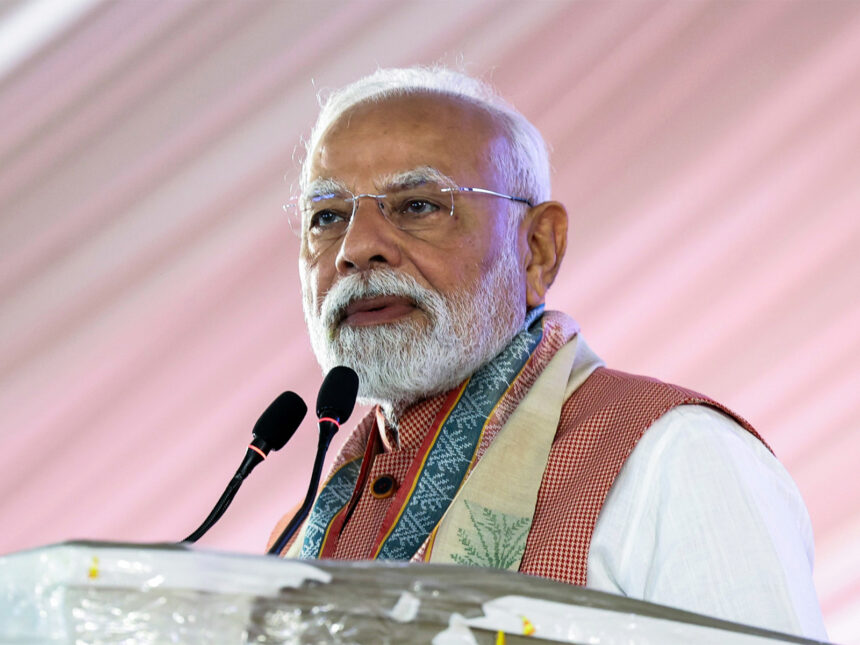
The winter session of Parliament is set to begin on December 1 and continue until December 19, and ahead of this crucial session, Prime Minister Narendra Modi will address accredited media representatives at Parliament House. His briefing, scheduled for 10:00 am at Hans Dwar on the opening day of the sixth session of the eighteenth Lok Sabha, is expected to set the tone for the political, legislative, and financial agenda that will unfold over the next three weeks.
PM Modi’s media briefing and political groundwork before the winter session
The announcement of Prime Minister Narendra Modi’s media interaction on December 1 marks an important beginning to the winter session, a period traditionally known for high political engagement and intensive legislative activity. The prime minister’s briefing will take place just before the Lok Sabha convenes, giving him an opportunity to outline the government’s priorities and shape the public discourse around the upcoming debates and bills. Such interactions at the start of a session are often seen as an indicator of how the government intends to approach issues raised by the opposition, how it plans to handle expected confrontations, and what major policy areas it will emphasize.
One day prior to the session, the government convened an all-party meeting on Sunday morning at 11 am. These meetings are customary before any major parliamentary session, designed to ensure smoother legislative functioning, reduce disruptions, and build consensus wherever possible. Representatives from major national and regional parties participated in the discussion, bringing forward their concerns and expectations from the government. While the opposition generally uses these platforms to demand clarifications and draw attention to issues it wants prioritized, the ruling side attempts to project an atmosphere of cooperation.
This winter session holds particular importance due to the diverse range of legislative proposals on the agenda. With only 19 days allotted, the government aims to push through several crucial bills that address national security, taxation, economic reforms, and administrative restructuring. The shorter duration, combined with the high volume of pending and newly proposed legislation, suggests that both houses will witness long working hours, intense debate, and heightened political exchanges.
The political opposition is also gearing up for the session. Leaders of the INDIA bloc, which includes several major national opposition parties, have called for their own strategic meeting on Monday. This meeting, to be held at the office of Mallikarjun Kharge, leader of the opposition in the Rajya Sabha, aims to consolidate the bloc’s approach towards questioning the government and raising issues such as federal concerns, economic challenges, social justice, and transparency in policy decisions. The upcoming session may therefore see vocal demands from the opposition benches seeking detailed discussions and accountability on pressing national matters.
Key legislative proposals, constitutional recommendations, and financial business before Parliament
The legislative agenda for the winter session is expansive, featuring proposals that touch upon areas of taxation, national security, insolvency and bankruptcy reform, highway development, insurance regulations, corporate law, capital markets, arbitration mechanisms, and higher education restructuring. Several of these bills have already received the president’s constitutional recommendation for introduction, a mandatory step under specific articles of the Constitution when financial implications or state-level taxation matters are involved.
Among the most prominent proposals is the Health Security and National Security Cess Bill, 2025. The president has recommended its introduction under article 117(1) and article 274(1), with consideration permitted under article 117(3). This indicates that the bill likely involves taxation measures that will contribute to enhancing national health infrastructure and strengthening national security mechanisms. The bill may propose the imposition of a cess designed to provide dedicated financial resources for sectors considered strategically important for India’s long-term resilience.
Another significant bill on the agenda is the Manipur Goods and Services Tax (Second Amendment) Bill, 2025. This legislation has received the president’s approval under article 207(1) and article 207(3), which deal specifically with money bills and state-level taxation changes. The amendment aims to update the GST framework in Manipur, potentially addressing administrative needs, compliance improvements, and economic adjustments in the state. Given Manipur’s unique socio-economic conditions and ongoing recovery from periods of unrest, such amendments carry substantial relevance.
The Central Excise (Amendment) Bill, 2025, also cleared under articles 117 and 274, is expected to refine the excise framework, align it with current market conditions, and modernize administrative enforcement. This could include technological upgrades, changes in the monitoring system, and streamlining tax collection mechanisms, ensuring greater efficiency and preventing revenue leakage.
In addition to these, several other bills are slated for introduction or discussion. The Jan Vishwas (Amendment of Provisions) Bill, 2025, aims to reduce compliance burdens across multiple sectors by decriminalizing minor offences, simplifying legal processes, and enhancing citizen-government interactions. The Insolvency and Bankruptcy Code (Amendment) Bill, 2025, seeks to strengthen corporate resolution mechanisms, ensure faster insolvency settlements, and provide clarity on contentious provisions that frequently lead to litigation.
The Repealing and Amending Bill, 2025, is expected to remove outdated, redundant, or obsolete laws from the statute books, thereby improving the overall legal framework and reducing clutter. This has been a recurring exercise in recent years as the government continues its objective of modernizing India’s legal ecosystem.
The National Highways (Amendment) Bill, 2025, may introduce changes related to land acquisition, tolling frameworks, highway development models, or administrative clarity for national highway management. Meanwhile, the Atomic Energy Bill, 2025, is anticipated to refine regulations concerning nuclear energy, an area where India continues to expand its strategic capabilities and international partnerships.
Further, the Corporate Laws (Amendment) Bill, 2025, may introduce updates to company governance norms, corporate compliance requirements, and investor protections. The Securities Markets Code Bill (SMC), 2025, has been long awaited as it seeks to combine multiple securities and financial market regulations into a unified code, strengthening oversight and enabling more transparent market conduct.
The Insurance Laws (Amendment) Bill, 2025, could address capital requirements, insurance penetration, policyholder rights, and oversight of insurance companies, aiming to expand the sector’s reach across the country. The Arbitration and Conciliation (Amendment) Bill, 2025, is expected to enhance the efficiency of dispute resolution, promote faster settlement processes, and align arbitration standards with global best practices.
Complementing these is the Higher Education Commission of India Bill, 2025, which proposes significant structural changes in the higher education sector, replacing older regulatory frameworks with a new commission to improve quality, accountability, and institutional standards. This bill reflects ongoing reforms aimed at modernizing the educational system and making it internationally competitive.
On the financial business front, Parliament will take up the first batch of supplementary demands for grants for the financial year 2025–26. This process involves the government seeking approval for additional funding beyond what was allocated in the annual budget. Supplementary demands typically arise due to new schemes, cost escalations, urgent expenditures, or unforeseen national priorities. After the demands for grants are debated and approved, the related appropriation bill must be passed or returned by Parliament, making it legally possible for the government to withdraw funds from the Consolidated Fund of India.
The combination of legislative proposals and financial business indicates that the winter session will be activity-heavy. Both houses are expected to engage in lengthy discussions, potential disagreements, and intense debates, particularly on bills that touch upon taxation, security, or socio-economic reforms. The government has a strong legislative calendar, while the opposition has signaled its intent to scrutinize and challenge the proposals.
Given this backdrop, political observers expect a lively and deeply involved session where policy decisions, national priorities, and governance models will take center stage. The prime minister’s opening-day briefing will therefore play a crucial role in setting expectations, offering clarity, and shaping the narrative before the parliamentary debates begin.